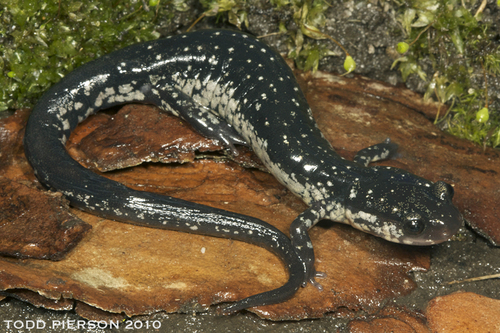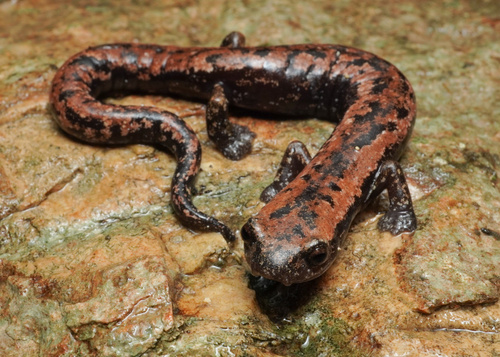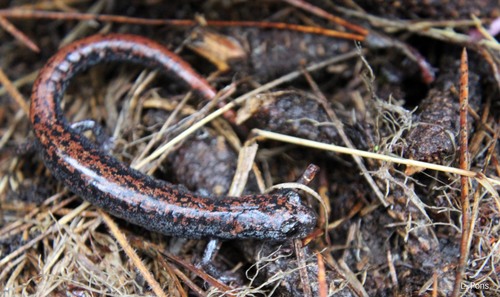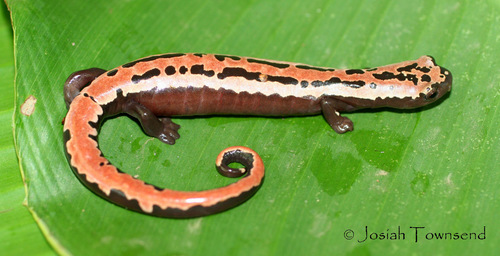
About Eurycea hillisi Wray, Means & Steppan, 2017
Taxonomic First Description
Eurycea hillisi was first formally described by Wray, Means, and Steppan in a 2017 study.
Pre-Description Taxonomic Status
Prior to this formal description, it was considered a population of the southeastern dwarf salamander (E. quadridigitata).
Distinct Hindlimb Trait
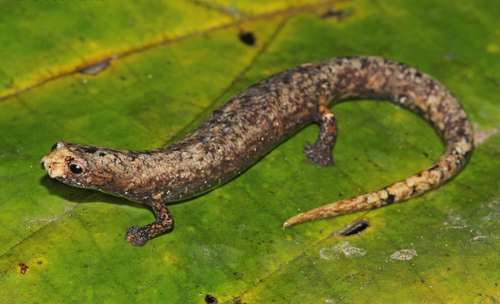
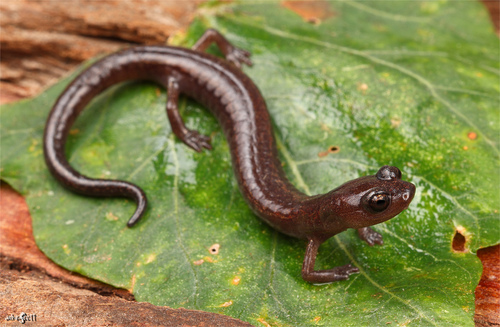
This species is distinct for having only 4 toes on each of its hindlimbs.
Coloration
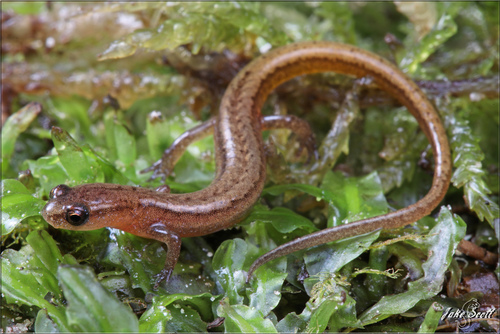
Across 20 observed individuals, Eurycea hillisi shows more consistent coloration than other plethodontids, with a copper or orange-brown body.
Early Documentation
Although it was not fully described until 2017, it was likely first documented by Lamb and Beamer during their 2012 study of four-toed evolution within the Eurycea genus.
Etymology
The species is named to honor American evolutionary biologist David Hillis.
Core Distribution Range
Hillis' dwarf salamander occurs in southern Alabama, the central Florida panhandle, and mid-central Georgia.
Distribution Boundaries
To date, it has not been recorded east of the Ogeechee River basin in Georgia, or the Chipola and Choctawhatchee rivers in Florida.
Habitat Types
This salamander inhabits bay swamps, the upper ends and periphery of beaver ponds, isolated wetlands, streams, and seepage ravines.
Documented Occurrence Locations
Documented locations that support this species include the Apalachicola National Forest, the Mobile Bay River Delta area, and the river basins mentioned earlier.
Microhabitat Preference
Eurycea hillisi is most often found in Sphagnum moss, which provides the moisture and shelter required for its habitat.