About Batrachoseps pacificus (Cope, 1865)
Common Name and Shared Traits
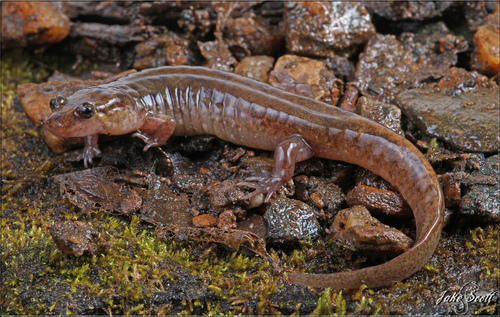
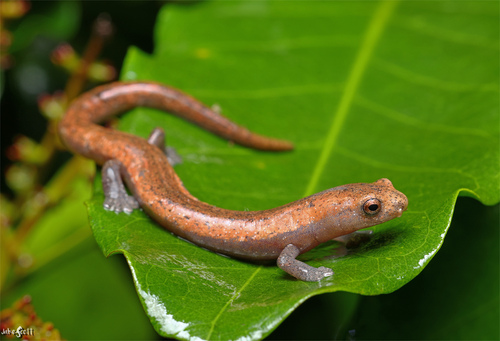
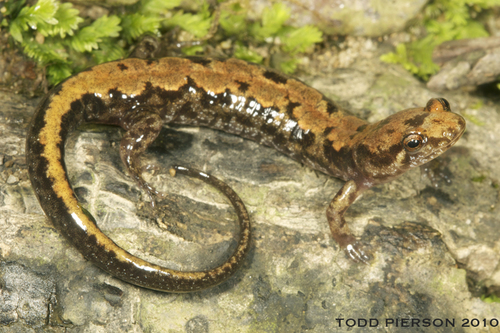
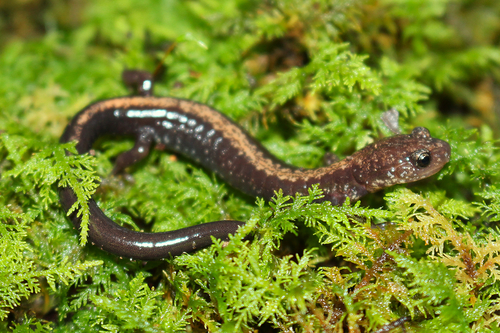
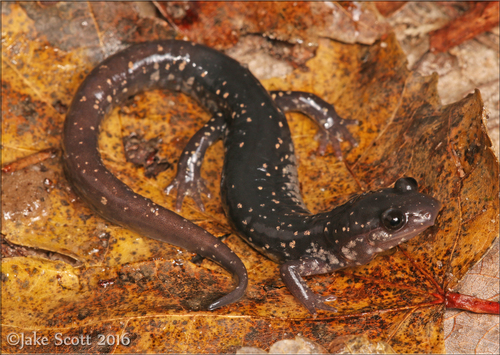
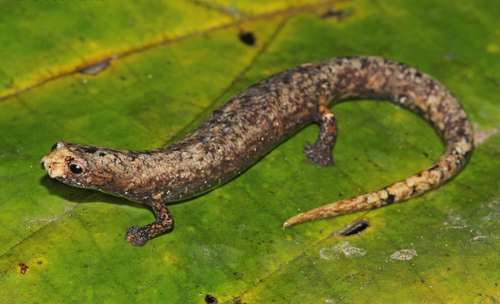
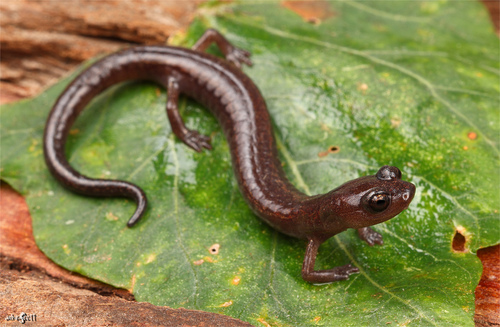
This species, commonly called the Channel Islands slender salamander, shares the characteristic traits of all slender salamanders: short limbs, a narrow head, a lean body, a particularly elongated tail, and four toes on each foot.
Distinguishing Morphology
Unlike other slender salamanders, it has a more robust overall appearance, caused by its longer legs.
Snout-to-Vent Length
Adult Channel Islands slender salamanders measure 4.2 to 7 centimeters (1.67 to 2.75 inches) long from snout to vent.
Dorsal Coloration
Their dorsal surface color ranges from brown to pinkish, and has a prominent dorsal stripe formed from light speckles.
Ventral Coloration
The throat and underside of the tail are pale, while the abdomen is whitish or slate-colored and marked with mixed light and dark speckling.
Costal Grooves
A series of 18 to 20 clearly visible costal grooves mark the positions of its rib connections, and grooves at the end of the torso are also clearly visible.
Geographical Range
Batrachoseps pacificus is endemic to the northern California Channel Islands, occurring on San Miguel Island, Santa Rosa Island, Santa Cruz Island, and Anacapa Island.
Endemism Status
It is the only amphibian species that is endemic to the islands off the coast of California.
Habitat Types
Across the islands where it lives, the Channel Islands slender salamander occupies a broad range of habitat types, including island coastal sage scrub, grasslands, chaparral, oak woodlands, pine woodlands, and uniquely, driftwood-covered beaches.
Anti-Predator Behavior
When disturbed, this salamander may coil its body and stay motionless, relying on camouflage for protection.
As an alternative response, it can quickly uncoil and bounce away, while detaching its tail to distract predators.
Tail Regeneration
Even though the tail breaks off easily, it will regenerate over a period of time.
Egg Laying Sites
For reproduction, females lay eggs underground, using existing burrows dug by other animals or man-made crevices.
Egg Laying Period
Females move down from the surface to lay eggs between late fall and winter.
Clutch Size
A single clutch of eggs can contain 13 to 20 eggs.
Post-Hatching Activity Cycle
After the young salamanders hatch between winter and early spring, both adults and newly hatched young return to the surface when rain comes the following fall and winter.
Cycle Variability
This reproductive and activity cycle varies significantly with changes in weather conditions.