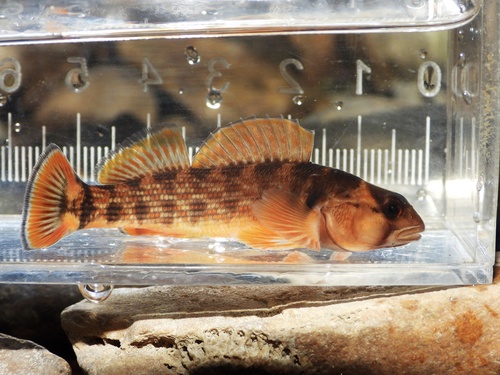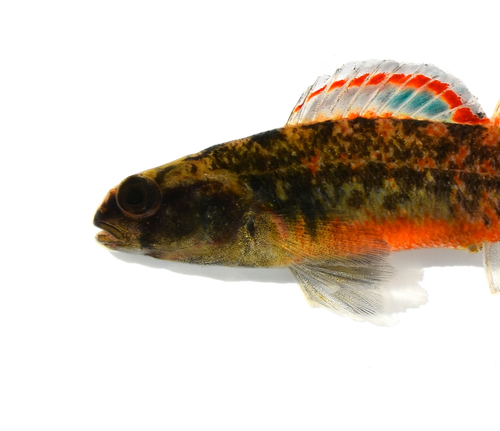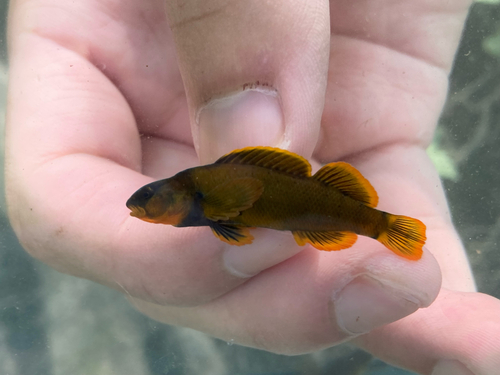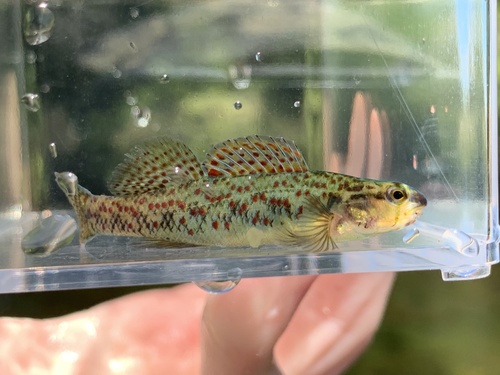
About Etheostoma caeruleum Storer, 1845
Taxonomic Classification
The rainbow darter (Etheostoma caeruleum) is a small freshwater ray-finned darter. It belongs to the subfamily Etheostomatinae, which is part of the family Percidae — a group that also includes perches, ruffes, and pikeperches.
General Habitat
This species is native to North America, where it inhabits small fast-moving streams and small to medium-sized rivers.
Size
Adults reach 2 to 3 inches (51 to 76 mm) in length.
Pollution Tolerance
Rainbow darters are very sensitive to pollution and silt, so they only live in clean, pollution-free water.
Identifying Features
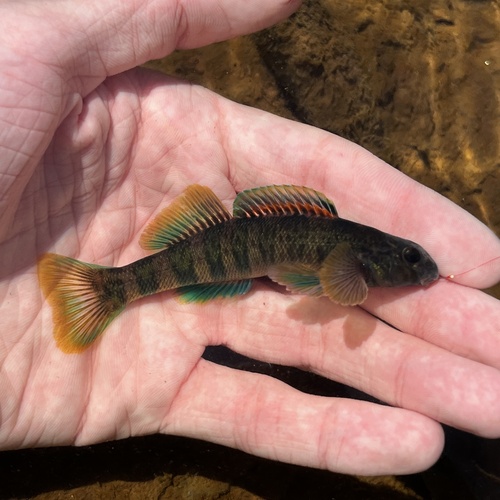
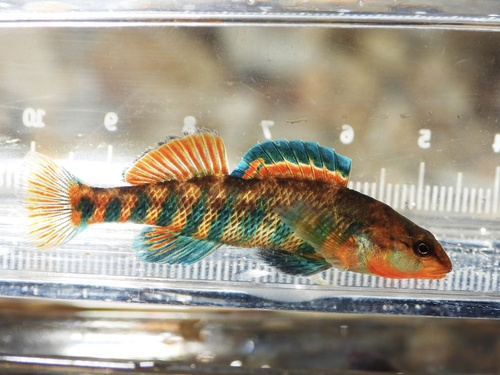
They can be easily identified by three dark spots on their back, and blue and orange coloring on their dorsal and anal fins.
Broad Distribution
As small benthic freshwater fish, rainbow darters are found across many creeks and small to medium-sized rivers throughout North America. They are especially common across the eastern United States, throughout the Great Lakes and Ohio River Valley regions.
Range Boundaries
Their range extends south to northern Alabama, and west as far as Missouri and Arkansas. Researchers have linked the species' current distribution to the presence of historic glaciers, as well as its intolerance of brackish water.
Phylogeographic History
A phylogeographic study of E. caeruleum and its colonization patterns confirmed that historic glaciation shaped its range, and movement between former drainages has produced the species' current morphological diversity.
Population Abundance
Geographically, the rainbow darter is one of the most abundant and common darter species.
Distribution Caveats
The current recorded distribution may be outdated, and should be verified with state fish and wildlife agencies; this is especially true for Texas, where the species only occurs in small numbers.
General Diet
The rainbow darter is an insectivorous species, feeding mostly on small invertebrates including insects and crayfish, but it is also known to eat some fly larvae.
Feeding Patterns
In Four-Mile Creek, Ohio, rainbow darters feed primarily on trichopterans (caddisflies), and have two distinct feeding peaks: one in the morning, and a second in the late afternoon or early evening.
Predators
The main predators of the rainbow darter are larger freshwater fish, including burbots (Lota lota), stonecats (Noturus flavus), and smallmouth bass (Micropterus dolomieu).
Substrate Holding Trait
Like many other darter species, the rainbow darter can hold its position on the stream substrate in flowing water. This unique trait is a key factor in its microhabitat preferences.
Microhabitat Preferences
E. caeruleum prefers creeks and rivers with rocky substrates and swift-moving riffles. Researchers have suggested this preference may relate to seasonal water oxygen level changes, or other factors connected to feeding or shelter needs.
Anthropogenic Threats
Because E. caeruleum has such a low tolerance for brackish water, human changes to habitats including pollution and sewer drainage can cause significant negative impacts to the species' abundance.