About Egernia saxatilis Cogger, 1960
Species Nomenclature and Size
The black rock skink (Egernia saxatilis Cogger, 1960) is a relatively large lizard, with an average total length of 215 mm and a maximum snout-to-tail length of 140 mm.
Base Body Coloration
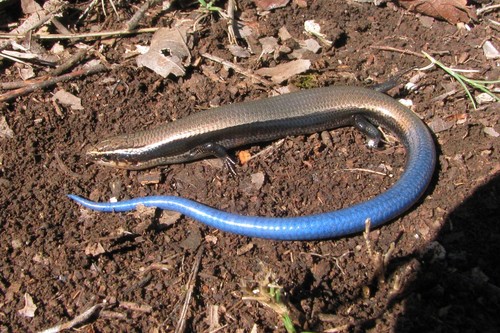
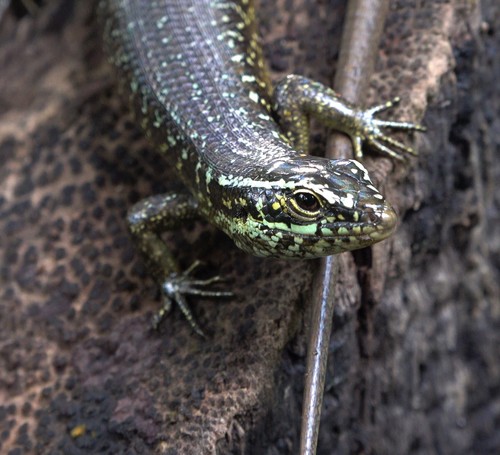
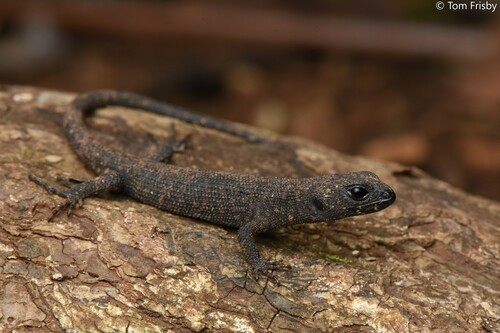
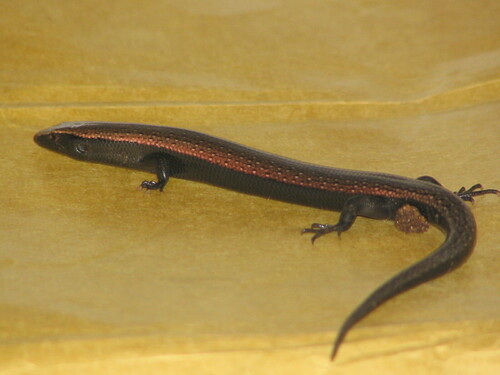
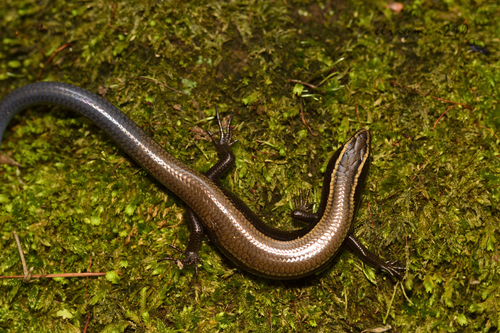
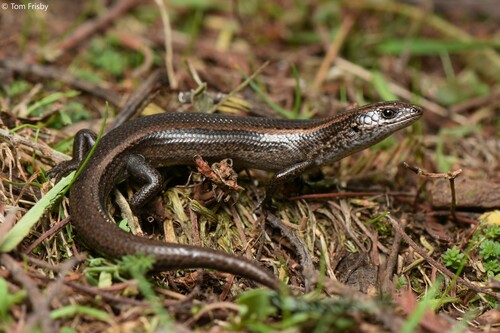
Most individuals are dark brown or black. The black upper body has broken pale scales that appear as white flecks.
Dorsal and Abdominal Scale Texture
Back scales are keeled and rough, while abdominal scales are smooth, unkeeled, and smaller than dorsal scales.
Underside Markings
The underside of the body is slightly orange; the ventral sides of the tail and throat are white with scattered black markings.
Lateral Body Coloration
The lizard’s sides have black scales scattered with lighter brown scales.
Head and Limb Coloration
Its feet and digits are black and shiny, and its upper lip is a lighter shade of black than the rest of the body.
General Activity Pattern
This species is diurnal, most active during the morning and late afternoon, and spends most of its time sheltering in rock crevices.
Warm Weather Behavior
In warmer weather, individuals emerge from shelters to bask and forage.
Broad Geographic Range
It is found in southeastern Australian woodlands, mainly along the coast and in nearby mountain ranges.
Primary Habitat Locations
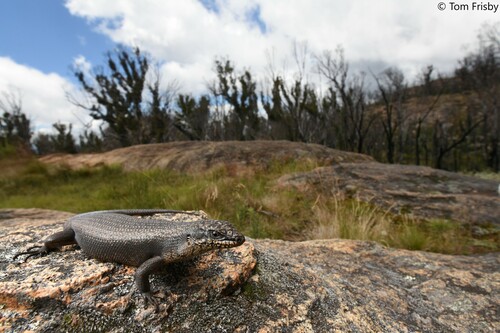
It primarily inhabits outcropping basalt bluffs of the Warrumbungle Ranges in New South Wales and rocky outcrops of the Great Dividing Range.
Subspecies Distribution
The subspecies Egernia saxatilis saxatilis is found almost exclusively in the Warrumbungle Range, while Egernia saxatilis intermedia occurs further east in the Great Dividing Range.
Preferred Shelter Types
These skinks prefer habitats with permanent shelter, including rock crevices beneath boulders, and sometimes timber on rocky outcrops.
Crevice Size Risks
Larger crevices can accommodate larger family groups, but they carry a higher risk of predator attack, especially from snakes.
Crevice Quality Determinants
Permanent rock crevice habitats vary in quality based on their sun exposure and the thermoregulatory benefits they provide to the lizards.
Shelter Proximity Behavior
Black rock skinks spend most of their time in and around these shelters, with all basking and foraging occurring near this permanent home.
Subspecies Habitat Differences
Egernia saxatilis saxatilis is exclusively rock-dwelling, while Egernia saxatilis intermedia can occupy arboreal habitats.
Interspecific Habitat Competition
If related Egernia species are present, Egernia saxatilis can be excluded from timber habitats and forced to remain entirely rock-dwelling.
Shelter Site Attachment
Black rock skinks have a strong attachment to their permanent shelters, since nearly all of their activity, basking, and foraging happens in the immediate area around the shelter site.
Shelter Desirability Factors
Shelter sites vary in desirability based on their sun exposure and resulting thermal properties.
Feeding Habits
Egernia saxatilis is active during the day. It feeds on small insects, and may also eat vegetation during some seasons.
Social Interaction Tendencies
It is particularly active in warm weather and engages in frequent social interactions. Individuals can be aggressive toward other skinks that enter their area.
Mating System Traits
The social organization of this species is complex; studies have documented monogamous tendencies, which differs from the general polygamous tendency of most reptiles.
Family Group Structure
Adults and their young can stay together for more than a year.
Initial Reproductive Traits
Females produce 2 or 3 young annually. The species is viviparous.
Lifespan and Maturity
Based on examination of similar species, it is thought that black rock skinks can live up to 10 years, and reach sexual maturity at 2 to 3 years of age.
Detailed Birthing Traits
More specifically, the species gives birth to 1 to 4 young annually between late February and early March.