About Carinascincus metallicus (O'Shaughnessy, 1874)
Common and Scientific Name
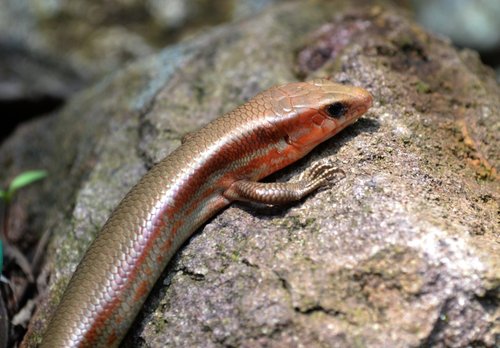
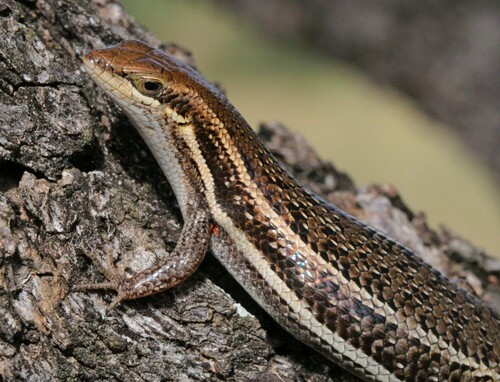
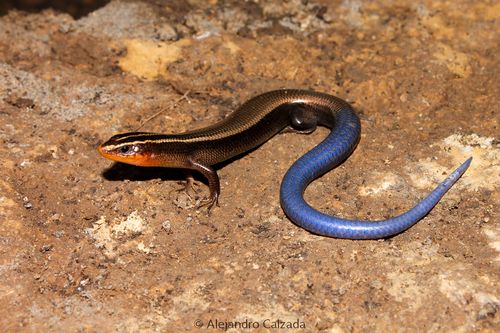
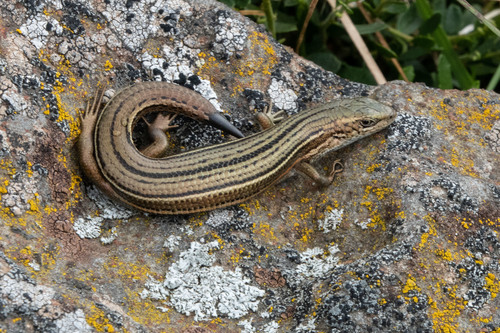
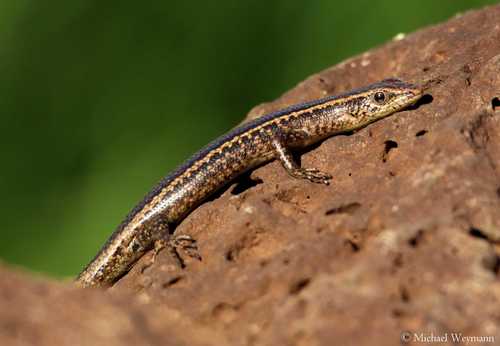
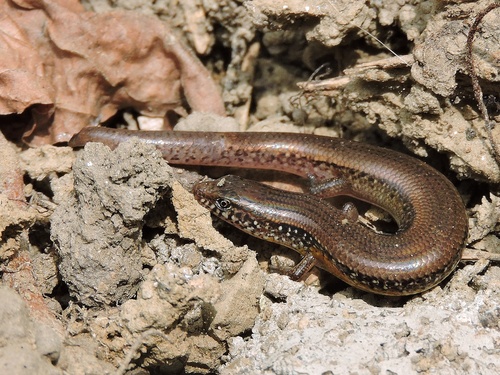
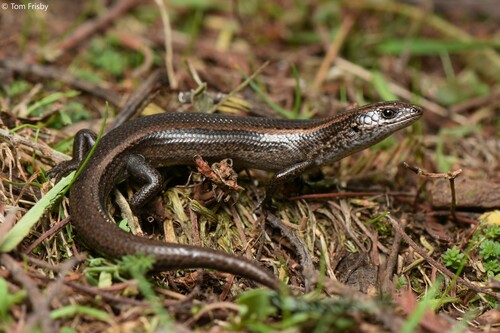
The Metallic Skink, scientifically Carinascincus metallicus, shows a range of colour variations that depend on its habitat.
Dorsal Coloration
It is typically brown with pale or dark streaks, which sometimes form distinct longitudinal stripes along its body. Its dorsal scales have a metallic sheen, which is the source of the species' common name.
Underside Coloration
The underside is usually grey or white with dark spots on the throat, chest, and tail, while the belly and lower tail often have an orange or pink hue.
Scale Characteristics
This species has 24–28 rows of keeled, or ridged, scales at mid-body.
Head Features
It has dark eyes, a movable lower eyelid with a transparent disc, and an ear opening of similar size.
Adult Body Length
Adult Metallic Skinks can grow up to 63 mm in length.
Geographic Range
The Metallic Skink is primarily found in Tasmania, and has more recently expanded into southern Victoria.
Habitats Occupied
It occupies a wide range of habitats, including coastal dunes, heathlands, dry and wet sclerophyll forests, and woodlands. It is most common in cool-temperate zones.
Thermoregulation
As a diurnal heliotherm, C. metallicus relies on external heat sources such as sunlight to regulate its body temperature.
Basking and Locomotion
It is primarily ground-dwelling, but often climbs rocks and fallen logs to bask.
Shelter Sites
During inactive periods, it shelters beneath rocks or in decomposing logs.
Elevation Range
The species occurs across a significant elevation range, from sea level up to 1500 metres, which reaches the subalpine tree line.
High Altitude Selective Pressure
At higher altitudes, colder conditions shorten the active season and limit basking opportunities, which exerts strong selective pressure on the species' thermoregulatory behaviour.
Reproductive Mode
The Metallic Skink is viviparous, meaning it gives birth to live young rather than laying eggs.
Mating Period
Mating occurs in autumn from March to May, with some late mating taking place in spring from September to November.
Copulation Trait
Males leave bite marks on the upper left chest of females during copulation.
Sperm Storage and Fertilisation
Females store sperm over winter from June to August while in brumation, and ovulation and fertilisation occur the following spring.
Gestation and Offspring Count
Gestation lasts approximately 18 weeks, after which females give birth to 1–8 offspring in summer or early autumn.
Embryonic Nutrition Source
While some nutrients are transferred to embryos through the placenta, most embryonic nutrition comes from the large yolk mass.
Thermal Effects on Offspring
Thermal conditions during embryonic development influence birth timing, size, mobility, and behaviour, which in turn affect offspring fitness.
Maternal Thermoregulation Benefit
Because C. metallicus gives birth to live young, females can regulate embryonic temperature by adjusting their basking behaviour, reducing exposure to harmful temperature extremes.
Thermoregulation Survival Advantage
This thermoregulatory flexibility may shape offspring traits, enhancing survival in specific environmental conditions.