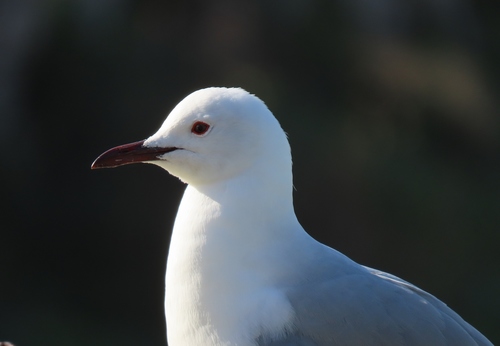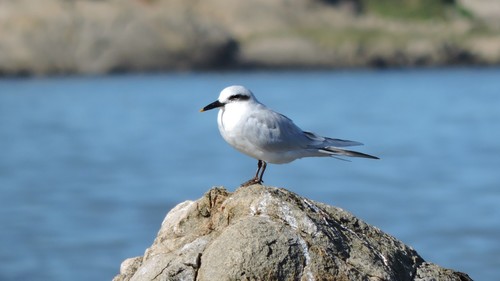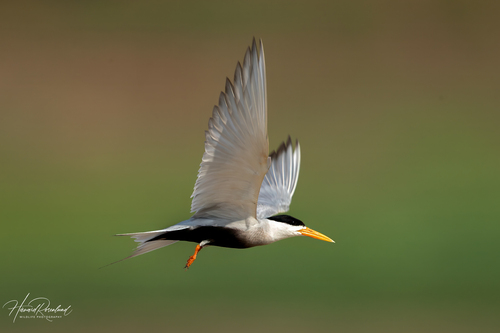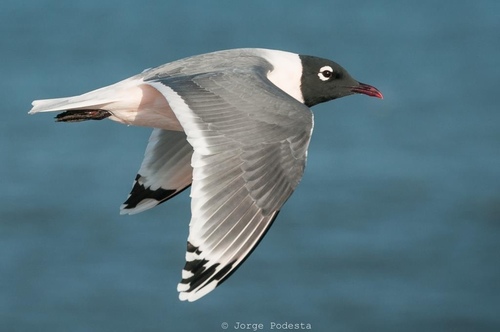
About Chroicocephalus novaehollandiae (Stephens, 1826)
Taxonomic Naming and Native Range
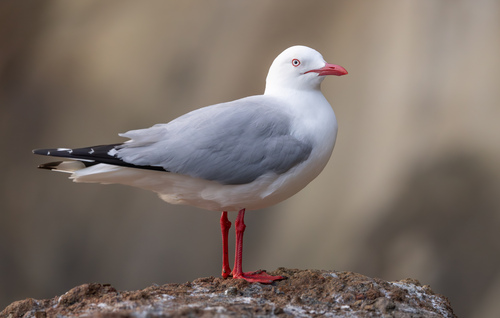
The silver gull, scientifically named Chroicocephalus novaehollandiae, is a gull species native to Oceania, and it is the most common gull found across Australia.
Distribution and Size Comparison to Pacific Gull
It occurs throughout the Australian continent, especially at or near coastal areas, and it is smaller in size than the Pacific gull (Larus pacificus), another gull species that lives in Australia.
Common Name Confusion with Herring Gull
This species should not be confused with the herring gull (scientific name Larus argentatus), which is referred to as "silver gull" in many other languages, including German (Silbermöwe), French (Goéland argenté), and Dutch (zilvermeeuw).
Herring Gull Differentiation
The herring gull is a much larger, more robust gull, and its range does not overlap with that of the silver gull.
Broader Geographic Distribution
Silver gulls are found in all Australian states, as well as in New Zealand and New Caledonia.
Urban Habitat Adaptation
The species is common near human settlements and beaches, and it has adapted well to urban environments, thriving around shopping centres and garbage dumps.
Population Growth Factors
Its successful adaptation to urban habitats has led to population growth in areas with human activity; the availability of nesting grounds is the only factor that limits the species' population growth.
Vagrant Records in the United States
Silver gulls have been recorded twice in the United States: one individual was shot in August 1947 at the mouth of the Genesee River, Lake Ontario, and another was photographed in Salem County, New Jersey, in autumn 1996.
Vagrant Record Origin Hypothesis
Both of these records are believed to involve birds that escaped from captivity.