About Chiromantis doriae (Boulenger, 1893)
Species Identity
Chiromantis doriae is a small frog species.
Adult Size
Adult males measure 25–27 mm in snout-vent length, while adult females measure 29–34 mm.
Head Morphology
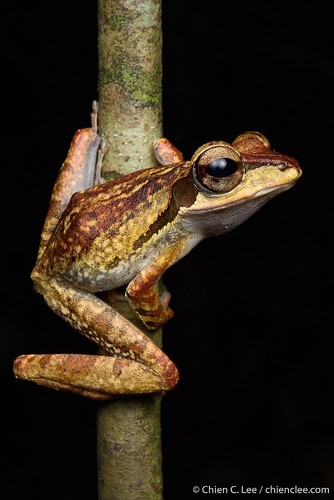
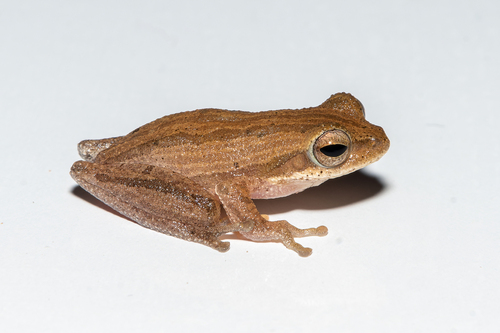
This frog has a pointed snout.
Dorsal Coloration
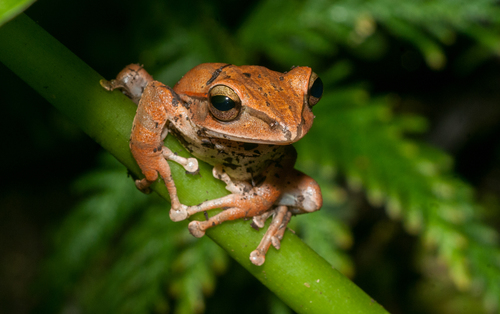
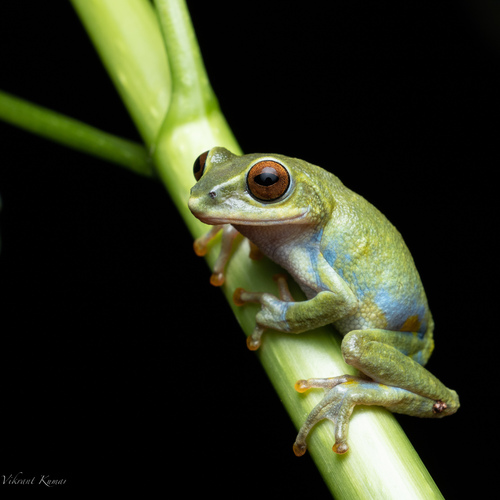
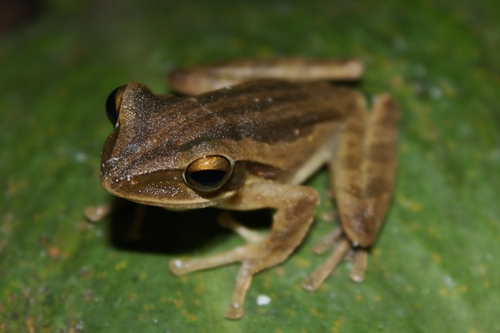
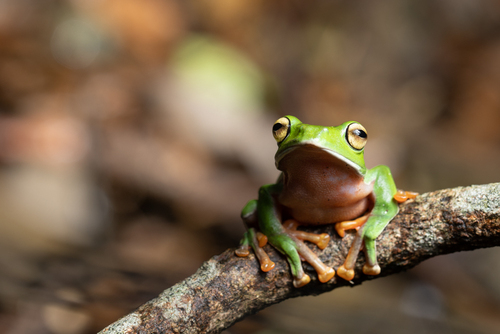
The dorsal skin is bright yellow or brown with brown stripes.
Leg Coloration
The backs of the legs are purple; some individuals have black stripes on these purple leg areas.
Ventral Coloration
Portions of the neck are white, and the undersides of the back legs are red.
Arboreal Adaptation
Toe disks help the frog climb, as this species is arboreal, meaning it lives in trees.
Natural Habitats
Its natural habitats include closed-canopy forests and grasslands.
Anthropogenic Habitats
It has also been observed in rice paddies and on plants growing near railroad tracks.
Elevation Range
This frog has been recorded at elevations ranging from 8 to 1630 meters above sea level.
Conservation Status
The International Union for Conservation of Nature classifies this frog as a species of least concern for extinction, due to its large range.
Protected Areas in Range
This range includes several protected areas: Phou Louey National Biodiversity Conservation Area in Laos and Lawachara National Park in Bangladesh.
Threats
However, deforestation to clear land for agriculture, particularly for cash crops like coffee, rubber, and tea, does pose some threat to this species.
Reproductive Behavior
For reproduction, females search out permanent bodies of water and lay their eggs in a foam nest attached to the undersides of leaves that overhang the water.
Development
This species develops through a larval stage to reach maturity.