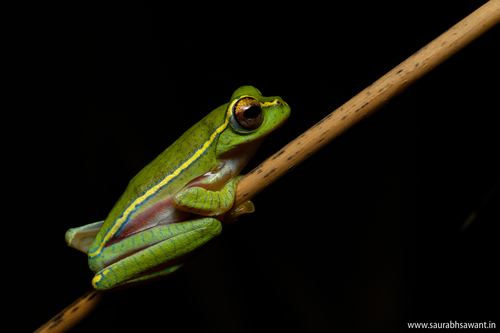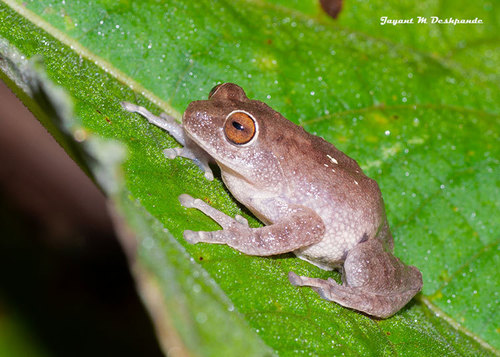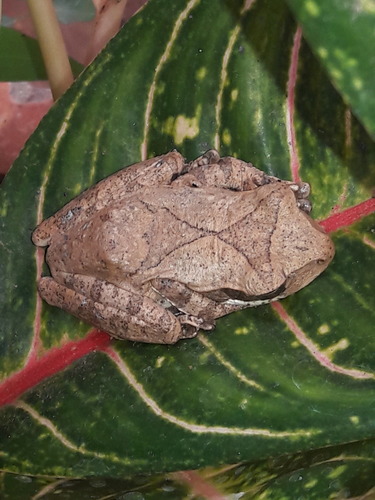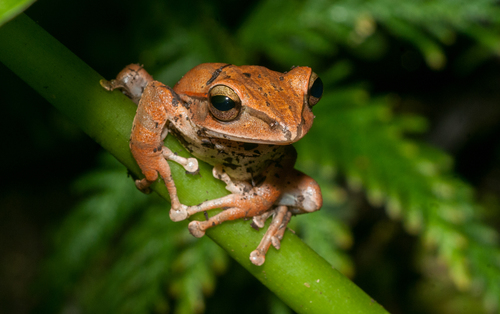
About Polypedates macrotis (Boulenger, 1891)
Adult Size
Male Polypedates macrotis reach a snout–vent length of approximately 60 mm (2.4 in), while females grow to 85 mm (3.3 in).
Tadpole Size
Fully grown tadpoles can be up to 60 mm (2.4 in) in total length.
Dorsal Coloration
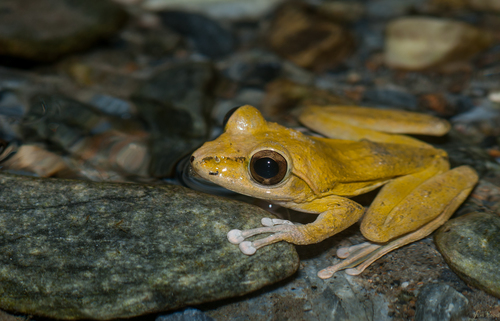
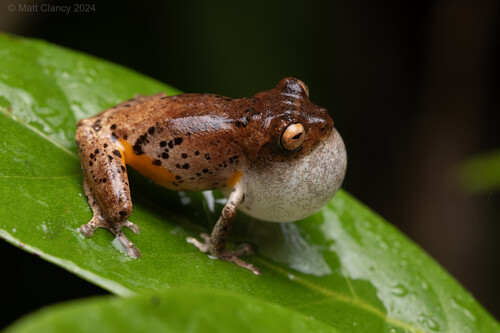
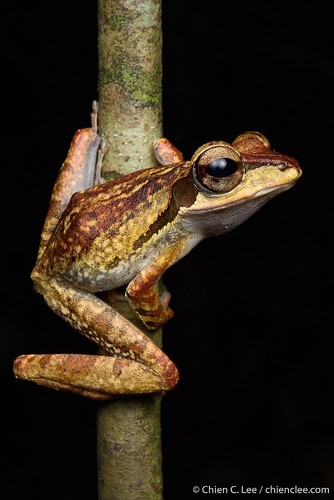
The dorsum of this frog is brown, with a darker band that starts behind the eye, covers the tympanum, and tapers along the side of the body.
Taxonomic Relationship
Polypedates macrotis is closely related to Polypedates leucomystax, differing only slightly from it in colouration and body proportions.
Common Name
Common names for this species include the dark-eared tree frog.
Range Abundance
It is a locally abundant species within its native range.
Geographic Distribution
Its distribution covers specific locations across multiple countries and regions: Thailand (Nakhon Si Thammarat, Narathiwat, Pattani, Songkhla), Malaysia (Johor, Kelantan, Kuala Lumpur, Negeri Sembilan, Pahang, Penang, Putrajaya, Sabah, Sarawak, Selangor), Indonesia (Aceh, Bangka Belitung, Jambi, Lampung, North Sumatra, Riau, South Sumatra, West Java, West Sumatra), Brunei, the Sulu Archipelago, and several western Philippine islands (Palawan, Busuanga, Calauit, Jolo, and Dumaran).
Forest Habitat
This species inhabits primary forests and forest-edge areas.
Human-Altered Habitat
It also occurs in and around human settlements, including large cities and towns.
Aquatic Habitat Proximity
Adult frogs are typically found close to small streams, ponds, puddles, small pools, swamps, and wet rainforests with slow dripping or trickling water sources.
Epiphytic Habitat Use
They also often occupy captured rainwater held inside epiphytic plants, ferns, and similar structures.
Reproductive Behavior
For reproduction, Polypedates macrotis deposit their eggs in foam nests that are attached to leaves or twigs overhanging standing water bodies such as ponds and ditches.