About Caprimulgus macrurus Horsfield, 1821
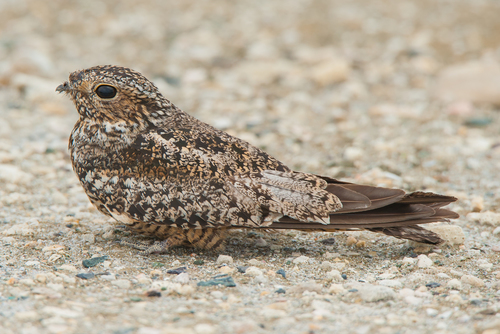
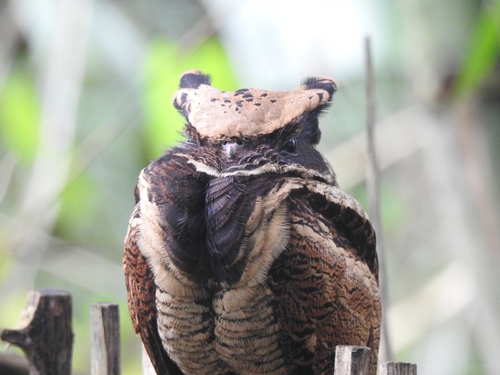
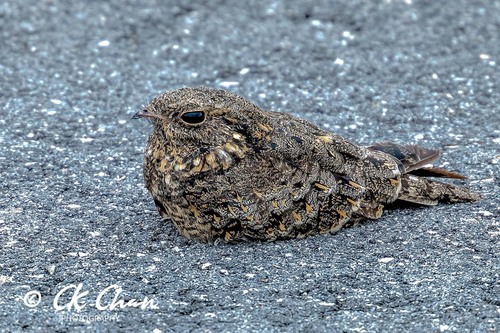
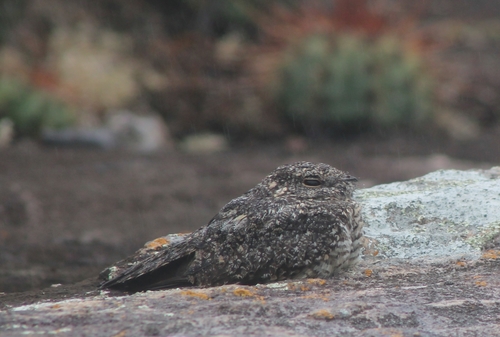
The large-tailed nightjar (Caprimulgus macrurus Horsfield, 1821) measures approximately 31.5 to 33 cm in length.
Camouflage Adaptation
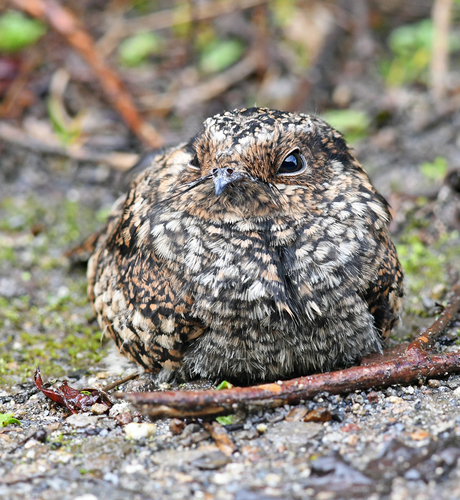
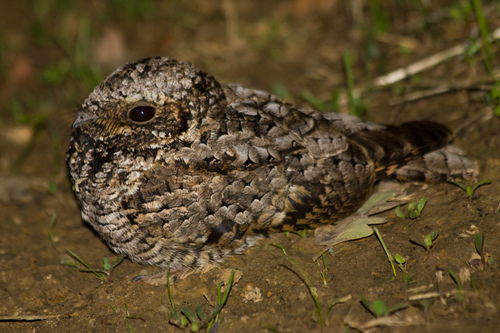
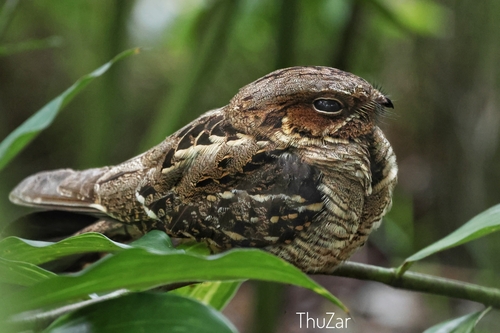
Its cryptic plumage and colouration provide effective camouflage within its natural habitat.
Male Plumage Markings
Males have distinctive markings: a pale crown with a dark median stripe, and a prominent row of black scapular feathers bordered by broad buff or whitish-buff fringes.
Male Throat and Tail Features
Males also have a white throat patch and a long, broad brown tail marked with uneven dark bars.
Male Flight Markings
Large white patches on its primaries and outer tail feathers are visible when the bird is in flight.
Female Plumage Base
In contrast, females have paler, greyer plumage than males.
Female Distinctive Markings
They have smaller buff-coloured wing patches and less vibrant tail patches, giving them a drabber overall appearance.
Large-tailed nightjars inhabit a diverse range of habitats in subtropical and tropical zones.
Resident Range Countries
This species is resident in Australia, Bangladesh, Bhutan, Brunei, Cambodia, China, India, Indonesia, Laos, Malaysia, Myanmar, Nepal, Pakistan, Papua New Guinea, Philippines, Singapore, Thailand, Timor-Leste and Vietnam.
Geographic Distribution Span
Its distribution covers a wide geographic area, stretching from northern India through eastern China and Indonesia to northern Australia.
Common Habitats
The species commonly lives in secondary forests, forest edges, plantations, and wooded parks.
Agricultural Landscape Presence
It has also been observed in agricultural landscapes, where its presence may be of significant economic interest to farmers, as large-tailed nightjars are believed to contribute to biological control of insect pests.
Little is known about the large-tailed nightjar's nesting and roosting behaviour.
Breeding Season Timeline
The breeding season most likely runs from mid-March to late September.
Egg Laying Habits
Females do not build nests; instead, they lay 1 to 2 eggs in a shallow depression of leaf litter on the ground.
Egg Characteristics
The eggs range in colour from pinkish-buff to pale yellow.
Chick Camouflage Plumage
Chicks have mealy brown feathers that provide good camouflage at their nest site.
Chick Early Development
Nightjar chicks hatch covered in downy feathers, and may be moved away from the nest site 1 to 2 days after hatching.
Chick Movement Behaviour
Chicks move every night, and siblings will sometimes separate, likely to avoid being detected by predators.