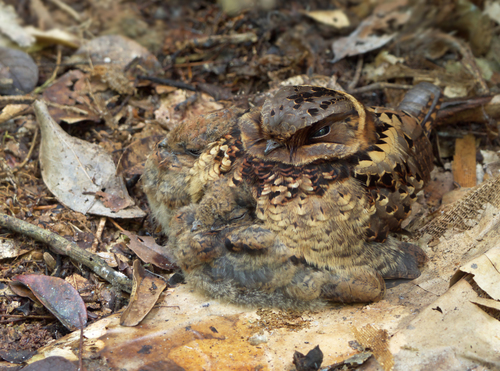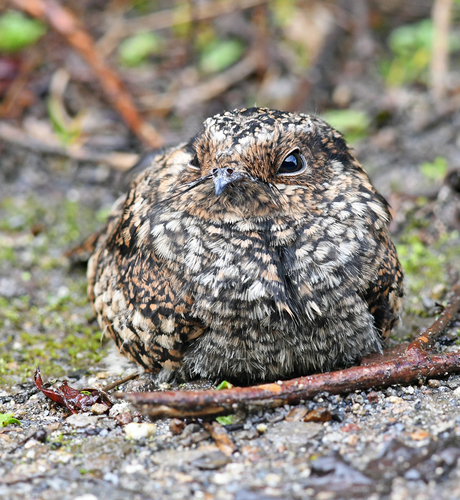
About Systellura longirostris (Bonaparte, 1825)
Common Name and Morphological Variation
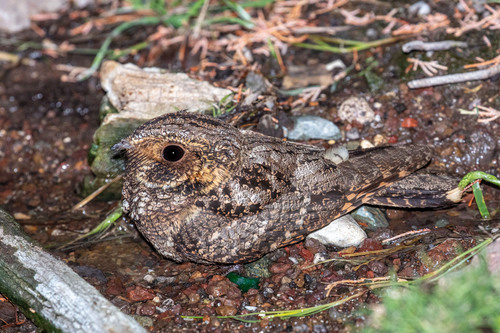
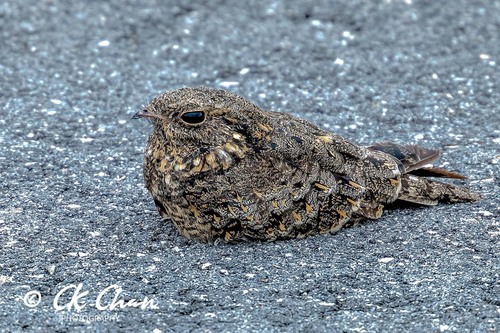
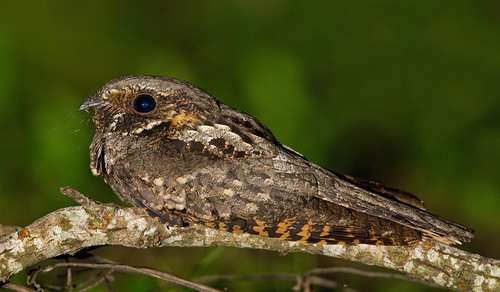
Systellura longirostris, commonly called the band-winged nightjar, displays significant morphological variation across its large range. However, as its common name suggests, it always has a distinctive wing band, which is white in males and buff in females; this band is best visible when the bird is in flight.
Overall Length
This nightjar species has an overall length ranging from 20 to 27 cm; in Ecuador, individuals measure 21.5 to 23 cm. The iris, bill, legs, and feet are colored from brown to blackish brown.
Upper Body Plumage
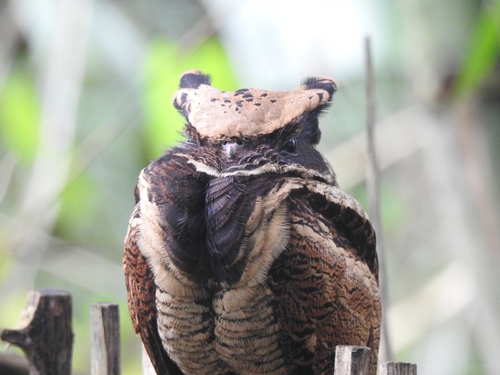
Upper body plumage includes combinations of greyish-brown, blackish-brown, brownish-orange, pale yellowish-brown, and greyish-white. The back of the neck ranges from brownish orange to yellowish brown.
Wing-Coverts and Scapulars
Wing-coverts are greyish-brown, covered with dense spots ranging from yellowish to greyish brown. Scapulars are blackish brown.
Throat Markings
Males sometimes have a white marking around the lower throat, while females sometimes have a yellowish-brown marking in this area. The belly and flanks are brown or yellowish brown.
Flight Markings by Sex
When in flight, males have white markings on the edge of the first four primaries, and a white band on the first and fourth rectrices; females do not have white markings on the tail. For males specifically, the face is greyish brown with brown markings, and the crown and edges of the forehead are greyish white.
Male Neck and Dorsal Features
A yellowish-brown to brownish-orange collar forms along the edges of the neck. The dorsal side is dark greyish-brown with scattered blackish-brown spots.
Male Wing Features
The alula and edges of the wing-coverts are white. The main background of the wing-coverts is predominantly brown, with yellowish brown spotting and additional brown spots.
Male Scapulars and Primaries
Scapulars are blackish brown, with yellowish-brown dots and brown spots. The 7th to 10th primaries and all secondary feathers are brown, with a mid-length white streak.
Male Outer Primaries and Tertiaries
The edges of P1 to P6 are yellowish-brown, with brownish-orange areas marked with small brown spots. Tertiary feathers are greyish brown with brown dots.
Male Tail Features
The tail is mainly brown; it has white markings on the third and fifth rectrices, which are outlined with brownish orange and yellowish brown. A 10mm white band typically crosses half of the middle-upper inner web of these feathers, and white dots with yellowish brown appear along the outer edge over this band on the second and third rectrices.
Male Ventral Plumage
The chin and upper throat are yellowish brown, with a prominent white band at the bottom of the throat. The breast, belly, flanks, and ventral coverts range from greyish brown or brown to yellowish brown.
Female Plumage Differences
Unlike males, females have a yellowish-brown throat. Females show brownish orange to yellowish brown coloration across the 7th to 10th primaries, and lack all white markings on the tail.
Juvenile Plumage
Juveniles and immature individuals are similar to adults but have less speckled plumage, with a narrow small brownish-orange band on the primary feathers. Fledglings hatch with cryptic plumules that help them blend into surrounding ground to avoid predation.
Juvenile Plumage Development
It takes approximately eight days for this juvenile plumage to begin developing the coloration of adult birds. Fledglings hatch with their eyes partially opened, and remain motionless during their first day after hatching.
Fledgling Development and Parental Care
First flights or short glides begin after 12 days, under the vigilance of an adult; it is not specified whether parental care is shared between both parents or provided by only one. Fledgling movement distance increases as the birds grow older.
Egg and Fledgling Weight
The average weight of a band-winged nightjar egg is approximately 3.03 g, while the average weight of a fledgling is 4.63 ± 0.25 g.
Distribution and Elevation Range
The band-winged nightjar is a South American species found at elevations up to 4200 m. Its habitat ranges from forest edges to semi-arid shrublands, open areas, and even the roofs of buildings.
Activity Period and Roosting Habits
These are mainly nocturnal birds. They roost across a variety of environments, from the forest floor to human buildings.
Foraging Behavioral Plasticity
In Rio de Janeiro, band-winged nightjars have demonstrated behavioral plasticity: they roost near light sources to feed on the insects attracted to these areas. Band-winged nightjars feed on insects, primarily moths, beetles, and termites.