About Nyctipolus hirundinaceus (von Spix, 1825)
Size and Weight
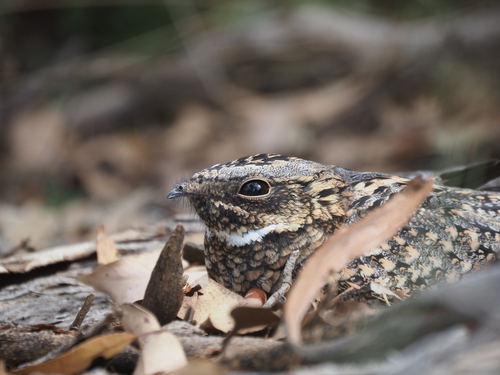
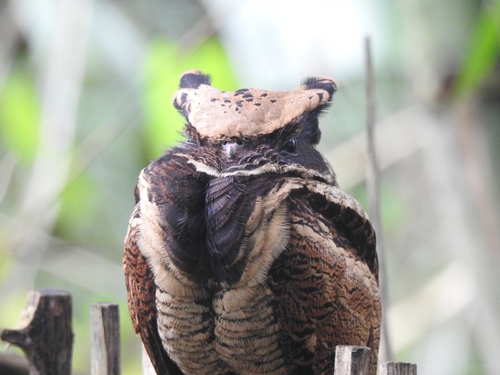
The pygmy nightjar (Nyctipolus hirundinaceus) is 16 to 20 cm (6.3 to 7.9 in) long; one measured male weighed 32 g (1.1 oz).
Nominate Male Upperparts
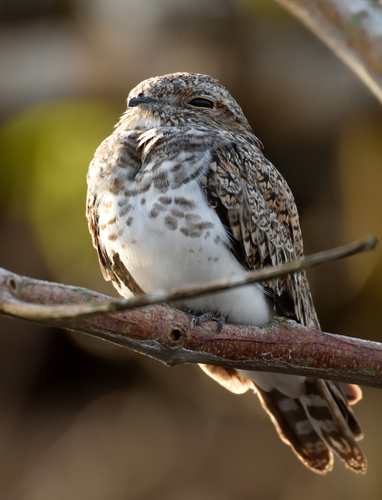
Males of the nominate subspecies have brown upperparts marked with grayish white and cinnamon speckles.
Nominate Male Tail
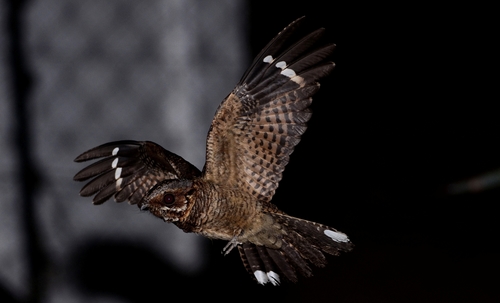
Their tail is brown with paler bars, and some feathers have white tips.
Nominate Male Throat and Breast
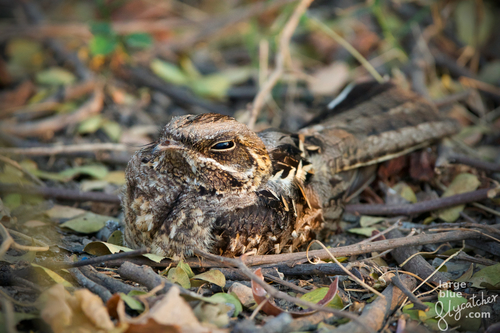
They have a buffy throat stripe, and a white chin and throat with brown bars.
Nominate Male Underparts
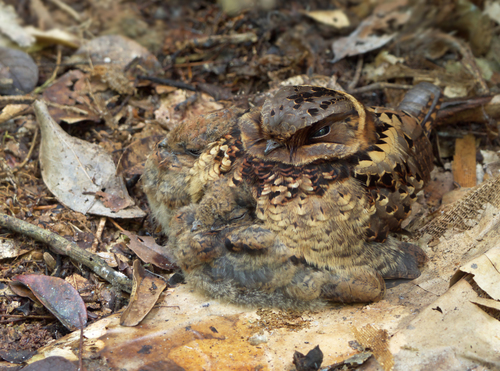
The upper breast has a broad buffy cinnamon band with brown spots; the lower breast is brown with pale spots and bars, and the belly and flanks are buff with brown bars.
Nominate Female Plumage
Females are similar to males but paler, and lack white coloration on the tail.
Subspecies N. h. cearae Plumage
The subspecies N. h. cearae is paler than the nominate subspecies, with a more rufous belly and lighter brown bars on the underparts, and more white on its tail.
Subspecies N. h. veilliardi Plumage
The subspecies N. h. veilliardi is darker than the nominate subspecies.
Nominate Subspecies Distribution
The nominate subspecies of pygmy nightjar is found in the northeastern Brazilian states of Piauí, Bahia, and Alagoas.
N. h. cearae Distribution
N. h. cearae is also found in northeastern Brazil, ranging from northern Ceará south into extreme northern Bahia.
N. h. veilliardi Distribution
N. h. veilliardi is found in southeastern Minas Gerais and west central Espírito Santo, which are states in eastern Brazil.
General Habitat
The pygmy nightjar inhabits dry landscapes of scrub and deciduous forest.
Caatinga Region Habitat
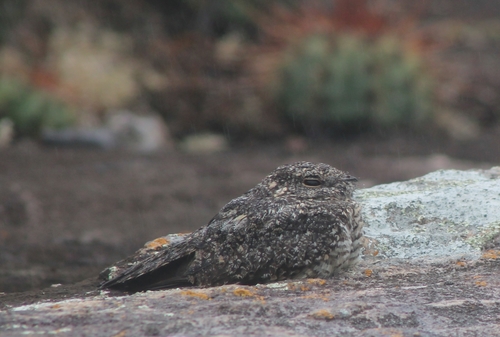
Within the caatinga region, it favors gravelly or stony sites.
Atlantic Forest Region Habitat
Within the Atlantic Forest region, it is typically found at stony outcrops.