About Caprimulgus asiaticus Latham, 1790
Plumage Overview
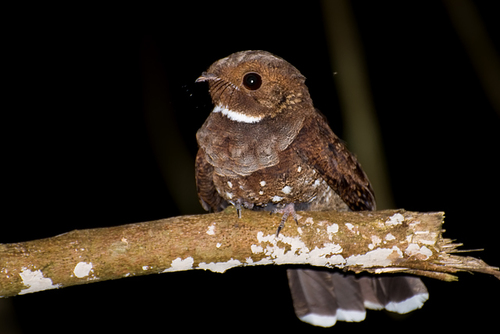
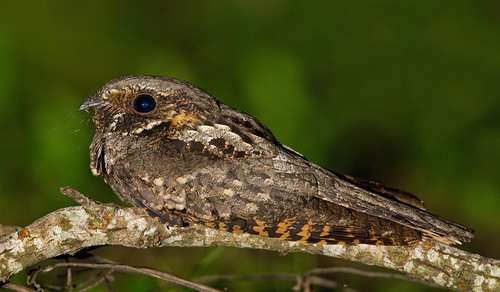
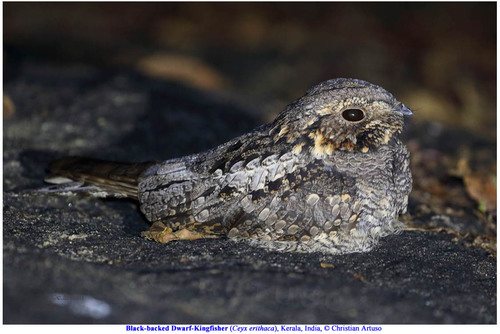
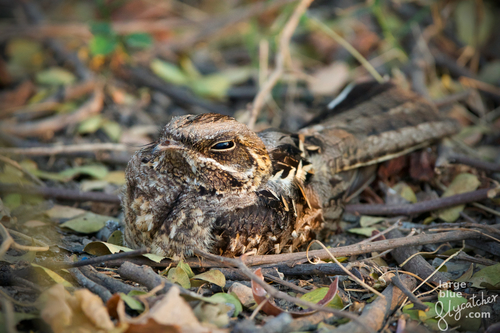
This small, short-tailed nightjar has white tail corners, a golden nape and collar, dark cheeks, and white patches on the sides of the throat. Its crown is grey, and its breast is finely barred in brown.
Sexual Dimorphism
Males of this species have more white on the tail, while females have heavier streaking on the crown.
Similar Species Distinction
It can be distinguished from Sykes's nightjar by its dark undertail, and from Jerdon's nightjar by its shorter tail and the white throat-side patches.
Vocalization
Its call is distinctive, and has been compared to a stone skipped across a frozen lake — this comparison led to it being called the "ice-bird" in colonial India — or a rapidly bouncing ping-pong ball that gradually comes to rest.
Flight Characteristics
It flies after sundown, with an easy, silent flight that resembles that of a moth.
Daytime Behavior
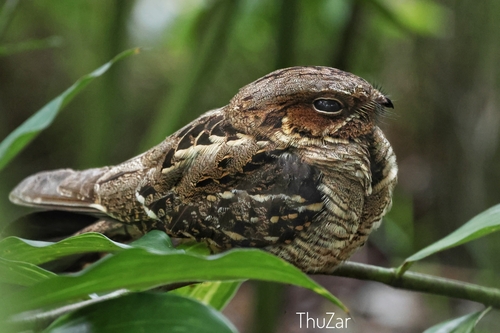
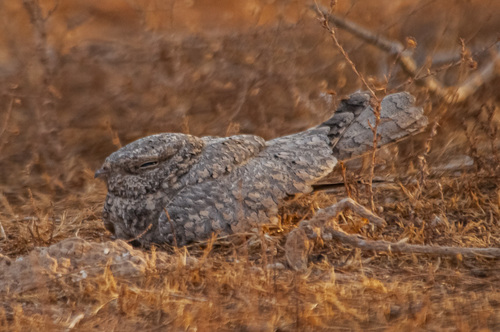
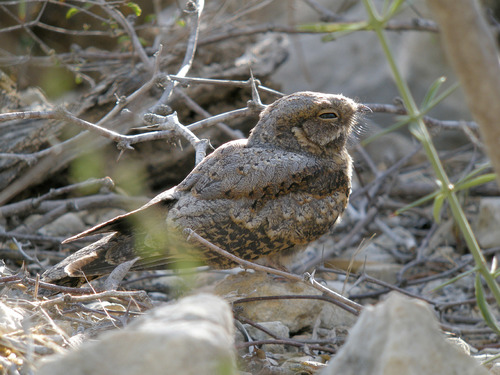
During the day, the Indian nightjar remains motionless on the ground, hidden by its camouflaged plumage that blends in with soil, making it very hard to spot.
Habitat
This species lives in open woodland, scrub, and cultivated land. It typically perches on the ground or in low trees, and does not use high perches.
Distribution Range
Its distribution ranges from northwestern India and adjacent parts of Pakistan, but it does not occur in arid desert areas. It is found south of the Himalayas at low elevations, extending east through Bangladesh and Myanmar to Vietnam, and also occurs in Sri Lanka.
Nesting Behavior
This nightjar does not build a nest. Its two beautifully marbled creamy pink eggs are laid directly on bare ground between February and September.
Egg Incubation
The brooding parent sits tightly on the eggs and is well camouflaged. Eggs may be moved short distances by the parent.
Chick Appearance
Newly hatched chicks are covered in down, with brown plumage on their upper side and light rufous plumage on their underside.
Hatchling Traits
Chicks hatch with their eyes open, can sit upright, and can produce a weak sound.