About Antrostomus vociferus (A.Wilson, 1812)
Antrostomus vociferus, commonly called the eastern whip-poor-will, is a medium-sized nightjar.
Standard Measurements
It measures 22–27 cm (8+1⁄2–10+1⁄2 in) in length, has a wingspan of 45–50 cm (17+1⁄2–19+1⁄2 in), and weighs 42–69 g (1+1⁄2–2+7⁄16 oz). Additional standard measurements are: wing chord 14.7 to 16.9 cm (5+13⁄16 to 6+5⁄8 in), tail length 10.5 to 12.8 cm (4+1⁄8 to 5+1⁄16 in), bill length 1 to 1.4 cm (3⁄8 to 9⁄16 in), and tarsus length 1.5 to 1.8 cm (9⁄16 to 11⁄16 in).
Plumage Patterns
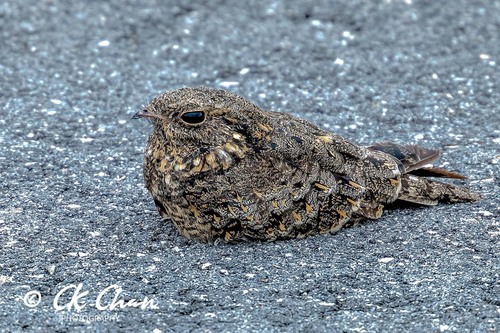
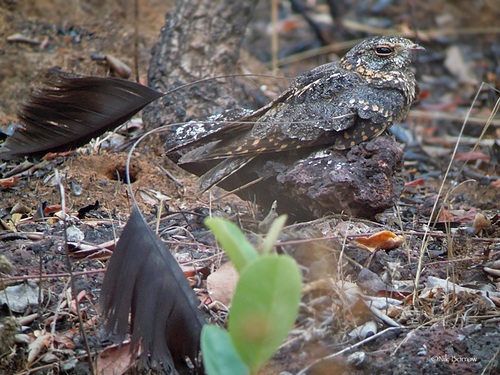
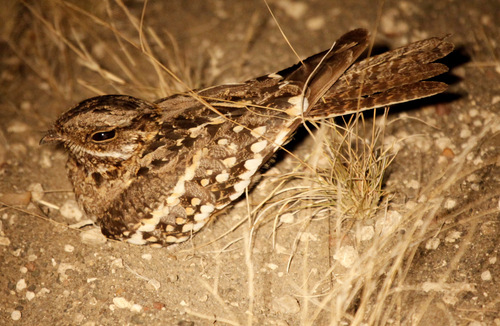
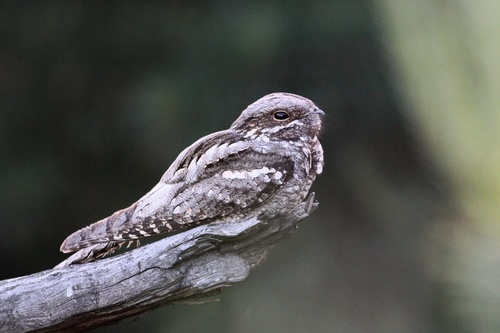
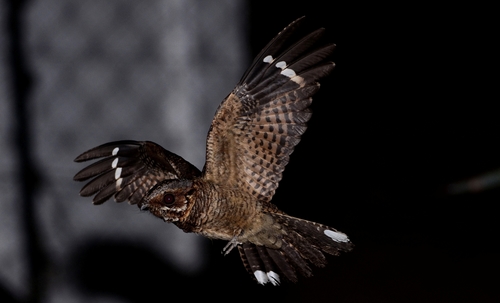
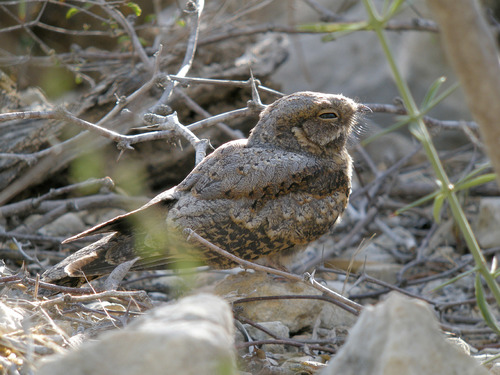
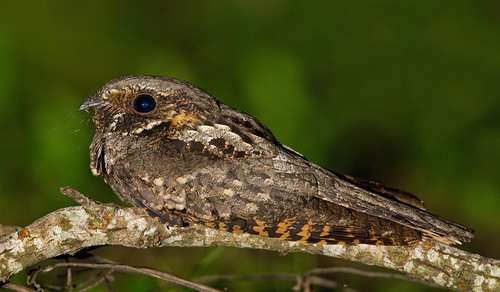
Adult eastern whip-poor-wills have mottled plumage: upperparts are grey, black, and brown, while underparts are grey and black. They have a very short bill and a black throat.
Sexual Dimorphism
Males have a white patch below the throat and white tips on the outer tail feathers; in females, these same areas are light brown. This species is sometimes confused with the closely related chuck-will's-widow (Antrostomus carolinensis), which has a similar call that is lower-pitched and slower.
Breeding Range
In terms of ecology, eastern whip-poor-wills breed in deciduous or mixed woodlands across central and southeastern Canada and the eastern United States. They migrate to the southeastern United States, eastern Mexico, and Central America to spend the winter.
Foraging Behavior
These birds forage at night, catching flying insects, and typically sleep during the day. They nest on the ground in shaded spots among dead leaves, and usually lay two eggs per clutch.
Nesting Defense
The bird will usually stay on its nest unless a person almost steps on it.
Taxonomic Split
Previously, the whip-poor-will was classified as a single species, but it has since been split into two separate species. Eastern populations are now classified as the eastern whip-poor-will, while the disjunct population in the southwestern United States and Mexico is classified as the Mexican whip-poor-will, Antrostomus arizonae.
Split Rationale
The split was based on differences in geographic range, vocalizations, egg coloration, and genetic differentiation shown by DNA sequencing.