About Calidris ruficollis (Pallas, 1776)
Common Name and Taxonomy
Calidris ruficollis, commonly called the red-necked stint, is one of the smallest wader species. It is very similar to the little stint (Calidris minuta), and the two species were once considered to be the same single species.
General Identification Traits
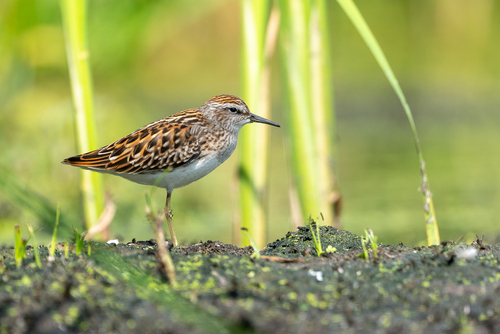
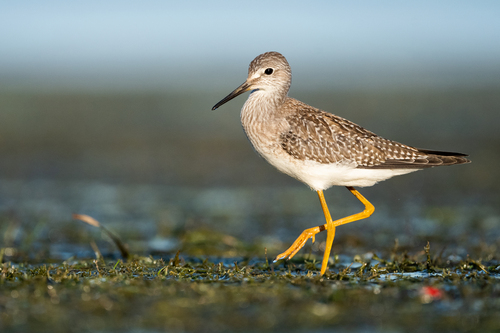
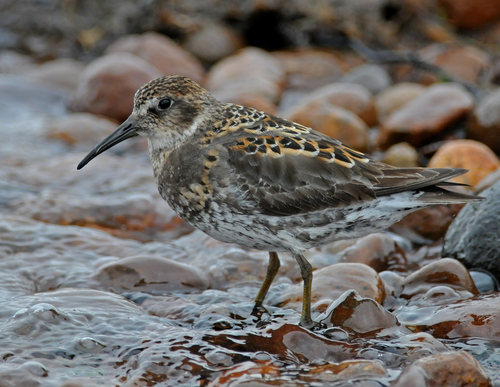
The red-necked stint can be told apart from most other waders by its small size, fine dark bill, dark legs, and quicker movements, with the exception of other dark-legged stint species.
Standard Measurements
This species measures 13–17 cm (5.1–6.7 in) in total length, has a wingspan of 28–37 cm (11–15 in), and weighs 21–51 g (0.74–1.80 oz).
Sandpiper Comparison Traits
Across all plumage types, it can be distinguished from the western sandpiper and semipalmated sandpiper by its combination of a fine bill tip, unwebbed toes, and longer primary projection.
Breeding Adult Plumage
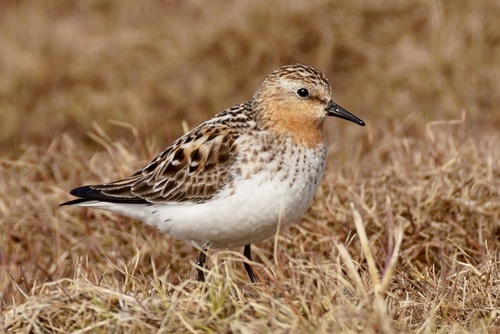
Breeding adult red-necked stints have an unstreaked orange breast with dark markings along the lower border, and a white V-shape on the back.
Winter Plumage Identification
Identification is more difficult for individuals in winter plumage, though red-necked stints are shorter-legged and longer-winged than little stints.
Juvenile Plumage
Juvenile red-necked stints have more contrasting mantle plumage and weaker white lines running down the back than the closely related little stint.
Vocalization
The call of this species is a hoarse "stit".
Migratory Status
Red-necked stints are strongly migratory.
Core Breeding and Non-breeding Range
They breed along the Arctic coastline of eastern Eurasia, and spend the non-breeding season in Southeast Asia and Australasia, reaching as far south as Tasmania and New Zealand.
Western Europe Vagrant Records
They are rare vagrants to western Europe, with confirmed records from Belgium, Denmark, Great Britain, Germany, Ireland, the Netherlands, and Sweden.
Americas Occurrence
They are frequently sighted in western Alaska, and are occasionally seen in other parts of the Americas.
General Foraging Behavior
Red-necked stints forage on wet grassland and soft mud, and primarily pick out food by sight.
Non-breeding Foraging Habitat
In their non-breeding habitat, they feed on intertidal mudflats and along the muddy margins of freshwater lakes.
Diet Composition
Their diet consists mainly of insects and other small invertebrates.