About Gallinago media (Latham, 1787)
Adult Size Measurements
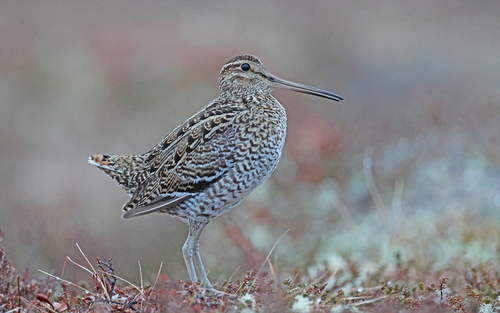
Adults of Gallinago media measure 26–30 cm (10–12 in) in length, with a wingspan of 42–50 cm (17–20 in). They are only slightly larger than the common snipe, but much bulkier, and have a shorter bill.
Plumage Patterns
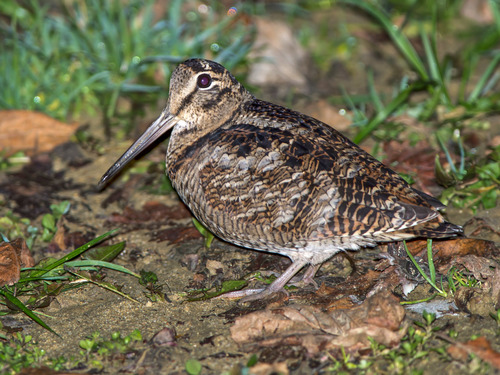
Their upper bodies are mottled brown, while their underbodies are barred. They have a dark stripe running through the eye.
Wing Characteristics
Their wings are broad, and a pale wingbar can be seen when the bird is in flight.
Common Call Description
The common call of Gallinago media is described as a faint yeah.
Group Display Calls
Group mating display calls can be heard from distances of more than 300 m (330 yd), and sound like a mix of firecracker wind-up and xylophone sounds.
Long-Distance Flight Capability
Gallinago media is known for its ability to fly fast and non-stop over very large distances. It can reach speeds of up to 97 km/h (60 mph), and researchers have found little evidence that this speed is aided by wind.
Recorded Non-Stop Flight
Individual Gallinago media have been recorded flying non-stop for 84 hours across 6,760 km (4,200 mi) at altitudes as high as 8700 metres.
Wing Aerodynamics
Their wings, which lack pointed tips, are not especially aerodynamic.
Flight Fuel Strategy
Despite having opportunities to stop to feed, the species typically does not do so, instead relying on stored fat reserves.
Breeding Lek Displays
During the breeding season at dusk, males perform displays at a lek, or display arena, where they stand erect with a puffed chest and fanned tail. They may jump into the air, and produce a variety of rattles, clicks, buzzes and whistles during their displays.
Nesting Behavior
Females lay three to four eggs in a well-hidden ground nest.
Foraging Behavior
Gallinago media forages in soft mud, probing the mud or picking up food by sight.
Diet Composition
It mainly feeds on insects and earthworms, and occasionally eats plant material.
Camouflage Trait
Due to effective camouflage in its habitat, the species is difficult to spot.
Flushing Behavior
When flushed from cover, it flies straight for a considerable distance before dropping back into vegetation.