About Bradypodion occidentale (Hewitt, 1935)
Common Name and Size
Bradypodion occidentale, commonly called the Namaqua Dwarf Chameleon, is relatively large for a dwarf chameleon, reaching a maximum total length of 16 cm.
Body and Tail Morphology
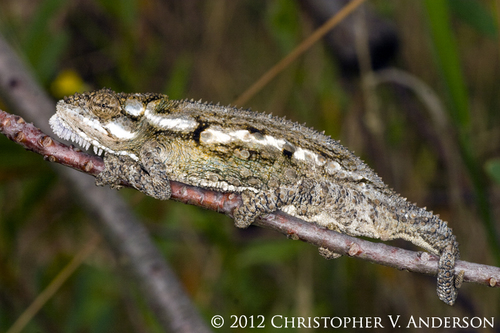
It has a stocky body build and the shortest tail of any species in its genus, Bradypodion.
Gular Groove Features
A set of distinctive gular grooves runs from under its chin down to the top of its chest.
Base Coloration
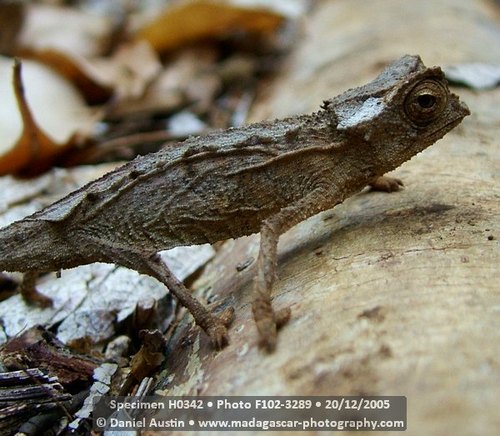
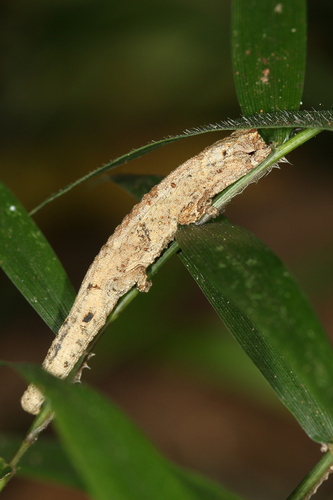
Its base coloration is a dull, mottled brown-grey.
Geographic Range
This species is native to coastal regions of the far southwestern tip of Africa, occurring in a continuous coastal belt from Melkbosstrand near Cape Town, South Africa in the south, northward to Lüderitz, Namibia.
Primary Habitat
Within this range, it primarily inhabits coastal Strandveld vegetation, and only very rarely occurs further inland.
Distribution Overlap with Related Species
Near Cape Town in the southern part of its range, its distribution overlaps slightly with that of the Cape Dwarf Chameleon, though the two species prefer different habitats.
Morphological Differences from Cape Dwarf Chameleon
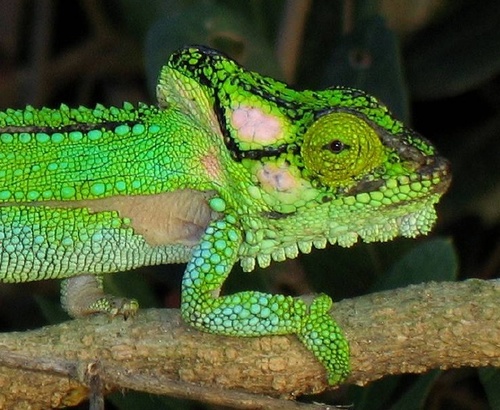
The two species are also easily distinguishable: the Cape Dwarf Chameleon has much brighter colouration, a lighter body build, a longer tail, and a blunter nose and casque than Bradypodion occidentale.
Threat from Domestic Cats
Near human settlements, Namaqua Dwarf Chameleons are often killed by domestic cats.
Habitat Loss Threat
This species is also threatened by habitat loss, as coastal vegetation is increasingly disturbed for development.