About Botaurus poiciloptilus (Wagler, 1827)
Taxonomy and Sexual Size Dimorphism
The Australasian bittern, with the scientific name Botaurus poiciloptilus (Wagler, 1827), is a relatively large, stocky bird that shows distinct size dimorphism between sexes. Males can weigh up to 1.4 kg (3.1 lb), while smaller females typically weigh around 0.9 kg (2.0 lb).
Plumage Similarity Between Sexes
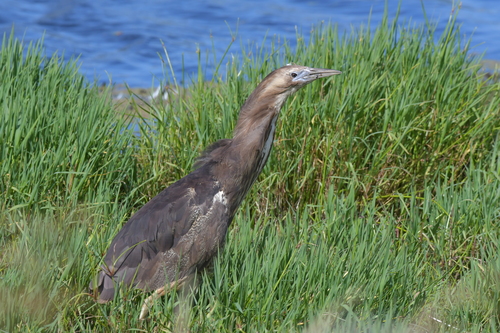
There is minimal additional sexual dimorphism outside of size, as males and females have very similar plumage. Their beige, streaked and mottled feathers give them effective camouflage in the reeds and rushes of their wetland habitats.
Physical Morphology
This species is characterized by a long yellow beak, broad neck, and short legs. Adults stand around 75 cm tall on average, and some individuals can grow up to one metre in height.
Juvenile Features and Maturation Changes
Juvenile Australasian bitterns have lighter mottling on their outer wings and yellowish irises, both of which darken as the birds reach maturity. Currently, there is limited specific information available on the timing and progression of these plumage changes as the birds mature.
Species Distribution Range
The Australasian bittern inhabits a range of freshwater wetland environments across New Zealand, southeastern Australia, southwestern Australia, southern Australia, and New Caledonia. The biogeographical origins of the species, as well as dispersal events between Australia, New Zealand, and New Caledonia, remain largely understudied.
Habitat Preferences
It is confirmed that the Australasian bittern strongly prefers densely vegetated wetlands with abundant rushes, reeds, and sedges, and the species can thrive in both temperate and subtropical climates. These birds fly long distances seasonally, reaching up to 600 km, to access and use coastal wetlands.
Historical Australian Population Size
Before approximately 2010, Australia's Australasian bittern population was estimated at 2,500 mature individuals. A severe drought around 2010 caused a sharp population decline, and current estimates place the total Australian population at fewer than 1,000 mature individuals.
Australian Conservation Status
This decline led to the species being classified as Endangered under the Australian Environment Protection and Biodiversity Conservation Act 1999. Today, it is estimated that over half of Australia's entire Australasian bittern population lives in New South Wales (NSW).
Breeding Habitat in New South Wales
Recent research has found that during the breeding season, rice fields in the Riverina region of NSW host between 500 and 1,000 bittern individuals, which is the largest known breeding population of the species. Before this research was conducted, the importance of agricultural wetlands, particularly rice fields, as critical habitat for this cryptic species had not been recognized.
New Zealand Population Status
In New Zealand, earlier population estimates for the Australasian bittern are likely higher than the actual population size. Habitat degradation, combined with fewer recorded booming males at key wetland sites including Whangamarino, the most important New Zealand habitat for the species, indicates that the species has a more precarious conservation status there than previously thought.
Ecological Indicator Role
Because this species depends on specific wetland habitats that have stable water levels and abundant food sources, it acts as a key indicator for evaluating overall wetland health.