About Ardea melanocephala Children & Vigors, 1826
Taxonomy and Naming
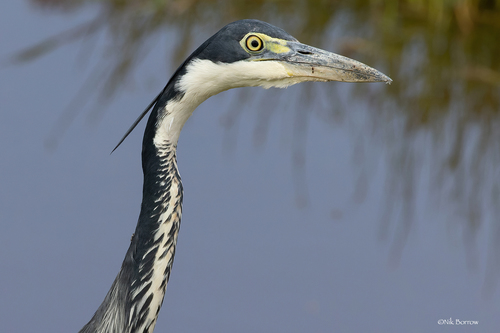
The black-headed heron (Ardea melanocephala) is a wading bird belonging to the heron family Ardeidae.
General Distribution
It is common across most of sub-Saharan Africa and Madagascar.
Movement Patterns
Most black-headed herons are permanent residents, but some populations in West Africa move further north during the rainy season.
Breeding Season and Nesting Sites
This species typically breeds in the wet season, nesting in colonies located in trees, reedbeds or cliffs.
Nest Construction and Clutch Size
It constructs a bulky stick nest, and lays between 2 and 4 eggs per clutch.
Aquatic Feeding Habits
Black-headed herons often feed in shallow water, spearing fish or frogs with their long, sharp bill.
Terrestrial Prey
They also hunt far from water, where they prey on large insects, small mammals, and other birds.
Foraging Behavior
To catch prey, they wait motionless for their target or slowly stalk it.
Body Size Measurements
Black-headed herons are large birds, reaching 85 cm in height and a wingspan of 150 cm.
Size Comparison to Related Species
They are nearly as large as the grey heron, which they resemble in appearance, although they are generally darker overall.
Plumage Coloration
Most of their upper body plumage is grey, and their underparts are paler grey.
Bill Characteristics
They have a powerful, dusky-colored bill.
Flight Posture
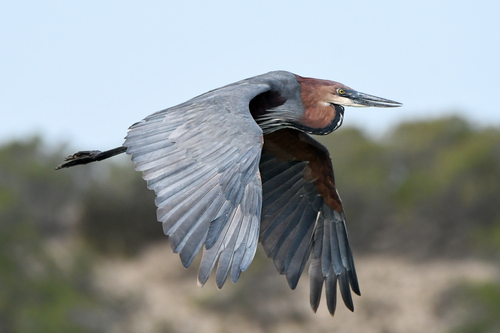
Their flight is slow, with their neck retracted.
Heron Flight Distinguishing Feature
This retracted neck in flight is a characteristic feature of herons and bitterns, and sets them apart from storks, cranes, and spoonbills, which hold their necks extended when flying.
In-Flight Markings
In flight, the white underwing coverts of the black-headed heron are very noticeable.
Vocalization
The call of this species is a loud croak.