About Bolitoglossa rufescens (Cope, 1869)
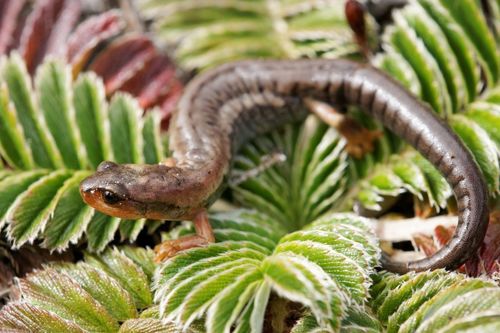
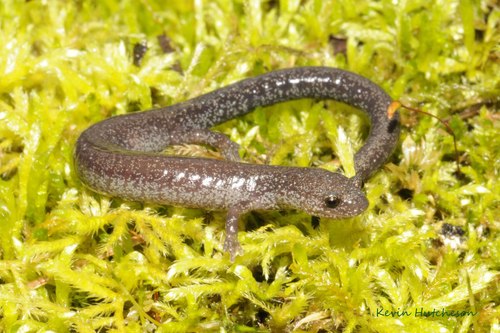
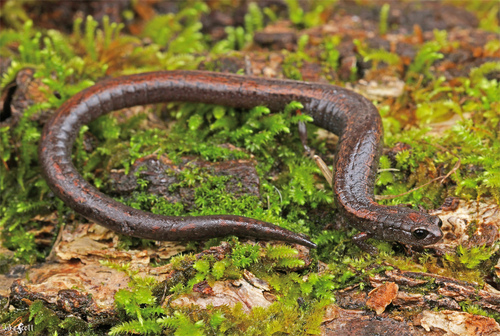
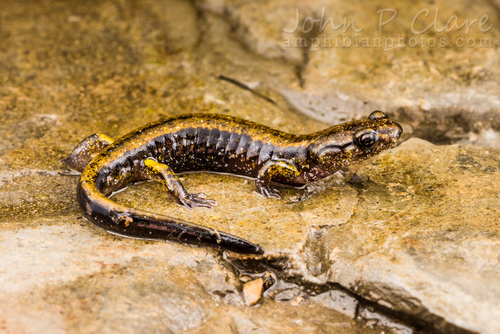
Bolitoglossa rufescens, commonly called the northern banana salamander, is a small terrestrial and arboreal salamander species.
Size and Comparison
Adults have a snout–vent length of 35–36 mm (1.4–1.4 in) and a total length of 65–70 mm (2.6–2.8 in), making it smaller than many other species in the genus Bolitoglossa, including the longer Bolitoglossa odonnelli (O'Donnell's salamander).
Habitat Range
This species lives in tropical and subtropical moist lowland rain forests, mountain ecosystems, citrus orchards, banana plantations, and pine plantations.
Microhabitat Preference
It is found most often in bromeliads within tropical and subtropical wet forests.
Dorsal Coloring
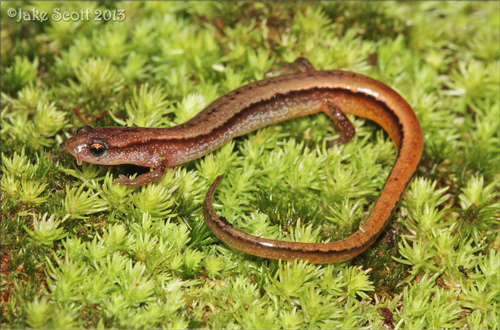
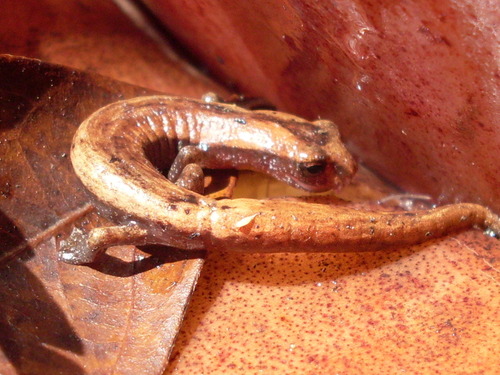
The dorsal side of Bolitoglossa rufescens ranges from pale brown to tan brown. Lighter individuals may have longitudinal streaks or specks on their back.
Ventral Coloring
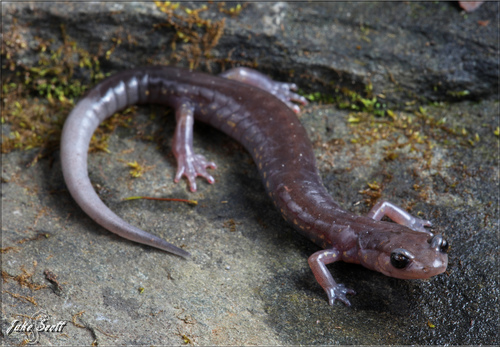
Most individuals have a ventral side that is grey or paler than the dorsal side, and some have uniform ventral coloring.
Facial Streak
A dark brown streak typically runs from behind the eyes toward the posterior end of the body, and can extend at least halfway down the body length.
Costal Grooves
The species has a robust body, with 11 costal grooves running longitudinally between the legs, plus 3 additional costal grooves between the limbs. These grooves help the salamander with water transport, enhance respiration, and aid thermoregulation.
Limb Features
It has webbed fingers and toes: 4 digits on each front limb, and 5 digits on each hind limb.
Snout Shape
Its snout is truncate and slightly projects when viewed from the anterior dorsal side.
Respiratory Trait
Like other members of its family, this is a lungless salamander that breathes entirely through its skin and the lining of its mouth.
Reproduction Cycle and Fertilization
Northern banana salamanders reproduce biennially, with internal fertilization. After courtship, during which breeding males develop an enlarged courtship gland to stimulate the female, the female picks up egg packets from the substrate through her cloaca.
Egg Laying
Fertilized eggs are laid in moist locations on land. This species has an average clutch size of 13.5 eggs, with an average egg diameter of 1.9 mm.
Development
Eggs develop entirely on land, and undergo direct development.
Sexual Dimorphism
Sexual dimorphism between males and females of this species is minimal.