About Apus nipalensis (Hodgson, 1837)
Taxonomy and Similar Species
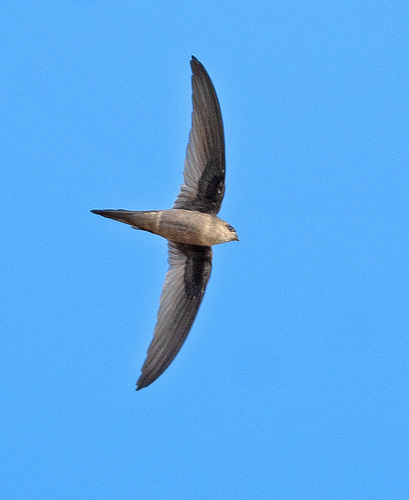
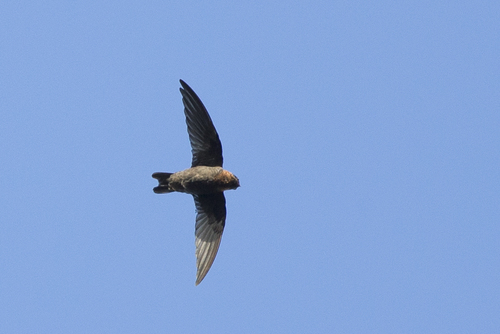
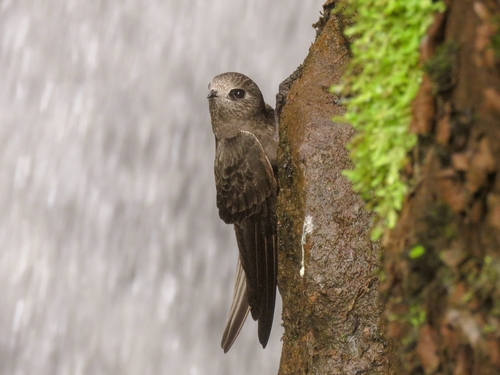
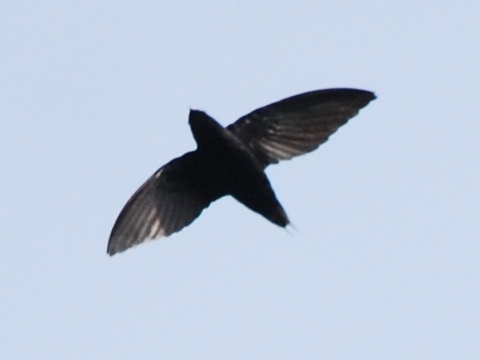
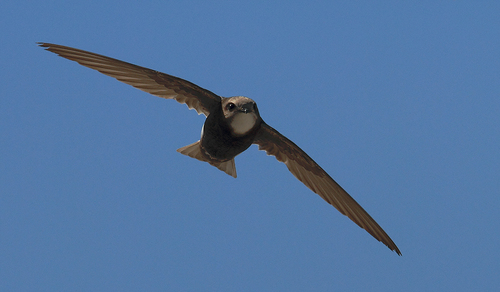
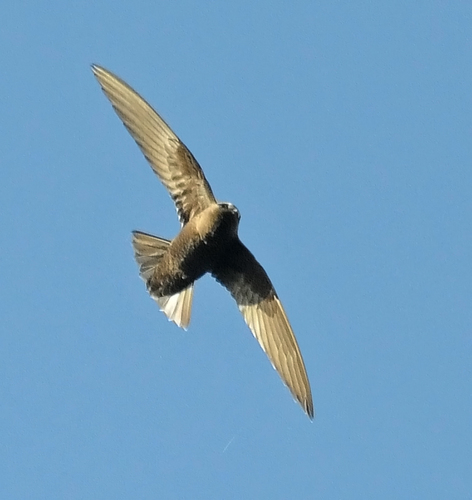
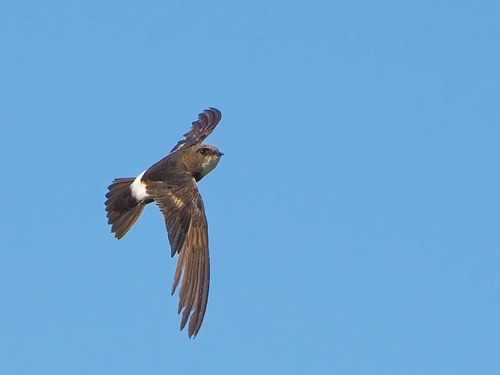
The house swift (Apus nipalensis) is a bird species that looks quite similar to the little swift.
Size
It is small in general bird terms, but considered a medium-sized swift. Its body length measures 14 to 16 cm, its wingspan ranges from 12.5 to 14.5 cm, and it weighs approximately 20 to 35 g.
Tail Structure
This species has a dark, slightly forked tail.
Plumage
Apart from a white rump band and a white throat patch, the house swift has entirely black plumage, which is darker than the plumage of the little swift.
Feeding Behavior
The house swift is highly aerial, and spends most of its time feeding in the air.
General Distribution
It is generally found across the Asian continent, with each subspecies having a slightly different distribution across the continent.
Subspecies Apus nipalensis nipalensis Range
The subspecies Apus nipalensis nipalensis occurs from Nepal to Southeastern China, Japan, and parts of Southeast Asia.
Subspecies Apus nipalensis subfurcatus Range
Apus nipalensis subfurcatus is found in the Malay Peninsula and other Southeast Asian islands.
Subspecies Apus nipalensis furcatus Range
Apus nipalensis furcatus occurs on Java and Bali in Indonesia.
Subspecies Apus nipalensis kuntzi Range
Apus nipalensis kuntzi lives only on the island of Taiwan.
Habitat
House swifts inhabit both urban and rural areas of Asia; they have been recorded in the mountainous regions of Nepal, as well as in cities and towns across China, Vietnam, and Hong Kong.
North American Sighting
The species has only been recorded in North America once, in 2012, and was identified as a house swift via DNA sequencing. This observation was not accepted, however, because the bird was already dead when it was found.
Breeding Cycle
The house swift has one annual breeding season, and generally raises two broods per year. The first egg-laying period spans three weeks.
First Brood Fledging
By early June, all fledglings from the first clutch have flown the nest.
Second Brood Timeline
A few weeks later, the second clutch hatches, and the last fledglings leave the nest by mid-September.
Clutch and Incubation
Clutch size can vary from one to five eggs, and the incubation period lasts between 20 and 30 days.