About Cypsiurus balasiensis (J.E.Gray, 1829)
Taxonomy and Naming
The Asian palm swift, Cypsiurus balasiensis, is a small swift species. It strongly resembles the African palm swift Cypsiurus parvus, and was previously classified as the same species.
Breeding Range
It is a common resident breeder across tropical Asia, ranging from India to the Philippines.
Nest Construction
It builds a nest of down and feathers, which it glues to the underside of a palm leaf using its own saliva. This same saliva is also used to secure its typical clutch of two or three eggs.
Habitat
This swift lives in open country and cultivated areas, and has a strong association with oil palms.
Size and Base Coloration
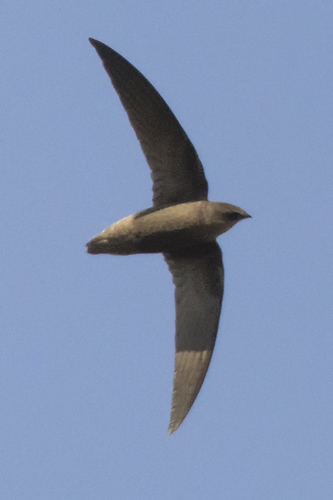
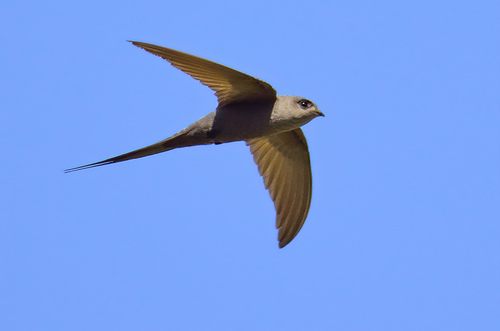
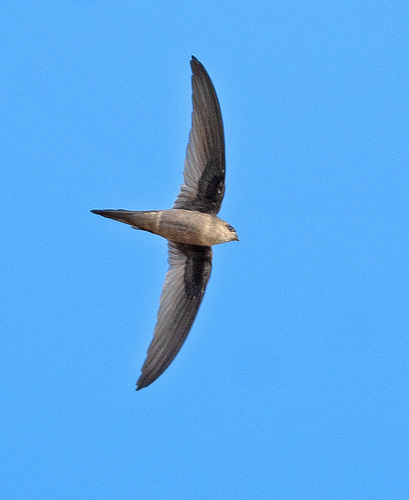
This species reaches 13 cm in total length, and is primarily pale brown in color.
Wing Structure
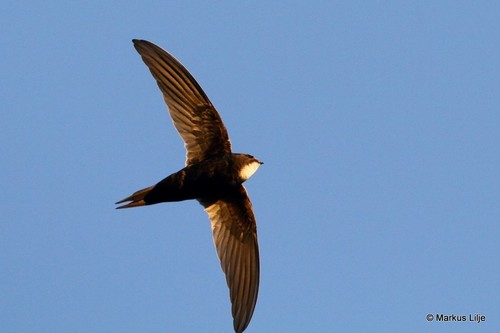
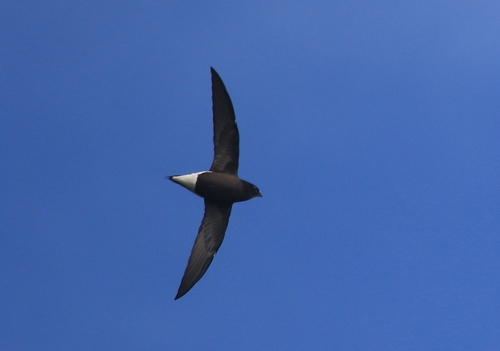
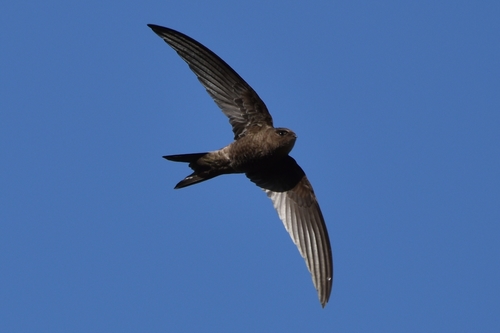
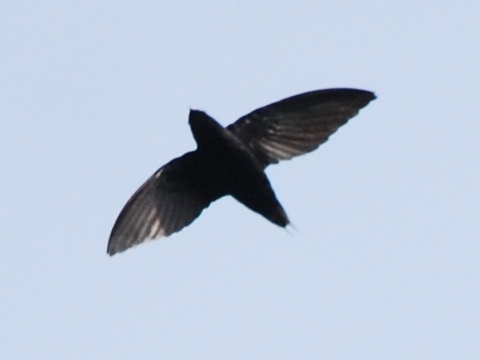
It has long swept-back wings shaped like a crescent or a boomerang.
Body and Tail Structure
Its body is slender, and it has a long, deeply forked tail that is usually held closed.
Vocalization
Its call is a loud, shrill scream.
Adult Plumage
Male and female Asian palm swifts have identical plumage.
Juvenile Traits
Young birds differ from adults most noticeably in having shorter tails.
Leg Morphology and Function
Like other swifts, this species has very short legs that it only uses to cling to vertical surfaces, because swifts never voluntarily settle on the ground.
Foraging Behavior
Asian palm swifts spend most of their lives flying, and feed on insects that they catch mid-flight in their beaks. They often feed close to the ground, and even drink while in flight.