About Cypseloides senex (Temminck, 1826)
Taxonomy and Size Ranking
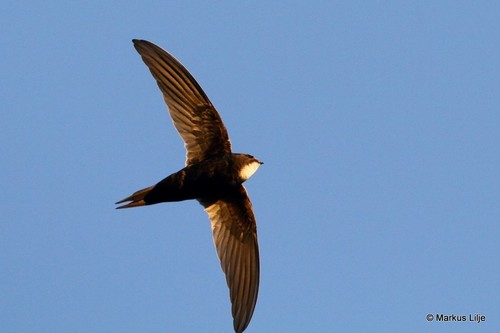
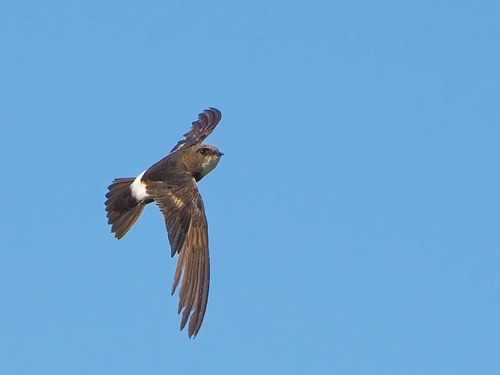
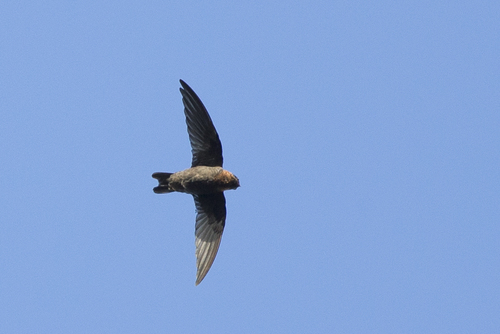
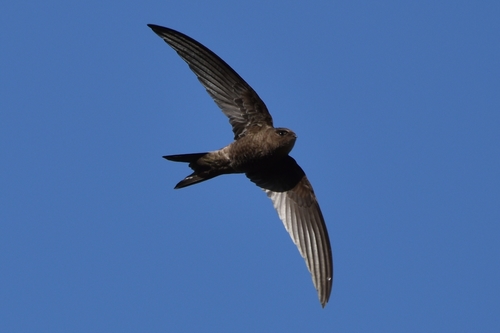
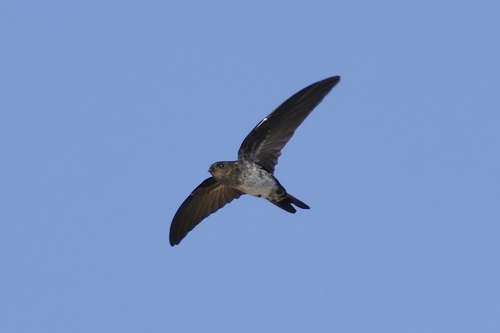
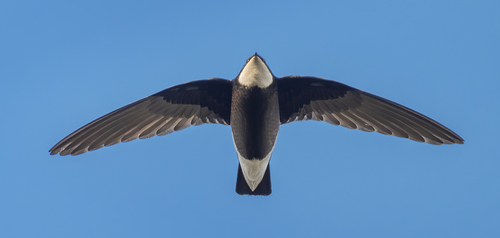
The great dusky swift, with the scientific name Cypseloides senex (Temminck, 1826), is the largest species in the genus Cypseloides. It measures 18 cm (7.1 in) long and weighs between 56 and 110 g (2.0 to 3.9 oz).
Adult Plumage: Sexual Dimorphism
Males and females have identical plumage.
Adult Plumage: Head and Throat
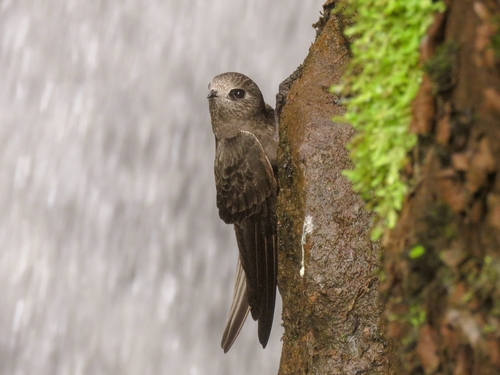
Adult great dusky swifts have chocolate brown crowns and throats, with pale gray feather edges that create a frosted look on the face.
Adult Plumage: Dorsal Body
Their back is darker brown, their rump is an intermediate brown shade between the color of the head and the back, and their tail is blackish brown.
Adult Plumage: Underside and Wings
Their undersides are paler brown than their back. The upper side of the wing is mostly brown, and the underside is somewhat lighter.
Juvenile Plumage
Juveniles closely resemble adults, but have additional pale fringes on their wing feathers.
Core Distribution Range
The great dusky swift is distributed in Brazil, ranging from southern Pará and most of Mato Grosso east to Bahia and south to Rio Grande do Sul, as well as in eastern Paraguay and Misiones Province in northeastern Argentina.
Unconfirmed Distribution
Undocumented sight records from Bolivia mean the South American Classification Committee of the American Ornithological Society classifies the species as hypothetical in that country.
Primary Habitats
Its main habitats are tropical evergreen forest, temperate forest, and second-growth scrubland.
Roosting and Specialized Behavior
This species roosts near waterfalls, and is known to fly through Iguazu Falls, located on the border between Brazil and Argentina.