About Adelotus brevis (Günther, 1863)
Species Sexual Size Dimorphism
Adelotus brevis, commonly known as the tusked frog, is unique among Australian frog species because females are smaller than males. Males reach a maximum length of approximately 5 centimetres (2.0 in), while females grow to 4 centimetres (1.6 in).
Common Name Origin
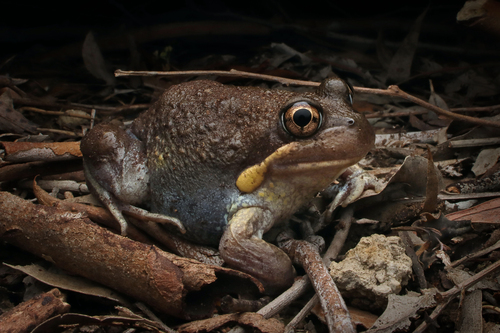
The species' common name comes from small tusk-like protrusions on the lower jaw. In males, these structures can reach about 5 millimetres (0.20 in) in length, and they are only visible when the mouth is open.
Tusk Structure
The pair of bony tusks are modified teeth that protrude from the middle of the lower jaw, and fit into specialized grooves on the upper jaw when the mouth is closed. The tusks are slightly curved and sharply pointed, and are present in both males and females, though they are larger in males.
Male Competitive Behavior
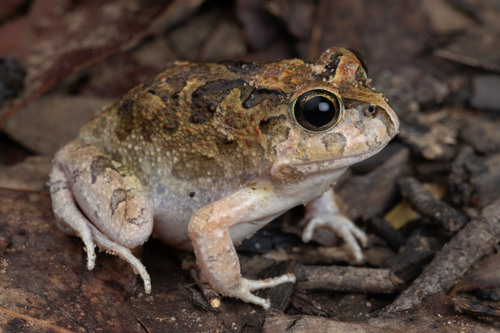
Males have been observed locking jaws with each other, a behavior similar to male deer locking antlers when competing for dominance. Male tusked frogs have a disproportionately large head relative to their body, while females have a proportionally smaller head than males.
Fighting Behavior Rationale
Males are known to fight, biting each other under the head and around the neck. This behavior is thought to have led to the sexual dimorphism of larger heads, body size and tusks, which increases fighting success, according to Katsirakos & Shine 1997.
Dorsal Surface Appearance
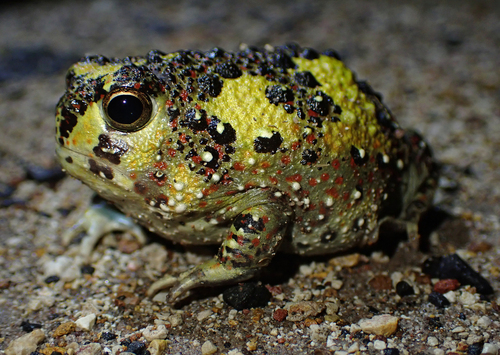
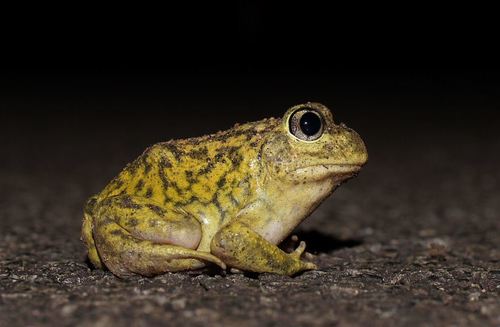
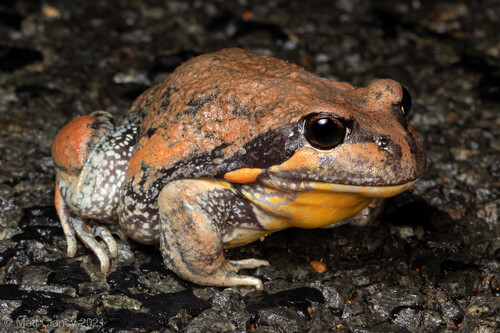
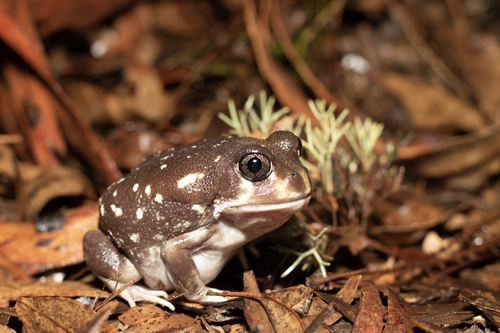
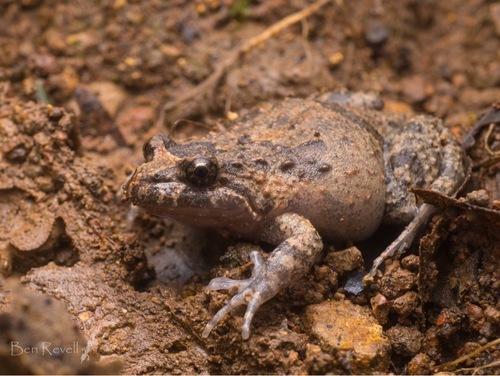
The dorsal surface of the tusked frog is usually brown, but may range from olive to black, with low ridges, warts and irregular darker markings. A butterfly-shaped marking between the eyes is usually present.
Ventral Surface Appearance
The ventral surface is more striking: it is marbled black and white, with patches of red on the groin and hind legs. Males and females have different belly patterns.
Limb Structure
The species' fingers and toes are cylindrical and not webbed.
Habitat Range
Adelotus brevis lives in habitats including dams, ditches, flooded grassland and creeks within rainforest, wet sclerophyll forest and woodland. It occurs in both coastal and highland areas, but has experienced population declines in many highland regions, particularly the New England Tablelands of New South Wales.
Male Nest Site Construction
Males build hidden nest sites in leaf litter and vegetation along streams and the edges of dams.
Species Vocalization
The species' call sounds like "tok-tok", and males call from their nest sites, making them hard to locate.
Breeding Period
Breeding occurs in spring and summer.
Nest Egg Characteristics
Eggs are laid as a foamy mass inside the nest, hidden from sunlight. The eggs are white and lack pigment.
Breeding Season Nesting
In the October to December breeding season, males build foam nests hidden from direct sunlight in ponds and swamps.
Egg Parental Care
Each floating foam nest may hold over 600 eggs, and the male guards the eggs until they hatch into tadpoles.
Tadpole Development
Tadpoles grow over two to three months to reach around 3 to 3.5 centimetres, then undergo metamorphosis into miniature adult froglets.