About Acentronura breviperula Fraser-Brunner & Whitley, 1949
Taxonomy and Nomenclature
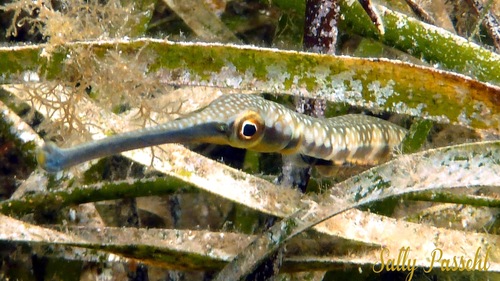
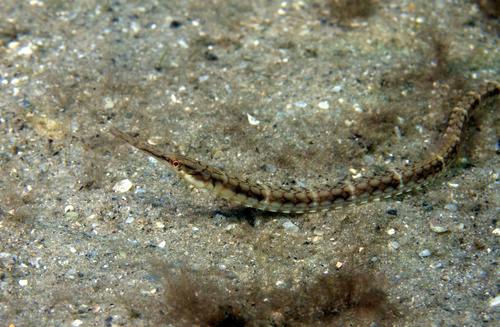
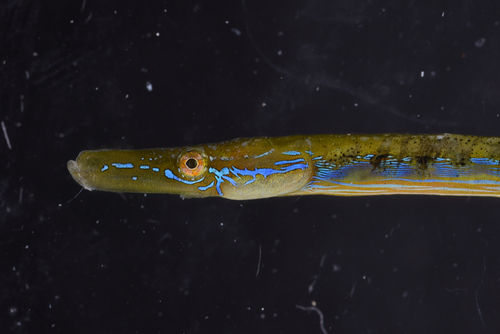
Acentronura breviperula, also known by the common names shortpouch pygmy pipehorse, dwarf pipehorse, and northern little pipehorse, is a species of pygmy pipehorse in the family Syngnathidae, the group that includes seahorses and pipefishes.
Geographic Distribution
This species is found in the Indo-Pacific region, ranging from the eastern Andaman Sea through the Malay Archipelago eastward to New Guinea and the northern Great Barrier Reef.
Habitat and Camouflage
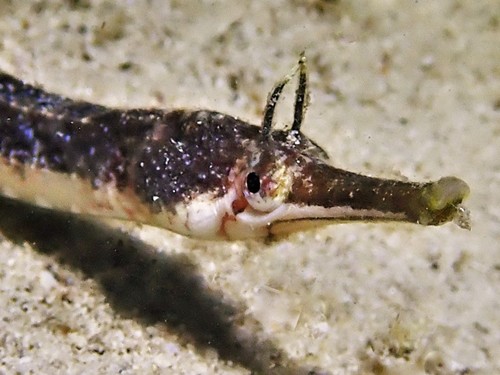
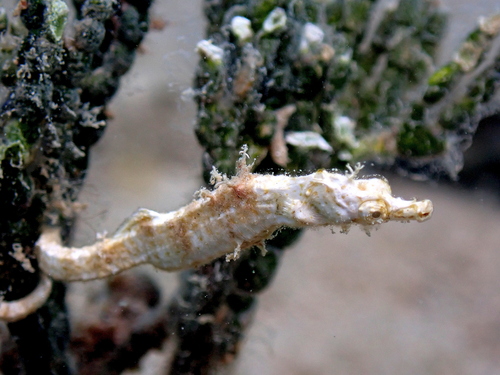
It is a small, drab-coloured pipehorse that is extremely well camouflaged in sandy and silty habitats; it is most commonly found on coral rubble substrates or in areas with sparse algal growth.
Morphology
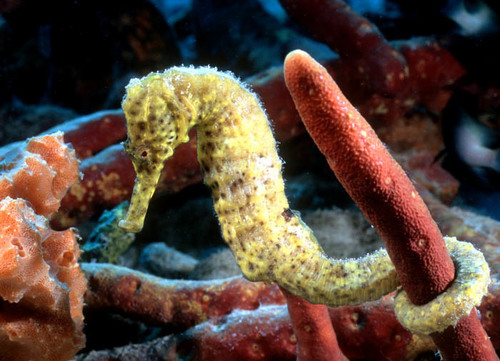
It has a prehensile tail like a seahorse, but unlike seahorses it does not have an angled head, and it swims with its body held horizontally.
Social Behaviour
It is typically recorded in pairs, and individuals use their prehensile tails to grip onto pieces of algae or debris.
Diet
This is a carnivorous species that feeds on small invertebrates.
Reproduction
Like all other syngnathids, it is ovoviviparous: males carry developing eggs in a brood pouch positioned on the underside of their bodies.
Depth Range
It occurs at depths between 2 and 40 metres (6.6 to 131.2 feet).
Sexual Dimorphism
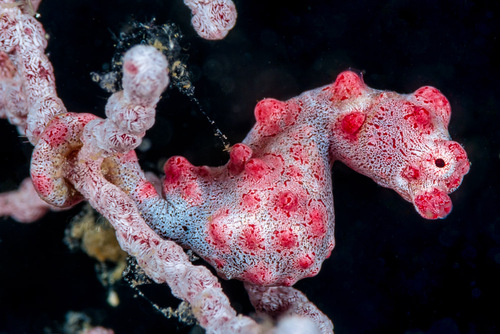
This species shows sexual dimorphism: females resemble pipefish, while males have large bellies and look more similar to seahorses.
Size
It reaches a maximum total length of 6 centimetres (2.4 inches).
Taxonomic History
Acentronura breviperula was previously classified as a synonym of Acentronura tentaculata, but it is now recognised as a separate valid species, with Acentronura tentaculata restricted to the Red Sea.
Conservation Status
In Australia, Acentronura breviperula is a listed marine species under the Environment Protection and Biodiversity Conservation Act 1999.