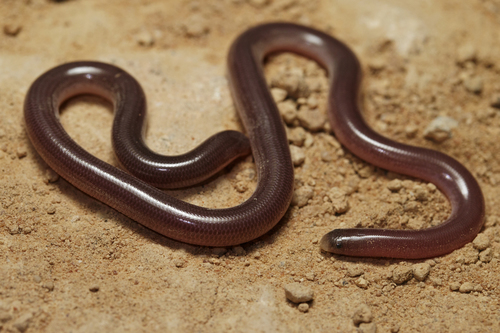
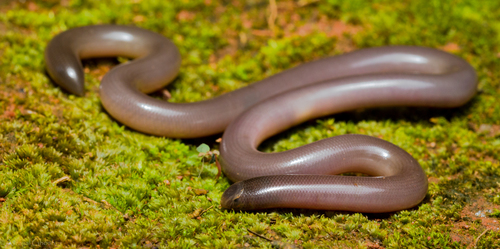
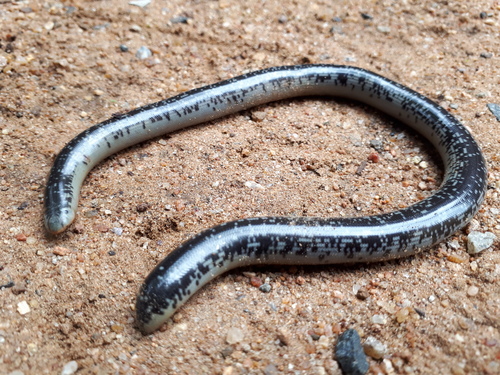
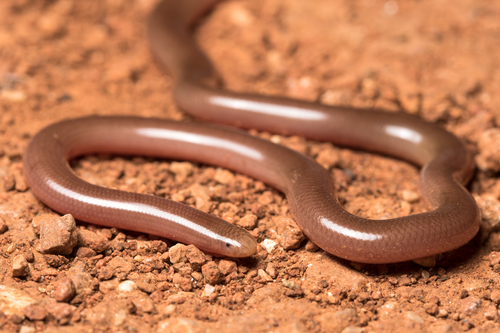
How to Identify Typhlopidae

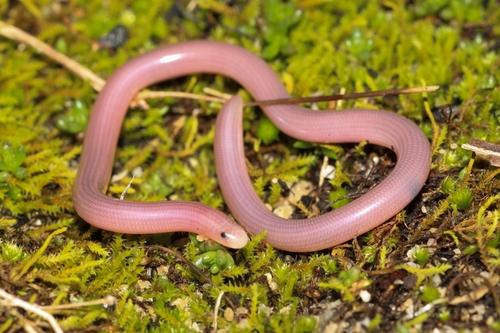
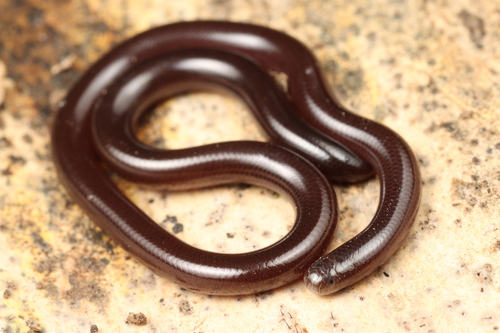
Typhlopidae is a animal family in the Animalia kingdom, order , class Squamata. The family contains 13 accepted species worldwide.

Key Identification Features

For instant identification in the field, use the iNature app — AI-powered, works offline.
Representative Typhlopidae Species

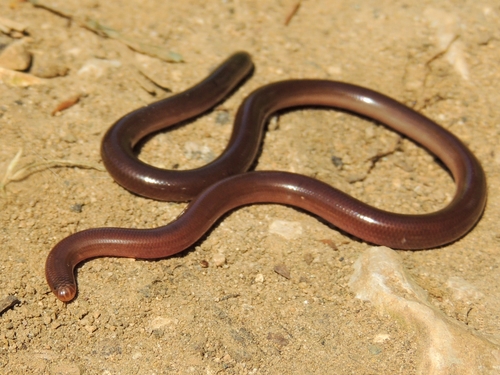
How to identify Rhinotyphlops lalandei (Schlegel, 1839)

Rhinotyphlops lalandei (Schlegel, 1839)

Rhinotyphlops lalandei (Schlegel, 1839)

Rhinotyphlops lalandei is a burrowing blind snake found across Southern Africa i…

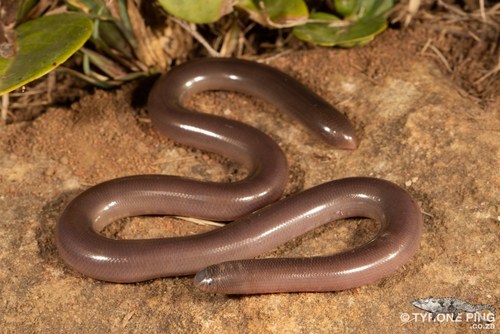
How to identify Anilios bituberculatus (Peters, 1863)

Anilios bituberculatus (Peters, 1863)

Anilios bituberculatus (Peters, 1863)

Anilios bituberculatus, the prong-snouted blind snake, is a small arid-adapted b…

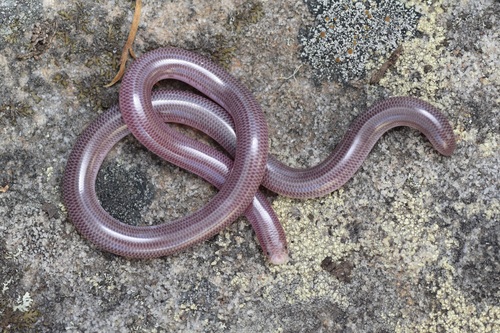
How to identify Grypotyphlops acutus (Duméril & Bibron, 1844)

Grypotyphlops acutus (Duméril & Bibron, 1844)

Grypotyphlops acutus (Duméril & Bibron, 1844)

Grypotyphlops acutus is a harmless endemic blind snake species, the only member …

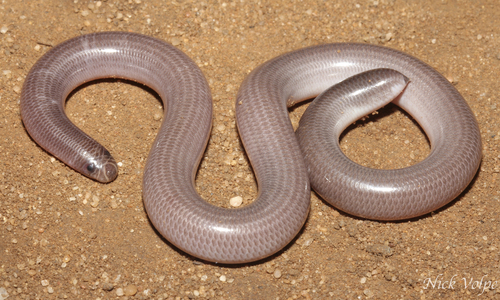
How to identify Afrotyphlops schlegelii (Bianconi, 1849)

Afrotyphlops schlegelii (Bianconi, 1849)

Afrotyphlops schlegelii (Bianconi, 1849)

Afrotyphlops schlegelii is a blind snake species with three color phases found a…

How to identify Xerotyphlops vermicularis (Merrem, 1820)

Xerotyphlops vermicularis (Merrem, 1820)

Xerotyphlops vermicularis (Merrem, 1820)

Xerotyphlops vermicularis is a small, earthworm-like European blind snake with l…

How to identify Xerotyphlops syriacus (Jan, 1864)

Xerotyphlops syriacus (Jan, 1864)

Xerotyphlops syriacus (Jan, 1864)

Xerotyphlops syriacus, the Syrian/Levantine blind snake, is a nonvenomous fossor…

How to identify Afrotyphlops bibronii (Smith, 1846)

Afrotyphlops bibronii (Smith, 1846)

Afrotyphlops bibronii (Smith, 1846)

Afrotyphlops bibronii is a heavy-bodied blind snake native to southern Africa, a…

How to identify Anilios nigrescens Gray, 1845

Anilios nigrescens Gray, 1845

Anilios nigrescens Gray, 1845

Anilios nigrescens is a small burrowing blind snake often mistaken for earthworm…

How to identify Anilios bicolor (Peters, 1858)

Anilios bicolor (Peters, 1858)

Anilios bicolor (Peters, 1858)

Anilios bicolor is a snake averaging 42 cm long, found across parts of southern …

How to identify Anilios australis Gray, 1845

Anilios australis Gray, 1845

Anilios australis Gray, 1845

The southern blind snake Anilios australis is an oviparous, Australian-endemic b…

How to identify Indotyphlops braminus (Daudin, 1803)

Indotyphlops braminus (Daudin, 1803)

Indotyphlops braminus (Daudin, 1803)

Indotyphlops braminus is the smallest known snake, a parthenogenetic blind snake…

How to identify Amerotyphlops reticulatus (Linnaeus, 1758)

Amerotyphlops reticulatus (Linnaeus, 1758)

Amerotyphlops reticulatus (Linnaeus, 1758)

Amerotyphlops reticulatus, the reticulate worm snake, is a Typhlopidae snake fou…

Browse all 13 Typhlopidae species →

Frequently Asked Questions

How do you identify Typhlopidae?

Typhlopidae animals belong to the order in the Animalia kingdom. Afrotyphlops schlegelii (Bianconi, 1849) occurs in three distinct color phases: uniform, blotched, and striped. For instant identification, use the iNature app — AI-powered and works offline.

What are the key characteristics of Typhlopidae?

Typhlopidae is classified in the order , class Squamata, phylum Chordata. The eyes are distinct, and positioned below the suture between the preocular and ocular scales.

Sources: GBIF, iNaturalist, Wikipedia · Disclaimer

Start Exploring Nature Today

Download iNature for free. 10 identifications on us. No account needed. No credit card required.

App Store
Scan to download from App Store

Scan with iPhone camera

Google Play
Scan to download from Google Play

Scan with Android camera