Key Identification Features
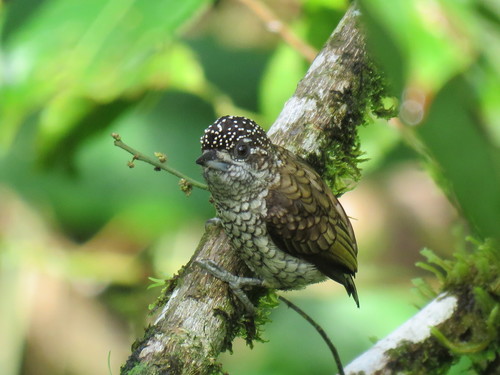
- Their upperparts are olive brown, with a distinct scaly appearance caused by narrow black borders on each feather.
- apurensis has whiter underparts than the nominate, and its scaly markings are narrow and indistinct.
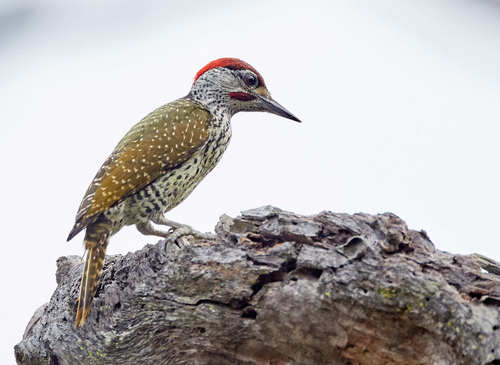
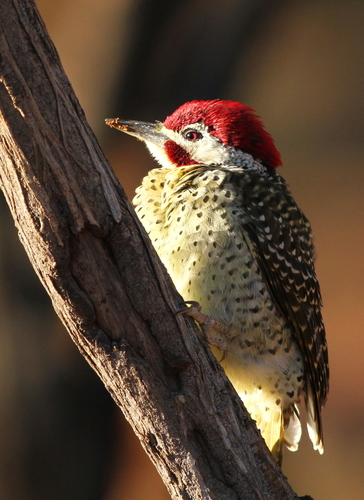
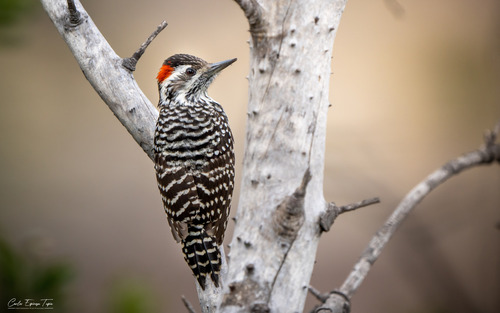
- Smith, 1836) can be readily identified by its combination of barred, greenish upper plumage and streaked underparts.
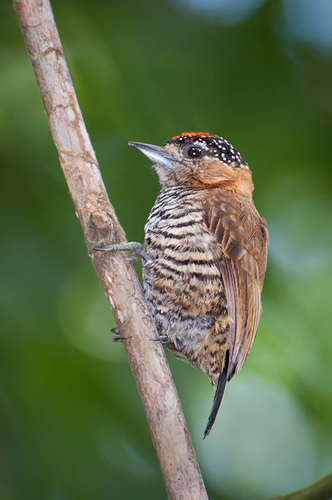
- The sexes are most easily distinguished by head markings: the fore-crown of males is red and brown, which differs clearly from the black, white-spotted fore-crown of females.
For instant identification in the field, use the iNature app — AI-powered, works offline.