About Zornia latifolia Sm.
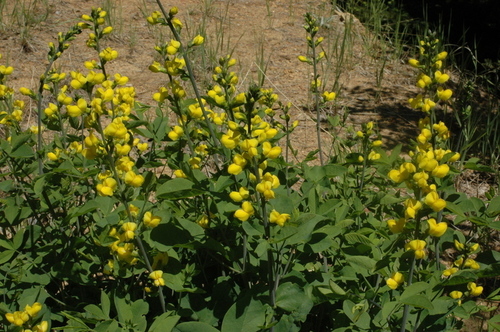
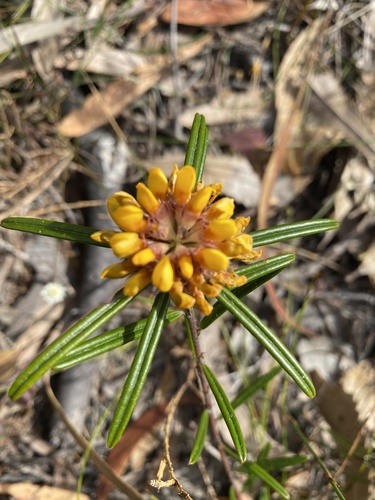
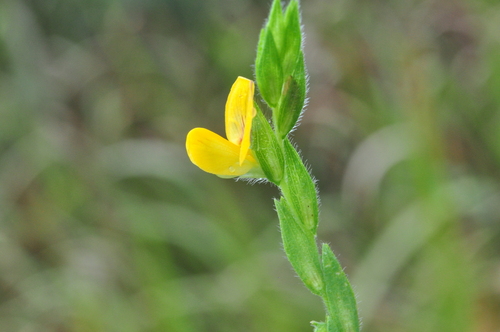
Zornia latifolia Sm. is a perennial herb that forms branching, prostrate stems that lie along the ground, reaching up to around 50 centimeters in total length. Its leaves are bifoliolate, meaning each leaf is composed of two leaflets. The leaflets are widely lance-shaped and can grow up to 4 centimeters long, with a stipule up to 1 centimeter long at the leaf base. The above-ground plant tissue ranges from hairless to lightly hairy. Its inflorescence is a spike holding up to 35 yellow flowers, each around 1 centimeter long. Individual flowers only remain open for 5 to 10 hours. The plant's bractlets are longer than the flowers, and may cover the blooms entirely. The fruit it produces is a spiny, hairy legume pod. In its native range, Zornia latifolia grows in savanna habitats on acidic, low-fertility soils. It can tolerate drought conditions, but cannot tolerate cold temperatures or shade. Within Africa, it grows as a weed in lawns and along roadsides. This plant is susceptible to several plant pathogens: the fungus Sphaceloma zorniae, which causes scab disease, and species from the Meliola genus of fungi, which cause leaf stunting and distortion. Common insect pests affecting the plant include the red-necked peanutworm moth (Stegasta bosqueella).