About Mimosa pigra L.
Species Identity and Height
Mimosa pigra L. is a leguminous shrub that can grow up to 6 meters tall.
Stem Characteristics
Young plants have greenish stems that become woody as the plant matures; its stems are covered in broad-based prickles that can reach 7mm in length.
Leaf Structure Overview
Its leaves are bright green and bipinnate, made up of a central prickly rachis 20 to 25 cm long that holds up to 16 pairs of 5 cm long pinnae. Each pinna is further divided into pairs of leaflets 3 to 8 mm long.
Leaf Sensitivity
Mimosa pigra leaves are sensitive: they fold up when touched and also fold at nightfall.
Flower Characteristics
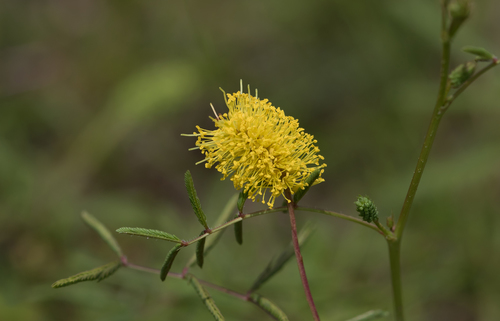
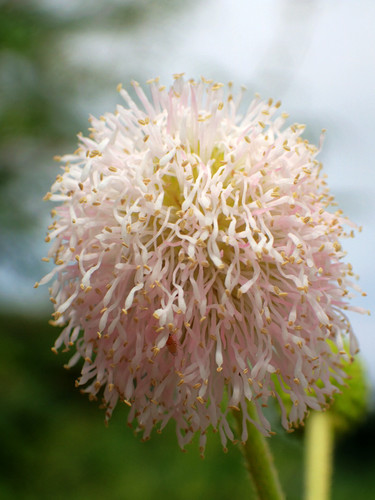
Its flowers are mauve or pink, and grow in tight, subglobose pedunculate heads 1 cm in diameter. Each flower head holds approximately 100 individual flowers.
Seedpod Production
Each flower head produces a cluster of 10 to 20 seedpods. Once mature, these seedpods break into segments, each holding one oblong-shaped seed.
Seed Dispersal Mechanism
Hairs on these segments allow them to float on water and stick to animal hair or human clothing, which helps the seeds disperse.
Seed Color and Longevity
Ripe seeds range in color from light brown to brown or olive green. Mimosa pigra produces hard seeds that can survive for at least 23 years in sandy soils, though seed viability decreases more quickly in clay soils.
Germination Conditions
Mimosa pigra can germinate year-round as long as the soil is moist but not flooded. Most germination occurs at the start and end of the wet season.
Growth and Reproductive Timeline
Seedlings grow very rapidly, and flowering begins between 4 and 12 months after germination. It takes approximately five weeks from the development of a flower bud to the production of ripe seed.
Related Species Comparison
Mimosa pigra is closely related to Mimosa pudica, the common sensitive plant. It can be distinguished from Mimosa pudica by its larger overall size, its larger seedpods (6 to 8 cm long, compared to 2.5 cm long for M. pudica), and its leaves, which hold 6 to 16 pairs of pinnae, while M. pudica leaves only hold 1 to 2 pairs.
Native Distribution
Mimosa pigra is native to tropical America, where it grows in a wide belt that stretches from Mexico through Central America to northern Argentina.
Introduced Range and Weed Status
It is now widespread across all tropical regions, and is a serious weed in Africa, India, Southeast Asia, Australia, and some Pacific Islands.
Khmer Common Names
In Cambodia, it is known by three common names: ព្រះខ្លបយក្ស /prĕəh kʰlɑːp jĕəʔ/ “giant mimosa,” បន្លាយួន /bɑnlaː juən/ “Vietnamese thorn”, and បន្លាយក្ស /bɑnlaː jĕəʔ/ “giant’s thorn”.
Climate and Habitat Preference
Mimosa pigra prefers wet, tropical climates. It does not show a preference for any specific soil type, but it is most often found in moist locations such as floodplains and river banks.
Soil Type Range
It grows in a range of soils from black cracking clays through sandy clays to coarse siliceous river sand.