About Zanda baudinii (Lear, 1832)
Taxonomic Identity
Baudin's black cockatoo, with the scientific name Zanda baudinii (Lear, 1832), measures approximately 56 cm (22 in) in length.
Body Plumage
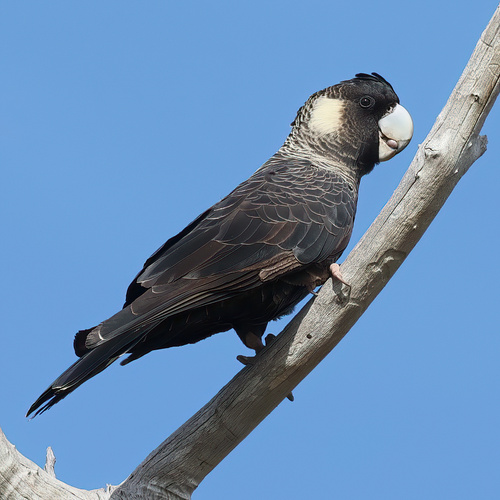
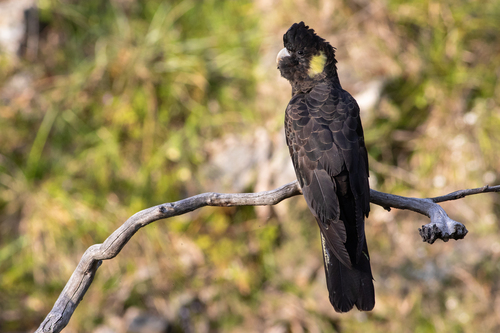
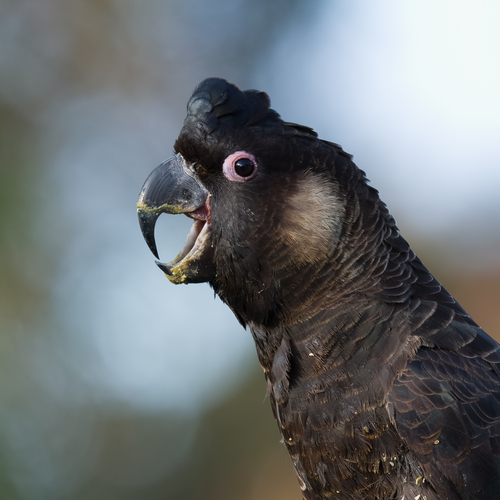
Its plumage is mostly dark grey, marked with narrow, faint light grey scalloping, which forms from narrow pale grey margins on the tips of dark grey feathers. It has a short feathered crest on its head, and whitish feather patches cover its ears.
Tail Feather Pattern
The lateral tail feathers are white with black tips, while the central tail feathers are entirely black. This species has dark brown irises and brown-grey legs.
Beak Distinguishing Feature
Its beak is longer and narrower than the beak of the closely related, similar-looking Carnaby's black cockatoo.
Adult Male Characteristics
Adult males have a dark grey beak and pink eye-rings.
Adult Female Characteristics
Adult females have a bone-coloured beak, grey eye-rings, and paler ear patches than adult males.
Juvenile Characteristics
Juveniles have a bone-coloured beak, grey eye-rings, and less white in their tail feathers.
Recorded Longevity
As of 1996, one recorded individual of this species had lived to 47 years old.
Endemic Range
Baudin's black cockatoo is one of two white-tailed black cockatoo species endemic to south-western Australia.
Taxonomic History
The two species were only split taxonomically in 1948.
Habitat Preference
It is strongly associated with moist, heavily forested areas dominated by the marri tree Corymbia calophylla, and it is currently threatened by habitat destruction.