About Verbascum sinuatum L.
Nomenclature
Verbascum sinuatum L., commonly called Scallop-leaved mullein, also known as Candela for its flower shape, grows as follows: In winter, a basal rosette of broad leaves spreads along the ground, reaching 30–50 cm in length.
Vegetative growth habit
In spring, a leafless stalk grows from the plant’s base, and splits into many diagonal stems that hold the flowers, growing up to 50–100 cm long.
Leaf morphology
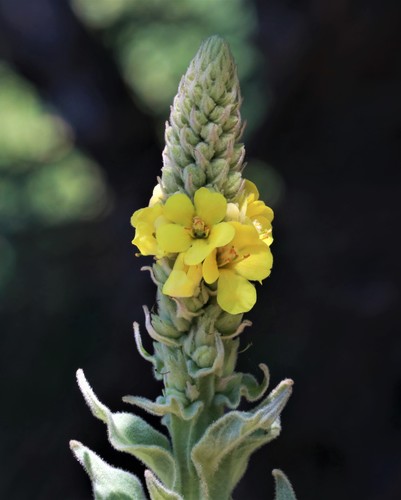
This species has simple, emarginate leaves that are arranged alternately, with entire, dentate, or serrate margins; the basal leaves form the overwintering rosette.
Flower characteristics
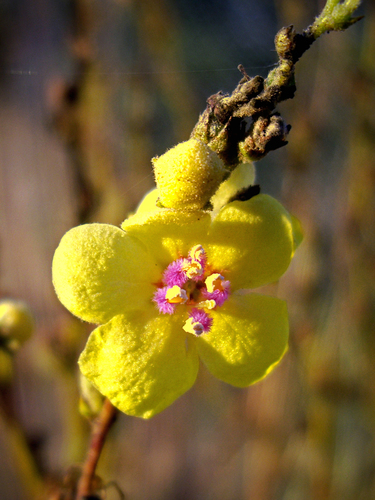
Its flowers are yellow, lamp-shaped, have 5 petals, and bloom primarily from late May to August, sometimes as late as October.
Broad distribution range
This plant has a broad distribution across both the Irano-Turanian and Mediterranean regions, ranging from Mediterranean coastal areas to western and southern Iran.
Native range in Israel
It is native to Israel, where it grows in the Golan, Mount Hermon, the Mediterranean coastline, Gilboa, Carmel, the Samarian Mountains, the Judean Mountains, the Jordan Valley, the Sharon valley, Shephelah, the Northern Negev, the Eilat Mountains, and the Arabah.
Habitat preferences
It typically grows in waste habitats, along waysides, in open chaparral shrublands, and in phrygana.
Food use of mullein flowers
For related mullein species, some human societies use mullein flowers to flavor alcoholic beverages.
Medicinal use of mullein flowers
Mullein flowers are also used medicinally as a remedy for sore throat and cough, though this use has not been scientifically proven to be effective.
Medicinal use of mullein leaves
Mullein leaves are applied topically to the skin to treat wounds, burns, and frostbite, and are used to soften and protect the skin.