About Upeneichthys vlamingii (Cuvier, 1829)
Scientific Name
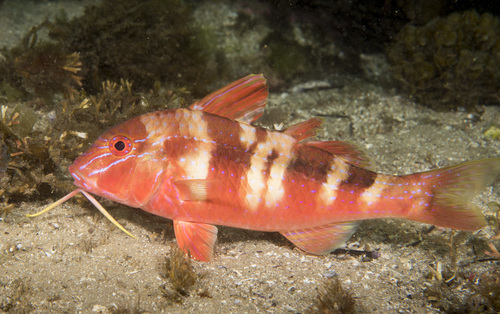
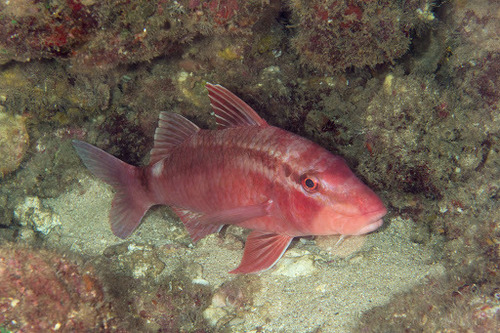
Upeneichthys vlamingii (Cuvier, 1829) has a moderately long, compressed body with a rounded dorsal profile that is steep in front of the first dorsal fin.
Head and Mouth Features
It has a long snout, small eyes, and a small mouth with fleshy lips that do not reach the front of the eye.
Dorsal Fin Structure
This species has two dorsal fins: the first is spiny, taller, and has a shorter base than the second, which contains soft rays.
Chin Barbel Length
The barbels on its chin are roughly the same length as its head.
Base Body Coloration
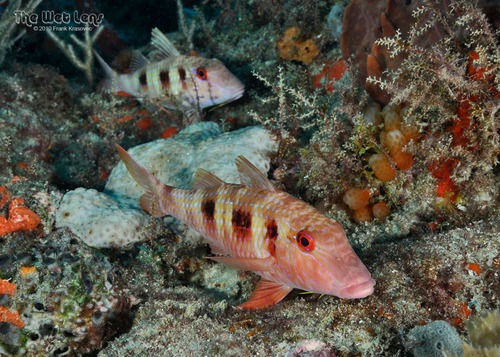
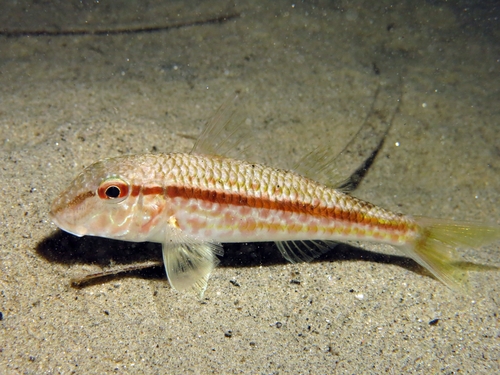
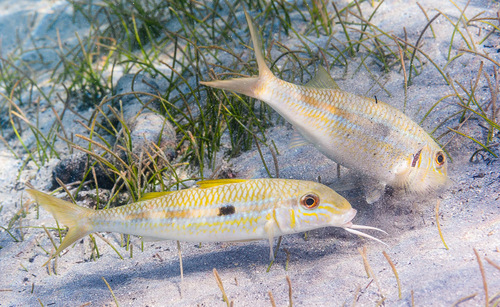
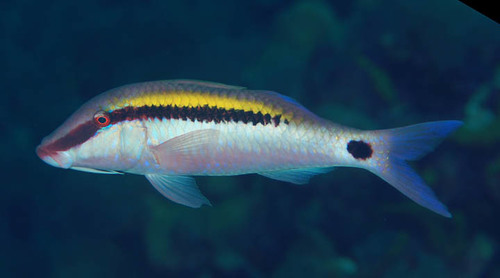
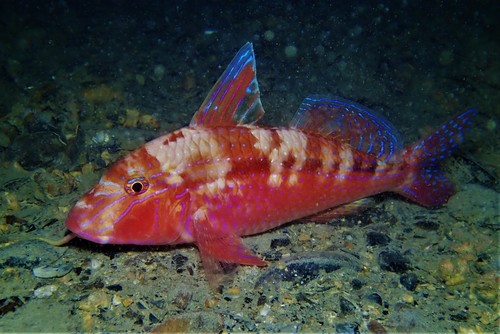
The coloration of this species is very variable; the background colour can be greyish-cream, pale greenish, or pinkish to orange-red.
Flank Markings
Many specimens have a reddish or black stripe along the flanks running from the snout to the caudal peduncle.
Adult Body Markings
Adult individuals have blue spots on their body scales.
Color Change Ability
During the night and when stimulated, they often darken their body to a reddish colour.
Fin Ray and Spine Counts
The first dorsal fin has 9 spines, the second dorsal fin has 8 rays, and the anal fin has 1-2 spines and 8 rays.
Similar Species Distinction
This species may be difficult to distinguish from the blue-striped goatfish (Upeneus lineatus), but U. vlamingii has a marginally longer head and a dark flank stripe.
General Distribution
Upeneichthys vlamingii is widespread along the coasts of southern Australia, where it can be very common.
Detailed Range
Its range extends from southern Western Australia east along the southern Australian coast to Tasmania, and north along the east coast as far as southern New South Wales.
Habitat and Depth Range
This species occurs in bays, estuaries, and sheltered coastal waters, normally on sandy and rubble bottoms near reefs at depths of 2 to 200 metres (6.6 to 656.2 ft).
Juvenile Behavior
Juveniles frequently form schools in sheltered bays.
Feeding Habits and Diet
Like other goatfishes, this species uses its barbels to search the substrate for prey; for U. vlamingii, prey is mainly crustaceans, but also includes some polychaete worms and a few small fish.