About Parupeneus porphyreus (Jenkins, 1903)
Body Streaks
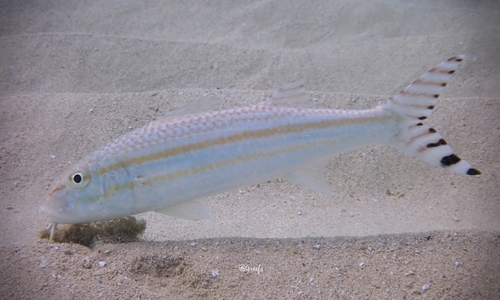
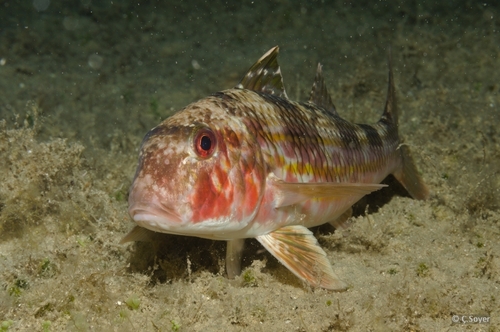
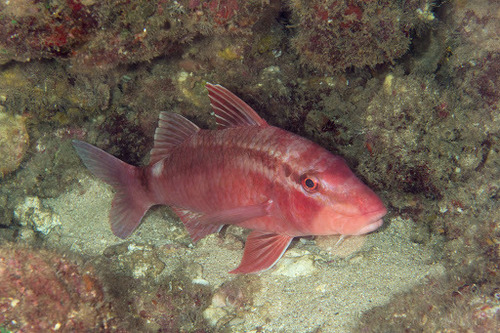
Parupeneus porphyreus has pale streaks running along its body.
Body Coloration
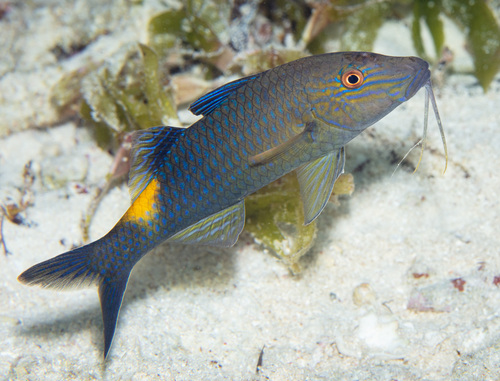
Its body can be grayish purple, greenish, or reddish, and it has a notable ability to change color in just seconds.
Distinctive Markings
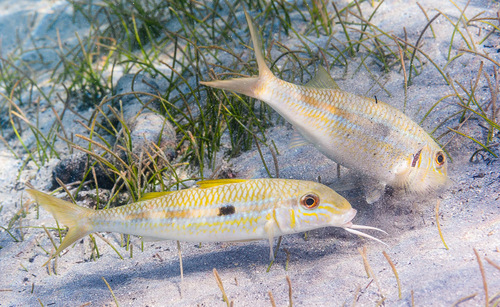
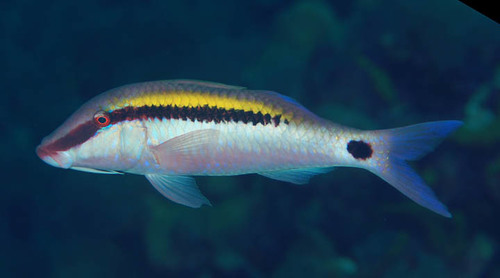
It has a small white spot, or saddle, above the base of its tail, and has beard-like projections called barbels on the lower portion of its head that resemble a goat's beard.
Early Life Stage Hawaiian Names
In Native Hawaiian naming, kolokolopā or mākolokolopā refers to the tiny early stage of this fish, which is called kūmū overall. ʻAhuluhulu is the name for juvenile kūmū.
Subadult Hawaiian Names
Kūmū aʻe refers to the stage when young kūmū are in the process of transforming into adults. Kūmū is the term used for fully grown adult individuals.
Activity Periods by Age
Adult Parupeneus porphyreus are crepuscular or nocturnal, while young individuals feed during the day.
Adult Behavior
Adults shelter in reef holes during the day, and forage for food over sandy areas at night.
Juvenile Feeding Timing
In contrast, juveniles feed during the day.
Depth Range
Parupeneus porphyreus is typically found in shallow waters.
Geographic Distribution
It occurs around coral reefs in the main and Northwestern Hawaiian Islands.
Habitat and Grouping Behavior
It inhabits lagoons and seaward reefs, and usually gathers in small groups under ledges or near corals during the day.