About Tupaia montana Thomas, 1892
Taxonomy and Upper Body Fur
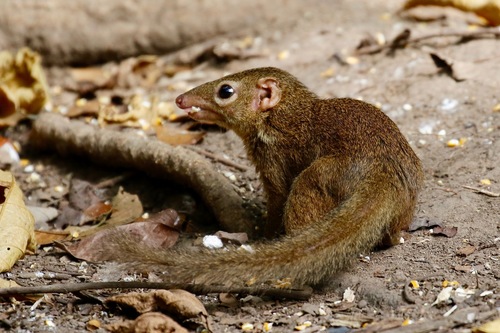
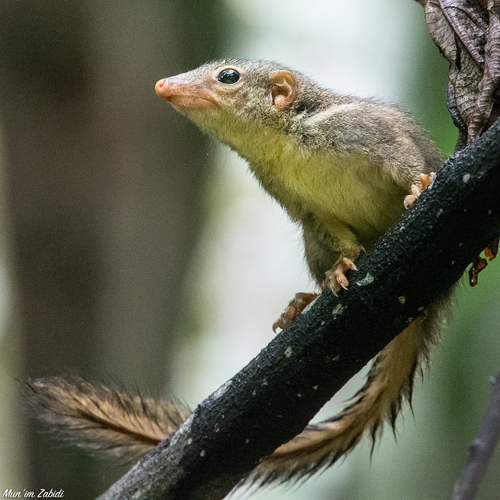
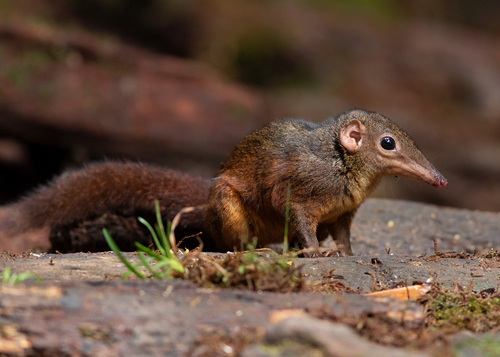
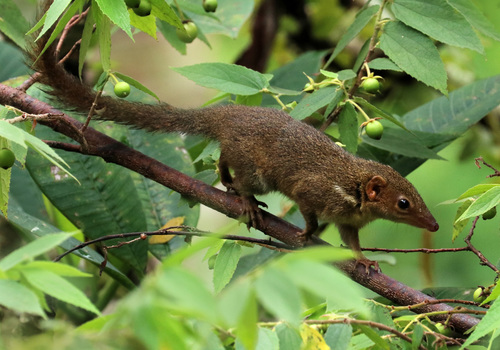
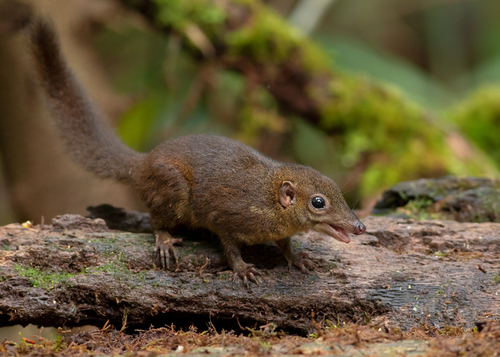
The mountain treeshrew, Tupaia montana Thomas, 1892, has dark grizzled rufous fur on its upper body, with an indistinct black stripe running along its back.
Tail Morphology
Its tail is relatively short, with grizzled rufous coloration on top, an olivaceous yellow underside, and a black tip. The individual hairs along the sides of the tail are ringed.
Body and Tail Length
Head and body length ranges from 15 to 33 cm, while tail length ranges from 13 to 19 cm.
Holotype Collection Details
The first known specimen of this species was collected by Charles Hose at around 1,200 m (4,000 ft) elevation on Mount Dulit.
Elevational Range
Most recorded sightings of mountain treeshrews are in montane outcrops located above 600 m (2,000 ft) elevation.
Activity Pattern
In their natural habitat, mountain treeshrews are active during the day.
Foraging and Primary Diet
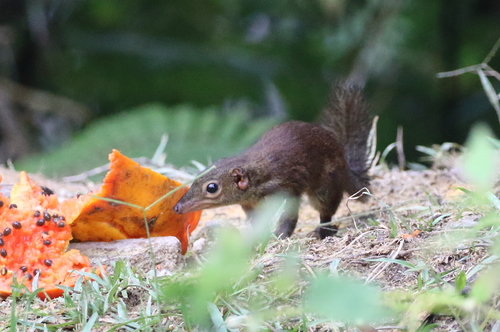
They forage on the ground among fallen logs and branches, and feed mostly on arthropods. They also eat large amounts of wild fruits and berries in short feeding bursts.
Dietary Supplement Hypothesis
Researchers assume they extract sugar-rich juices from these fruits to supplement nutrients missing from their arthropod-based diet.
Social Behavior
A behavioral study of 12 wild-caught captive mountain treeshrews found that this species is more social than other treeshrew species. In the studied group, two males tended to dominate the group.
Estrous Cycle
Females of the species have an estrous cycle that lasts 9 to 12 days.
Reproductive Traits
Gestation lasts 49 to 51 days, and the species does not have a distinct reproductive season. Litters contain between one and two young.
Mutualism with Pitcher Plants
Mountain treeshrews share a mutualistic relationship with several pitcher plant species: Nepenthes lowii, Nepenthes macrophylla, and Nepenthes rajah. The treeshrews defecate into the plants' pitchers when they visit to feed on sweet, fruity secretions produced by glands on the pitcher lids.