About Tupaia belangeri (Wagner, 1841)
Species Introduction
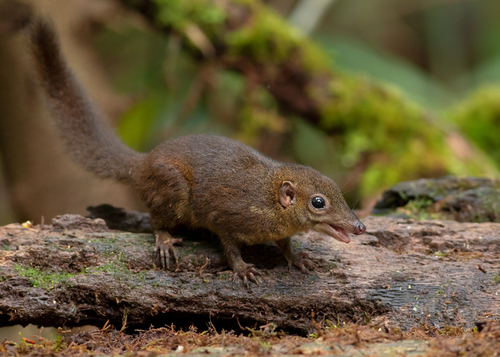
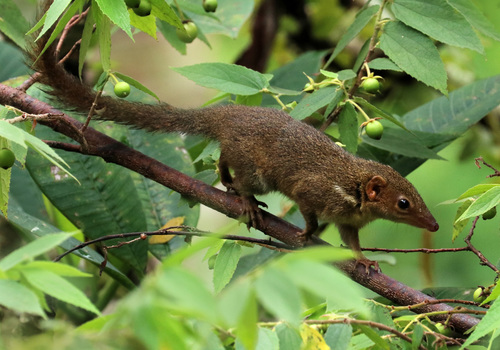
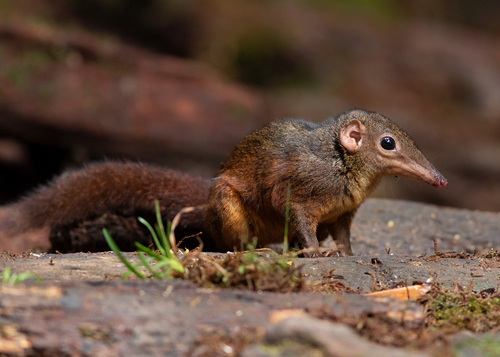
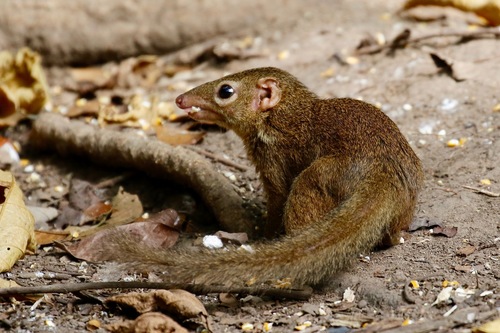
Tupaia belangeri, commonly known as the northern treeshrew, has several documented physical and behavioral traits.
Body Temperature Patterns
Results from a telemetry study on this species found that its body temperature changes between 35 °C (95 °F) at night and 40 °C (104 °F) during the day. This daily temperature difference is larger than what is seen in other endotherms, and shows that the circadian rhythms of body temperature and locomotor activity are synchronized in this species.
Size and Lifespan
Adult northern treeshrews weigh 0.2 kg (0.44 lb), and their maximum recorded longevity is 11 years.
Capsaicin Tolerance
Apart from humans, the northern treeshrew is the only mammal currently known to willingly eat spicy food. This behavior is caused by a genetic mutation that makes the species much less sensitive to the effects of capsaicin, the compound that produces spiciness.
Medical Research Relevance
Northern treeshrews have gained increasing interest as a model organism for medical research.
Hepatitis C Study Model
In 2002, a published article reported that the species' primary hepatocytes can be used as a model to study the hepatitis C virus, which is a leading cause of chronic hepatitis across the globe.
Ocular Research Applications
The species has also been used in research on the development of photo reception, studies of retinal cones, and investigations into refractive state and ocular component dimensions of the eye. Many studies of eye structure, development, and vision use the northern treeshrew as a model because its eye structure and vision are similar to humans, a trait not commonly found in conventional small laboratory animals like rodents.