About Diphylla ecaudata Spix, 1823
Taxonomic Similarity
Diphylla ecaudata Spix, 1823 is similar in appearance to the common vampire bat.
Ear, Thumb and Eye Traits
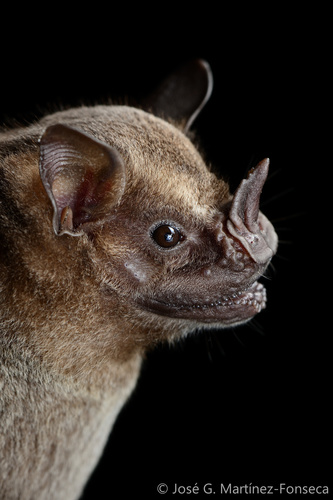
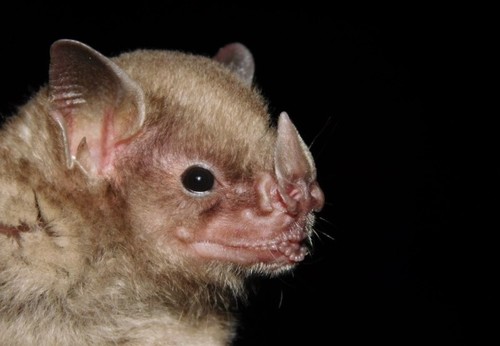
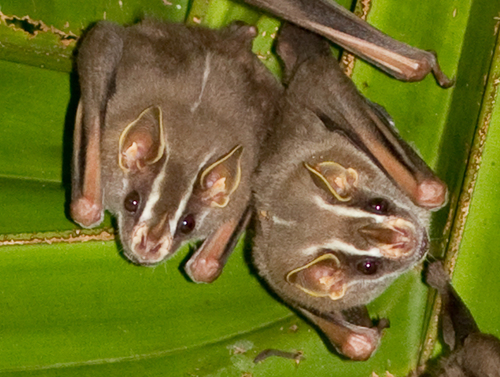
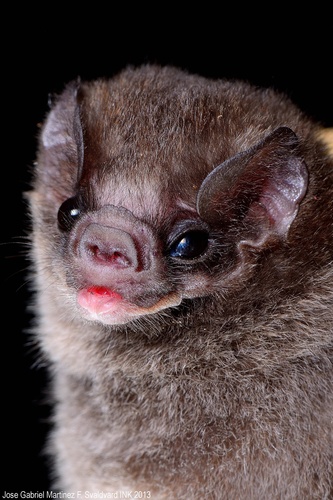
It differs from the common vampire bat in having broad, short ears; a short thumb without a pad; and large, shiny eyes.
Dentition
It also has more teeth than the common vampire bat: 26 teeth total, compared to the common vampire bat’s 18, and its dental formula is 2.1.1.2 / 2.1.2.2.
Brain Size
Additionally, its brain is smaller in mass than that of the common vampire bat, reaching only two-thirds the size by mass.
Uropatagium and Tail
Its uropatagium is narrow and very furry, and as its species name ecaudata indicates, it has no tail.
Fur Coloration
The fur on its back is dark brown, while the fur on its ventral surface is lighter in color.
Fur Texture
Its fur is soft and long.
Nose-leaf Trait
Compared to other leaf-nosed bats, its nose-leaf is greatly reduced in size.
Weight
This species weighs 24–43 g (0.85–1.52 oz).
Head and Body Length
Its combined head and body length is 75–93 mm (3.0–3.7 in).
Forearm Length
Its forearm measures 50–56 mm (2.0–2.2 in) long.
Tongue Features
Unlike Desmodus and the white-winged vampire bat Diaemus, it has no lingual grooves under its tongue.
Palate Groove
However, it does have a groove along the roof of the mouth that may function as a "blood gutter".
Geographic Range Extent
This species has a wide geographic range, found across Central and South America.
Documented Range Countries
It has been officially documented in Belize, Bolivia, Brazil, Colombia, Costa Rica, Ecuador, El Salvador, Guatemala, Honduras, Mexico, Nicaragua, Panama, Peru, and Venezuela.
United States Record
One single individual has ever been recorded in southern Texas, United States.
Texas Record Details
This individual was a female found near Comstock, Texas in 1967, inside an abandoned railroad tunnel.
Range Extension Significance
This record placed the individual approximately 700 km (430 mi) north of the previously documented northern edge of the species’s range.
Altitudinal Range
Its altitudinal range spans 0–1,900 m (0–6,234 ft).