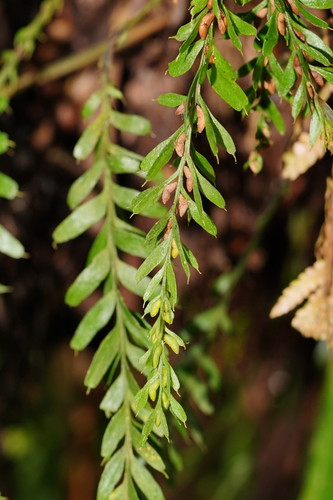
About Tmesipteris obliqua Chinnock
Common Names and Growth Form
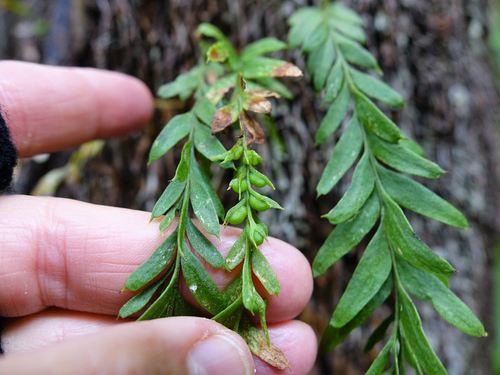
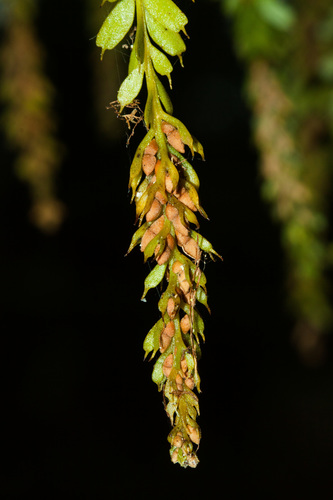
Tmesipteris obliqua, commonly called the long fork-fern or common fork-fern, is a weeping, epiphytic fern ally with narrow unbranched leafy stems.
Genus Classification
It belongs to the genus Tmesipteris, which is commonly known as hanging fork-ferns.
Order Classification
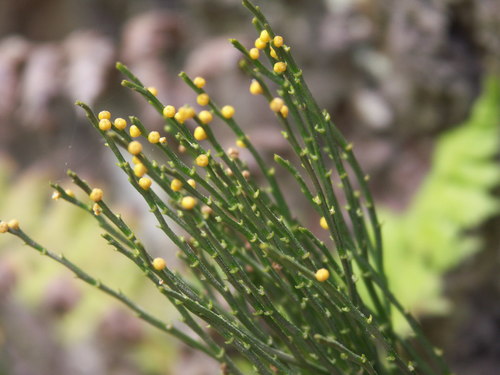
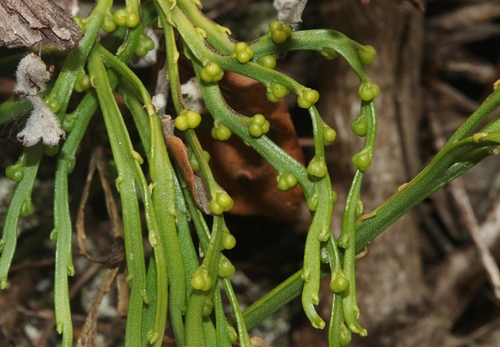
Tmesipteris is one of two genera in the order Psilotales; the other genus in this order is Psilotum.
Endemic Range
This species is endemic to eastern Australia.
Primary Epiphytic Habitat
As an epiphyte, Tmesipteris obliqua is most often found growing on the trunks of tree-ferns, particularly the soft tree-fern Dicksonia antarctica.
Secondary Habitat
It occasionally grows on shady, moist rock faces.
Elevation and Habitat Types
It is widespread and common between sea level and 600 metres above sea level, found in fern gully communities, rainforests, and wet sclerophyll forests.
Preferred Growth Conditions
The species grows best in moist, shady, humid, rocky environments, and can grow in mossy logs, on rock, or in soil among exposed roots.
Distribution Concentration
Its distribution is concentrated along eastern Australia.
Climatic Growth Requirements
Due to its epiphytic growth habit, T. obliqua grows best in high rainfall, heavy shade, and humid conditions near rocky surfaces.
Cultivation Difficulty
Its very specific growth requirements, combined with the delicate nature of the species, make it extremely difficult to cultivate.