About Thymallus arcticus (Pallas, 1776)
Maximum Size
Arctic grayling (Thymallus arcticus (Pallas, 1776)) grow to a maximum recorded length of 76 cm (30 in) and a maximum recorded weight of 3.8 kg (8.4 lb).
Species Distinguishing Features
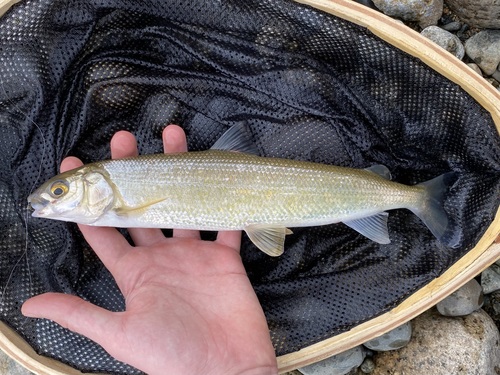
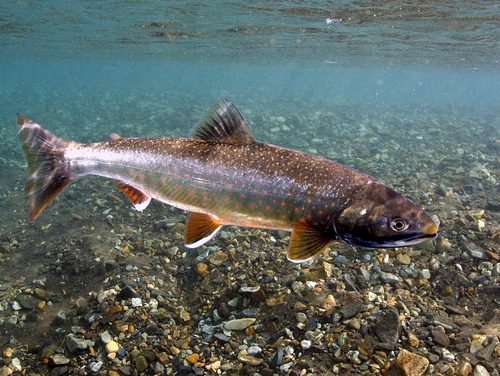
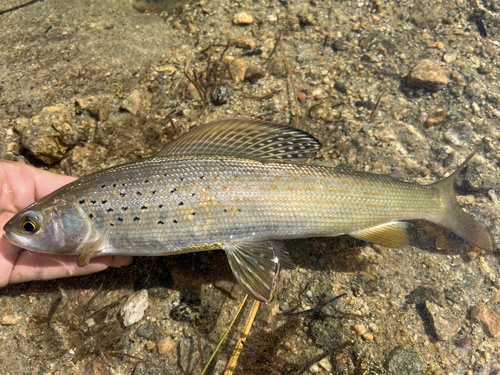
They have the typical appearance of thymalline fish, and can be distinguished from the similar European grayling (T. thymallus) by the lack of dorsal and anal spines, and by having a larger number of soft rays in these two fins.
Body Coloration
A dark midlateral band runs between the pectoral and pelvic fins, and the flanks may show a pink iridescence.
Maximum Age
The nominate subspecies T. a. arcticus has been recorded to reach an age of 18 years.
North American Native Range
Arctic grayling are widespread across Arctic Ocean drainages, ranging from Hudson Bay, Canada to Alaska, and also occur in Arctic and Pacific drainages extending to central Alberta and British Columbia in Canada.
North American Range Exclusions
They do not occur naturally in the Fraser and Columbia river basins.
Montana Native Populations
Remnant native populations of fluvial Arctic grayling exist in the upper Missouri River drainage, specifically in the Big Hole River and Red Rock basin (the "Montana Arctic grayling").
Reestablished Fluvial Populations
Fluvial Arctic grayling have been reestablished in the upper Ruby River, a tributary of the Beaverhead River.
Extirpated Historic Range
The species' native range once extended south into the Great Lakes basin in Michigan, where it was extirpated by 1936 due to habitat destruction, unregulated logging, and competition from non-native fish species.
Eurasian Native Range
Arctic grayling occurs naturally in the Arctic Ocean basin in Siberia from the Ob to Yenisei drainages, and in European Russia in some tributaries of the Pechora river.
Introduced Populations
Lake-dwelling forms of Arctic grayling have been introduced to suitable lake habitats throughout the Rocky Mountains, including lakes in Wyoming's Teton Range, central Idaho, Utah's high Uinta Mountains, the Cascade Mountains, and the Sierra Nevada Mountains as far south as Arizona.
Life History Forms
There are three main life history forms of Arctic grayling: fluvial populations that live and spawn in rivers; lacustrine populations that live and spawn in lakes; and potamodromous populations that live in lakes and spawn in tributary streams.
General Habitat
Arctic grayling live primarily in the cold waters of mid-sized to large rivers and lakes, and return to rocky streams to breed.
Feeding Habits
The various subspecies are omnivorous. Crustaceans, insects and insect larvae, and fish eggs make up the most important food items.
Size-Based Diet Differences
Larger T. arcticus specimens become piscivorous, while immature fish feed on zooplankton and insect larvae.
Spawning Season
Spawning occurs in spring.
Spawning Habitat Preferences
Adult fish seek out shallow areas of rivers with fine, sand substrate and moderate current.
Courtship and Mating Behavior
Males are territorial and court females by flashing their colourful dorsal fins; these fins are also used to brace receptive females during the vibratory release of milt and roe.
Post-Spawning Egg Care
Arctic grayling do not guard their eggs, which are left to mix with the substrate. While the fish do not excavate a nest, the highly energetic courtship and mating process tends to kick up fine material that covers the zygotes.
Egg and Embryo Development
Zygotes are small, measuring approximately 3 mm (0.1 in) in diameter, and embryos hatch after two to three weeks.
Newly Hatched Embryo Behavior
Newly hatched embryos remain in the substrate until all their yolk is absorbed.
Post-Yolk Absorption Behavior
They emerge at a length of around 12 to 18 mm (0.5 to 0.7 in), at which point they form shoals along river margins.
Juvenile Growth Rate
Juveniles grow quickly during their first two years of life.