About Thalassoma bifasciatum (Bloch, 1791)
Initial Phase Coloration
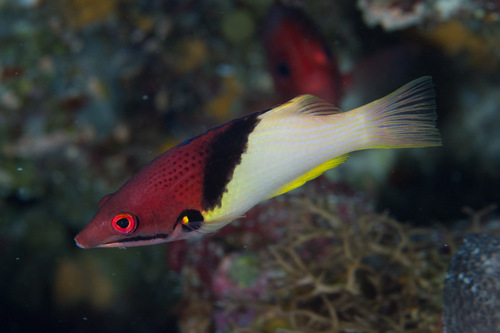
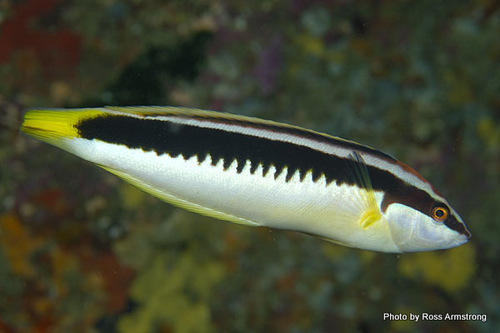
In the initial color phase, young and small females and males of Thalassoma bifasciatum have yellow upper bodies and white lower bodies, often with green or black lateral stripes, and occasionally have dark vertical bars.
Dynamic Color Change Ability
Individuals can rapidly change whether their yellow color, stripes, and bars are present, or alter the intensity of these markings, and these color changes appear to correspond with behavioral changes.
Permanent Phase Transition
Large females and some males can permanently change their coloration, sex, or both, and enter the terminal color phase.
Terminal Phase Coloration
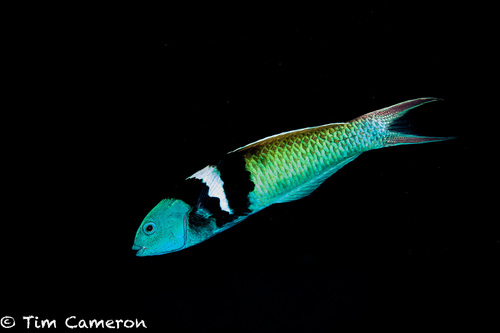
Terminal phase individuals have a blue head, black and white bars behind the head, and a green body; this color phase is where the species gets its common name.
Body Size
Terminal phase males are larger, measuring 70 to 80 mm, while initial phase males reach around 60 mm.
Habitat Type
Thalassoma bifasciatum occurs on coral reefs of the Atlantic Ocean.
Geographical Range
Its main range covers the Caribbean Sea and the southeastern Gulf of Mexico.
Common Observation Location
The bluehead wrasse is commonly seen by scuba divers and snorkelers exploring local reefs in Punta Cana, Dominican Republic.