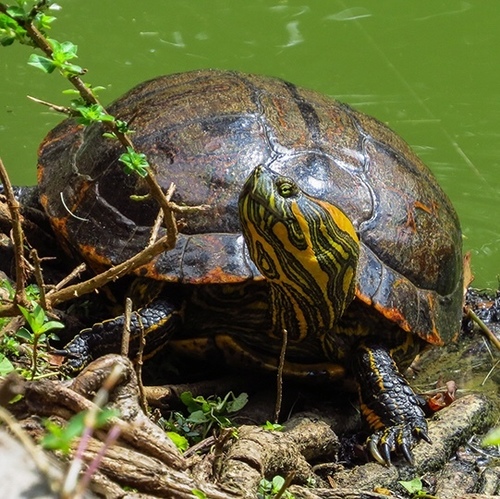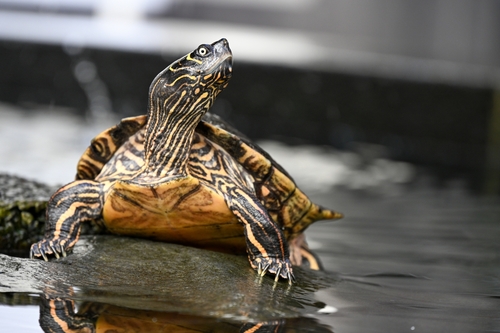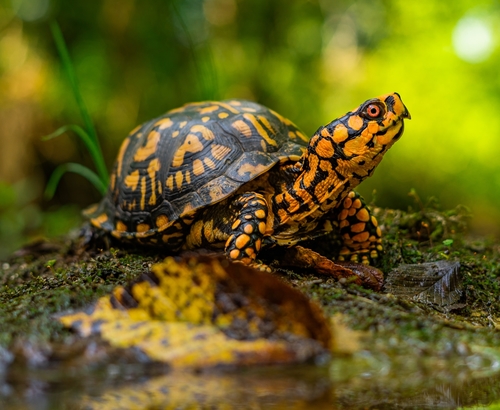
About Terrapene carolina (Linnaeus, 1758)
Etymology
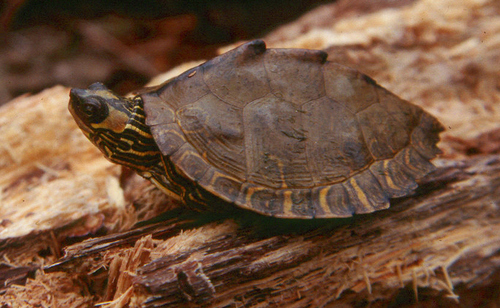
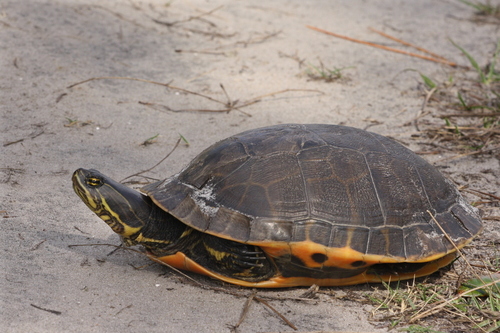
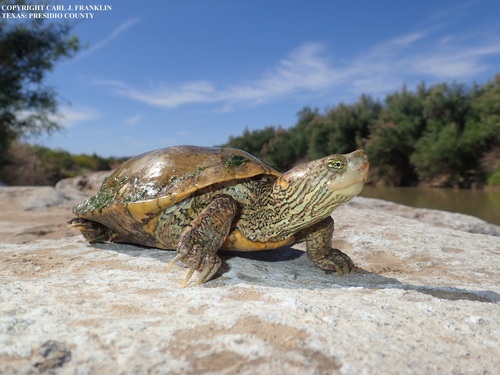
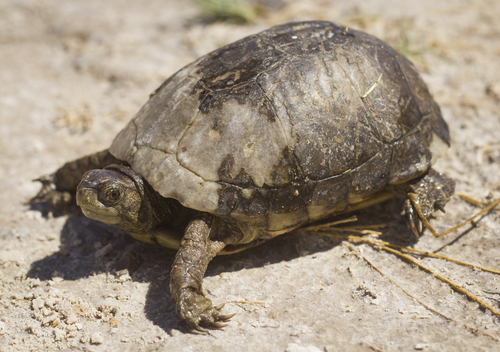
The common box turtle, Terrapene carolina, gets its common name from its unique shell structure.
Shell Structure General
It has a high domed upper shell (called a carapace) and a large, hinged lower shell (called a plastron). This hinge lets the turtle close its shell completely, sealing its vulnerable head and limbs safely inside a protective, box-like enclosure.
Carapace Coloration
The carapace is typically brown, and usually has a variable pattern of orange or yellow markings that can be lines, spots, bars, or blotches.
Plastron Coloration
The plastron is dark brown; it may be a uniform color, or it can have darker blotches or smudges.
Head and Jaw Features
The common box turtle has a small to moderately sized head and a distinctive hooked upper jaw.
Iris Sexual Dimorphism
Most adult male common box turtles have red irises, while females have yellowish-brown irises.
Claw and Tail Sexual Dimorphism
Males can also be distinguished from females by shorter, stockier, more curved claws on their hind feet, and longer, thicker tails.
Subspecies Count
There are five living subspecies of the common box turtle.
Subspecies Appearance Differences
Each differs slightly in appearance, most noticeably in the color and pattern of the carapace, and whether each hind foot has three or four toes.
United States Habitat and Range
The common box turtle lives in open woodlands, marshy meadows, floodplains, scrub forests, and brushy grasslands across most of the eastern United States, ranging from Maine and Michigan down to eastern Texas and southern Florida.
Canadian Extirpation Status
The species was once found in southern Ontario, Canada, but it has now been extirpated from Canada (including Ontario).
Mexican Range
It is still found in Mexico along the Gulf Coast and in the Yucatán Peninsula.
Range Discontinuity
The species' range is not continuous: the two Mexican subspecies, T. c. mexicana (the Mexican box turtle) and T. c. yucatana (the Yucatán box turtle), are separated from the United States subspecies by a gap in western Texas.
United States Subspecies Distribution
Three United States subspecies, T. c. carolina (the eastern box turtle), T. c. major (the Gulf Coast box turtle), and T. c. bauri (the Florida box turtle), are found roughly in the geographic regions their common names reference.