About Terminalia sericea Burch. ex DC.
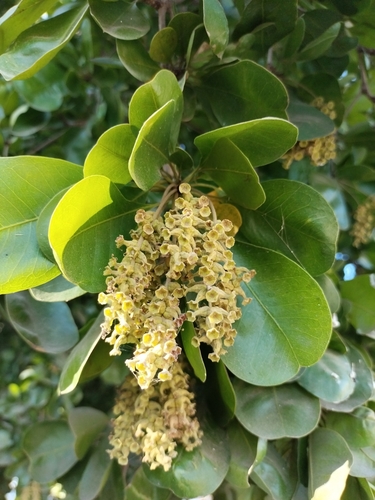
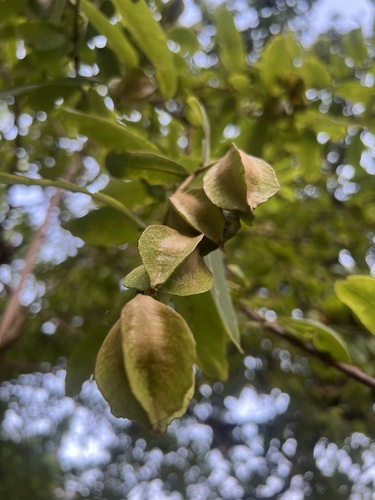
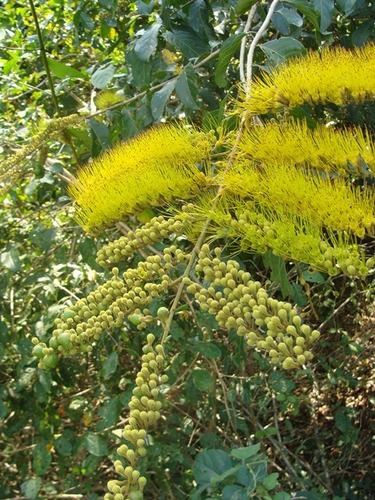
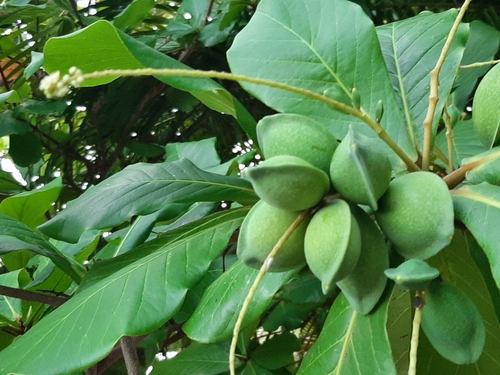
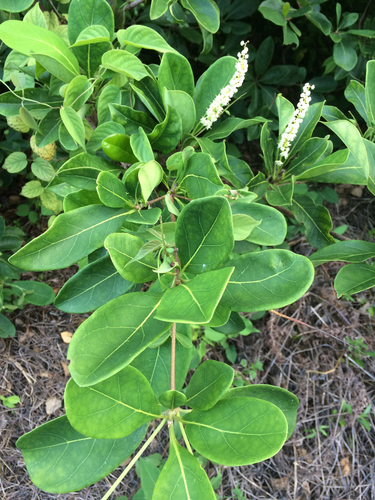
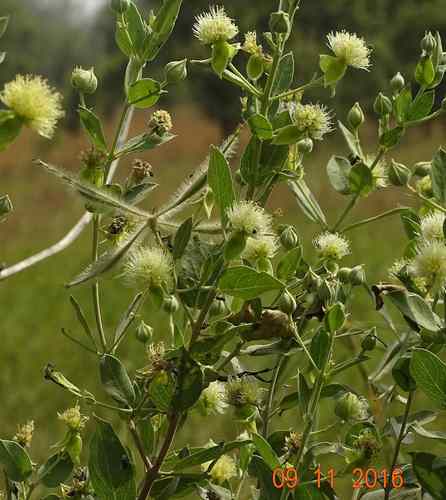
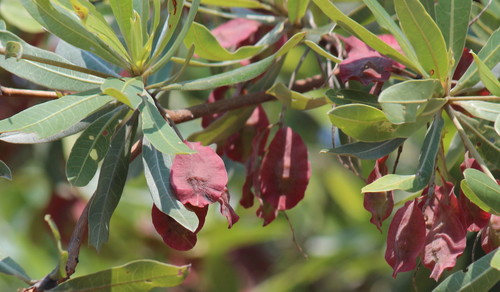
Terminalia sericea Burch. ex DC., commonly called silver cluster-leaf, typically reaches around 9 metres (30 ft) tall when growing in woodland, while isolated specimens may grow up to 23 metres (75 ft) tall. Its bark is reddish or greyish brown, and peels away in strips. The bluish-green leaves are usually clustered at the tips of branches; they are ovate with entire margins, and both the upper and lower leaf surfaces are covered in silvery hairs. The white flowers grow on short axilliary spikes, have an unpleasant smell, and may be pollinated by flies. The fruits are winged nuts that hold a single seed, turning darker pink as they ripen. Fruits may stay attached to the branch for up to a year, and are dispersed by wind. They sometimes become contorted and hairy due to activity from parasitic insect larvae. Silver cluster-leaf is endemic to Africa, occurring from Tanzania and the Democratic Republic of Congo southwards to South Africa. It grows in open mixed woodland on sandy soils, and is often found growing alongside miombo (Brachystegia spp.), mopane (Colophospermum mopane), Acacia spp. and bush willows (Combretum spp.). It is often one of the dominant species in this type of mixed woodland. The timber of silver cluster-leaf is yellow with a hard grain, and is resistant to attack by wood-boring insects and termites. This timber is used in building construction, and to make tool handles, furniture, and fencing posts. It is also used for firewood and to make charcoal. The bark has been used to make ropes, and is pounded to produce a material for waterproofing boats. Cattle eat the leaves during the dry season when grass is not available. In traditional medicine, both the leaves and roots are used as a remedy for stomach ailments. A root concoction is used to treat bilharzia, diarrhoea, and pneumonia. The bark is used to treat diabetes and to dress wounds.