About Terminalia arjuna (Roxb.) Wight & Arn.
Scientific Name and Height
Terminalia arjuna (Roxb.) Wight & Arn. grows to 20–25 metres in height, and typically has a buttressed trunk.
Trunk and Canopy
It forms a wide canopy at its crown, with branches that grow downwards.
Leaves and Bark
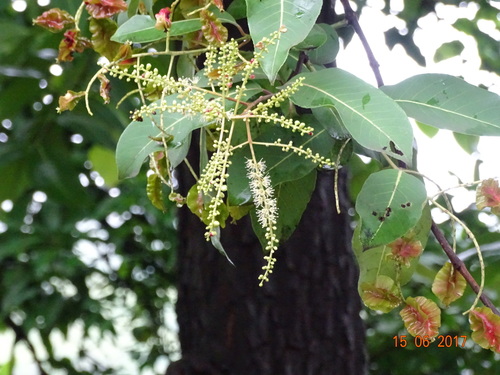
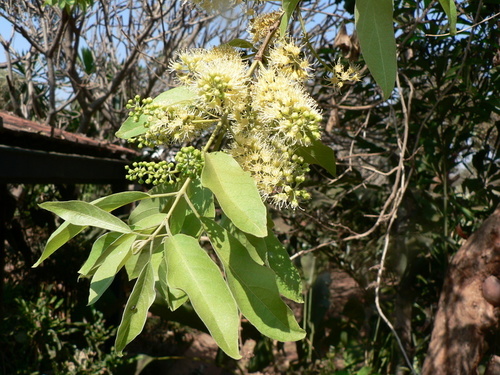
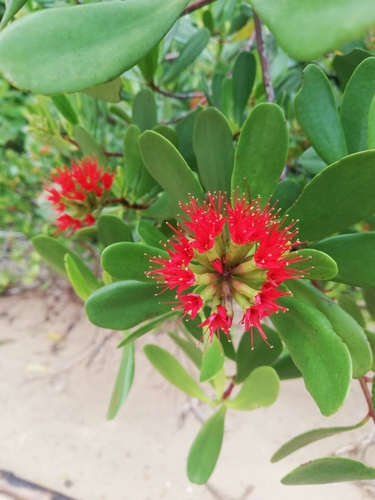
It bears oblong, conical leaves that are green on the upper surface and brown on the lower surface, along with smooth, grey bark.
Flowering Period
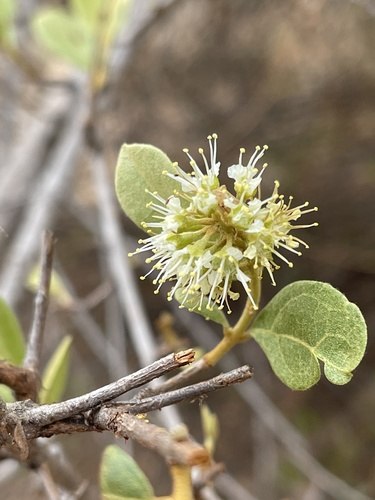
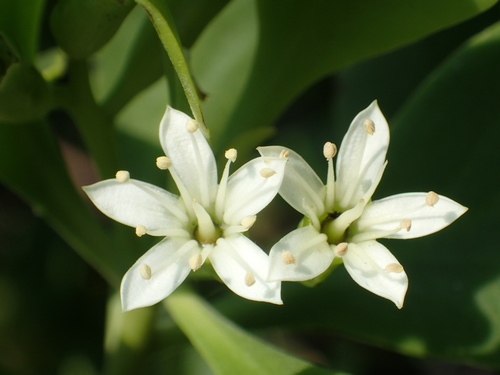
Its pale yellow flowers bloom between March and June.
Fruit Characteristics
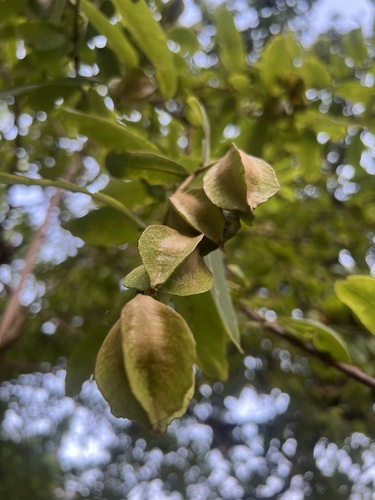
Its glabrous, fibrous woody fruit measures 2.5 to 5 cm across, is divided into five wings, and develops between September and November.
Diseases and Pests
This tree does not experience any major diseases or pest infestations, but it is susceptible to infection by Phyllactinia terminale and rot caused by Polystictus affinis.
Indian Subcontinent Distribution
Arjuna occurs across the Indian subcontinent, and most often grows on river banks or near dry river beds in Uttar Pradesh, Bihar, Maharashtra, Madhya Pradesh, West Bengal, Odisha, and south and central India.
Global Distribution and Cultivation
It is also found in Karachi (Pakistan), Sri Lanka, and Bangladesh, and has been planted in Malaysia, Indonesia, and Kenya.
Ecological Status
In riparian forests of southern India, arjuna is classified as a keystone species.
Nesting Habitat
It provides nesting habitat for multiple species, including Malabar giant squirrels and the critically endangered white-rumped vulture.
Ecological Food Web Role
Dead arjuna trunks host termites, which are a food source for sloth bears.