About Iberolacerta horvathi (Méhely, 1904)
Scientific Name and Common Name
Iberolacerta horvathi (Méhely, 1904), commonly called Horvath's rock lizard, reaches a snout-to-vent length (SVL) of 6.5 cm (2.6 in).
Body Shape
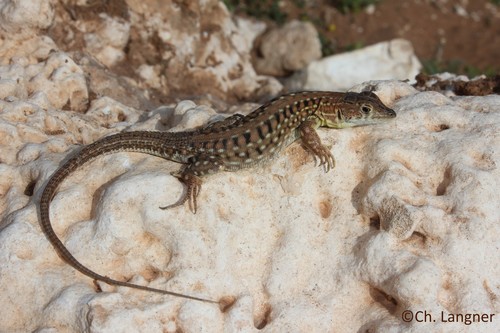
This species has a blunt snout and a dorso-ventrally flattened body.
Adult Coloration
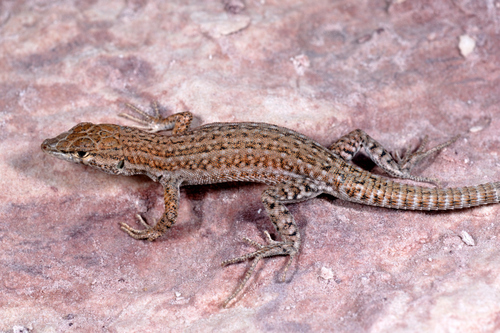
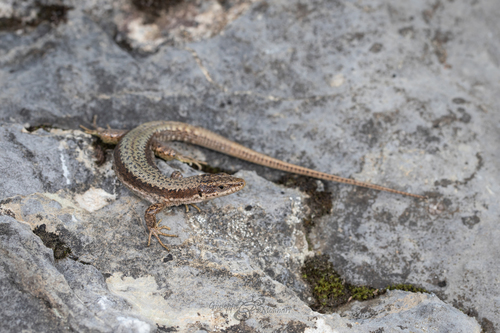
Its dorsal surface is pale greyish-brown, which contrasts sharply with its dark brown sides and its unspotted white or yellowish belly. Some individuals have a thin, faint dark line along part of the spine, or scattered dark speckles.
Juvenile Coloration
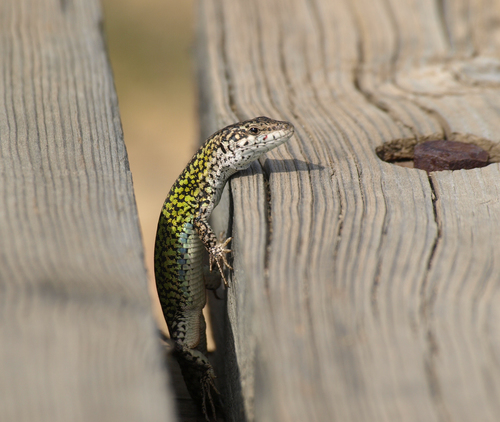
Juveniles share the same base coloration as adults, but often have a greyish-green tail.
Native Distribution
Horvath's rock lizard is native to northwestern Croatia, Slovenia, and adjacent areas of northeastern Italy and southern Austria. There are also reported records of this lizard in southern Germany.
Under-reporting Cause
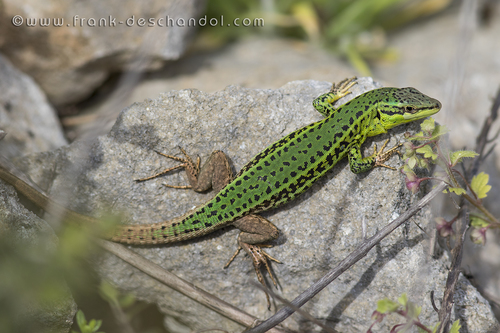
The species may be under-reported, because it closely resembles the more common wall lizard Podarcis muralis, which shares its habitat in the lower portion of its altitudinal range.
Habitat Types
Typical habitats for I. horvathi include cliffs, rocky outcrops, karst pavements, boulder fields, alpine scrub, damp open woodland, embankments, and bridges.
Altitudinal Range
It generally occurs at altitudes between 500 and 2,000 m (1,640 to 6,562 ft), and is most commonly found between 800 and 1,200 m (2,625 and 3,937 ft).
Reproduction
Female I. horvathi lay small clutches of four or five eggs. The eggs hatch after five to six weeks.
Hatchling Traits and Maturity
Newly hatched young have a snout-to-vent length of about 2.5 cm (1 in), and reach sexual maturity at approximately two years of age.