About Tara spinosa (Molina) Britton & Rose
Plant Size
Tara spinosa (Molina) Britton & Rose typically grows 2–5 m (6.6–16.4 ft) tall.
Bark and Twig Characteristics
Its bark is dark gray with scattered prickles, and its twigs are hairy.
General Leaf Structure
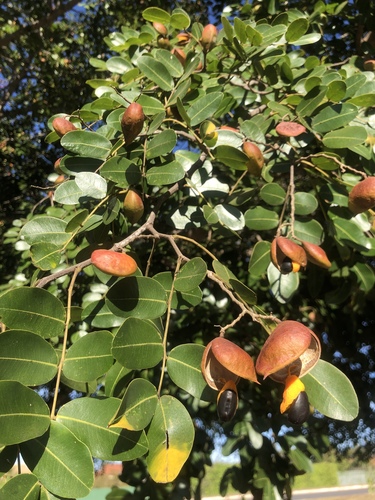
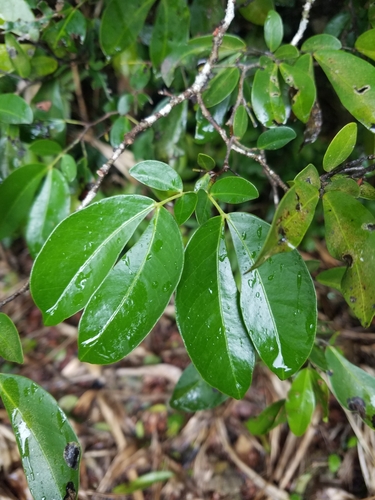
Its leaves are alternate, evergreen, lack stipules, are bipinnate, and do not have glands on the petiole or rachis.
Leaflet Morphology
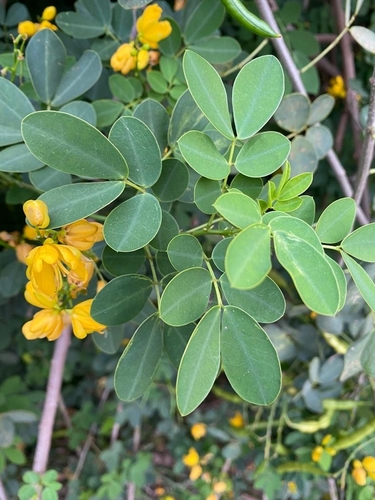
Leaves hold three to ten pairs of primary leaflets less than 8 cm (3.1 in) long, plus five to seven pairs of subsessile elliptic secondary leaflets; each secondary leaflet measures roughly 1.5–4 cm (0.6–2 in) long.
Inflorescence Structure
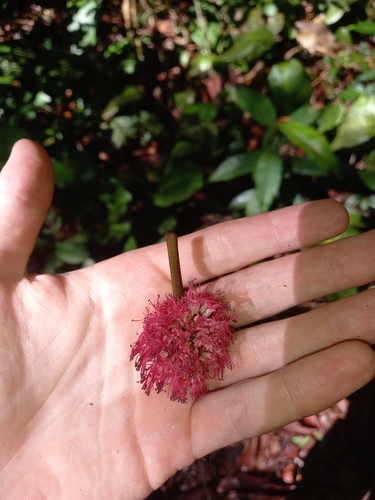
Inflorescences are 15–20 cm (5.9–7.9 in) long terminal racemes that hold many flowers and are covered in tiny hairs.
Flower Color and Petals
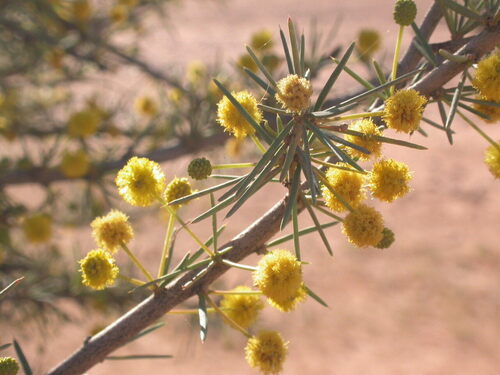
Flowers are yellow to orange with 6- to 7-mm petals.
Sepal and Stamen Traits
The lowest sepal is boat-shaped with many long marginal teeth, while stamens are yellow, irregular in length, and barely protruding.
Fruit and Seed Characteristics
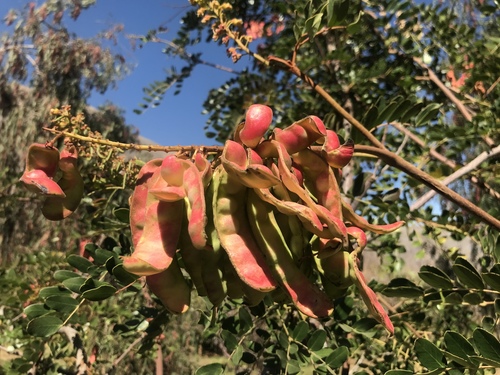
The fruit is a flat, oblong indehiscent pod around 6–12 cm (2.4–4.7 in) long and 2.5 cm (0.98 in) wide, holding four to seven round black seeds; the pod turns red when mature.
Native Range
Tara spinosa is native to Peru, and occurs across northern, western, and southern South America, ranging from Venezuela to Argentina.
Introduced Range
It has been introduced to drier regions of Asia, the Middle East, and Africa, and has become naturalized in California.
Natural Habitat
This species grows in the nearly rainless lomas (fog oases) of the Peruvian coastal desert.
Growth Tolerances
It is generally resistant to most pathogens and pests, grows at elevations between 0 and 3,000 m (9,800 ft) above sea level, and tolerates dry climates and poor soils, including soils high in sand and rocks.
Propagation Method
For propagation, seeds must be scarified (treated to break physical dormancy).
Cultivation Guidelines
Young plants should be transplanted to the field when they reach 40 cm (16 in) in height, and trees begin producing pods 4–5 years after planting.
Pod Harvest and Processing
Mature pods are usually harvested by hand, and are typically sun dried before processing.
Production Lifespan
If well irrigated, trees can continue producing for up to another 80 years, with peak production occurring between 15 and 65 years of age.
Derived Food Additives
The main food additives derived from Tara spinosa are tara flour and tara gum.
Tara Flour Properties
Tara flour is produced from the germ (embryo) of the tara seed and is potentially toxic.
Tara Gum Uses
Tara gum is produced from the seed's endosperm, and is commonly used as a thickener and stabilizer.