About Talpa europaea Linnaeus, 1758
Size
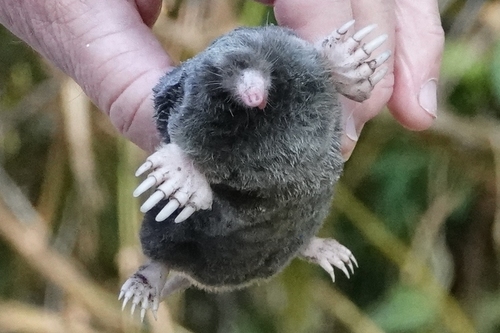
The European mole (Talpa europaea Linnaeus, 1758) has a cylindrical body, measuring 11 to 16 cm (4+1⁄2 to 6+1⁄2 in) long and weighing 70 to 130 g (2+1⁄2 to 4+1⁄2 oz). Females are typically smaller than males.
Sensory Features
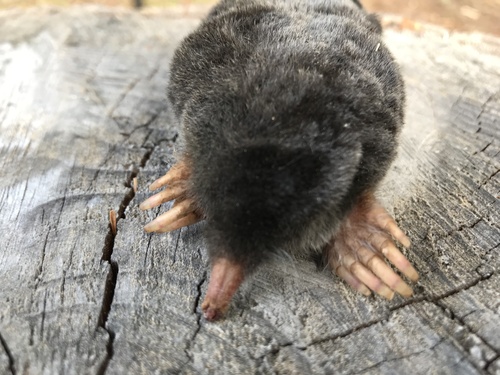
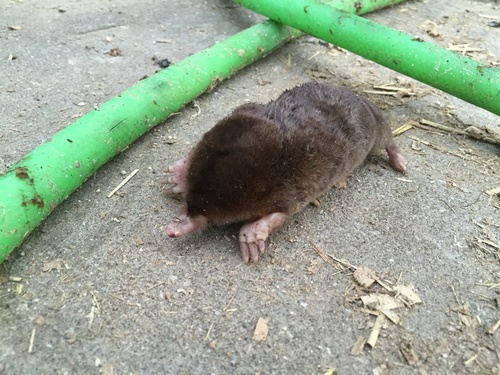
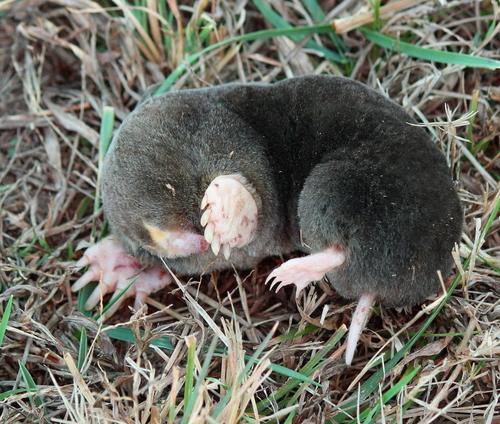
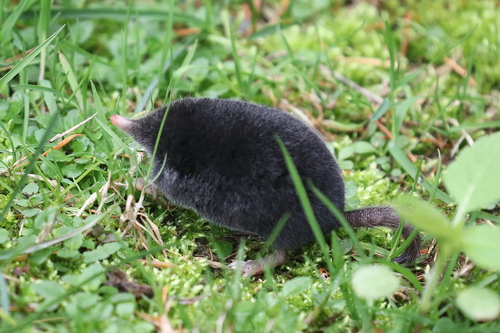
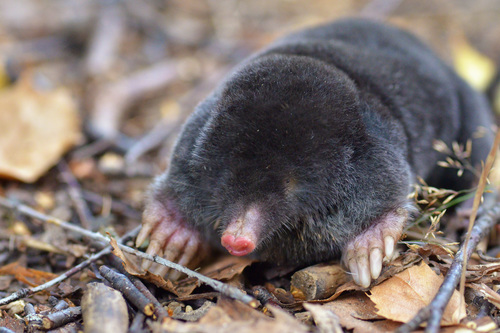
Its eyes are small and hidden behind fur, and its ears appear only as small ridges in the skin. Its fur is usually dark grey, but the actual range of colors is broader. Because the species has subterranean habits, having off-colored fur carries no disadvantage, and European moles with white, light grey, tan, taupe, and black fur have all been recorded.
Range
This species has a wide distribution across Europe and westernmost Asia. Its range extends north to the United Kingdom and southern Scandinavia, south to northern Greece, and east to western Siberia. It is the only mole species present across most of this range.
Loire River
The Loire River in France was previously thought to form a strict western barrier to the species' range, separating it from the Aquitanian mole. Studies now show that while this division is largely true, the river is not a strict barrier: individuals of both species have been found on opposite sides of the river, meaning the two are likely sympatric in at least some locations. There are an estimated 35 to 40 million European moles in the UK, with a population density of around 144.2 individuals per square kilometer.
Burrowing Habits
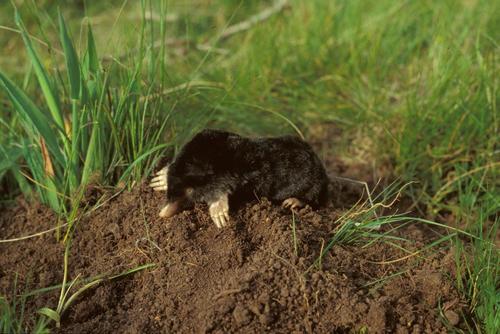
European moles typically live in tunnel systems, but they are not exclusively underground dwellers. In spring and early summer, young moles leave their mother's burrows to find new territories. This forces them to leave their original burrows, after which they either construct new tunnel systems or enter existing ones.
Summer Burrowing
In summer, they are more likely to burrow much more superficially. This superficial burrowing may be partially caused by harder soil, which makes deeper burrowing more challenging. T. europaea has also been found to spend a lot of time along the sides of drainage lines and streams.
Habitat Selection
It does not inhabit flooded or dry soils, though dry areas become important habitats when normal habitats become flooded. Soil type, existing vegetation, and altitude do not affect which areas European moles choose to inhabit. The only factor that greatly influences mole population size in a given area is the abundance of earthworms.
Urban Greenspace
In suitable urban greenspace, an area of 10 hectares is required for the population to persist, and the number of mole territories increases as the size of available habitat increases.
Breeding Season
The European mole has a relatively short breeding season that takes place in spring. Mating occurs over a span of a few weeks in March and April, followed by a gestation period of four to five weeks. Most births happen at the end of April or the beginning of May.
Births and Young
Litter size ranges from two to seven offspring. The lactation period lasts four to five weeks, and by the end of June the young are usually required to leave the natal tunnels. The European mole has a lifespan of three to five years.