About Scapanus latimanus (Bachman, 1842)
Genus Distinguishing Traits
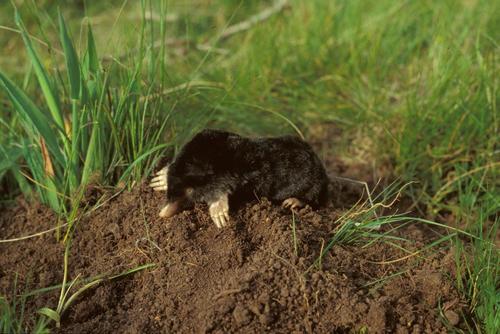
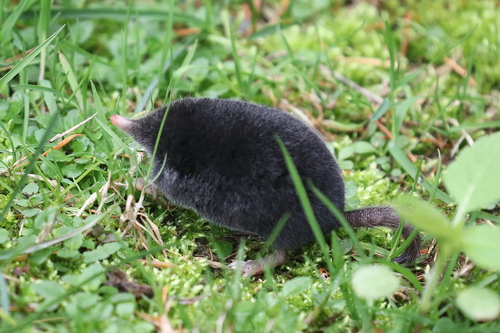
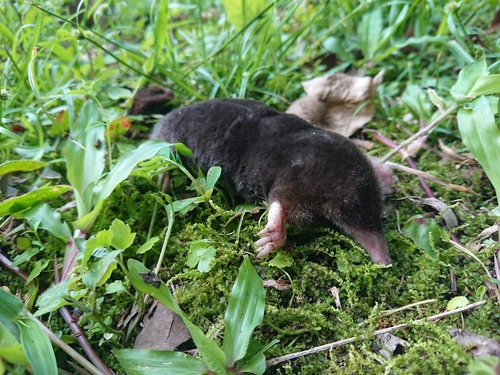
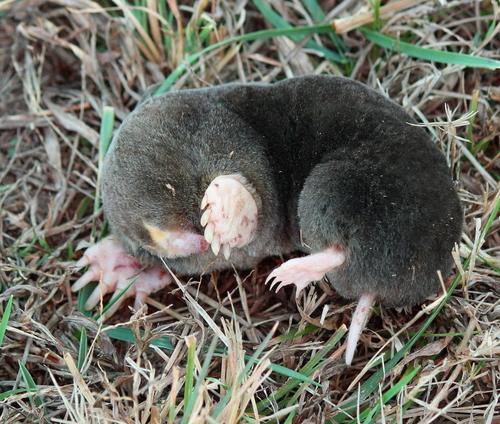
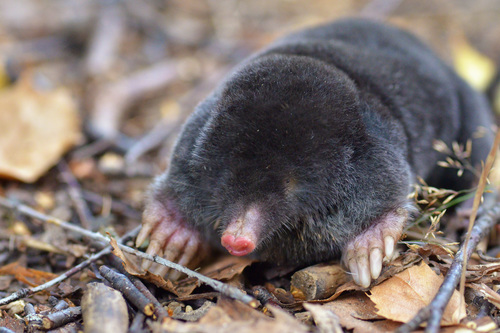
The broad-footed mole, Scapanus latimanus, can be distinguished from other species in the Scapanus genus by several key traits.
Fur and Dentition Basics
Its fur is dark brown to silvery, short, soft, plush-like in texture, and uniformly colored, and it has 40 to 44 unevenly spaced unicuspid teeth.
Body and Snout Shape
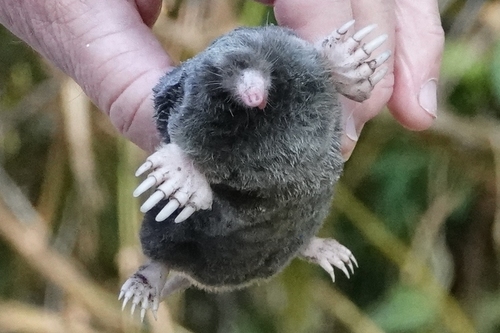
Adult bodies are short and cylindrical, with a long, pointed snout.
Forefeet Morphology
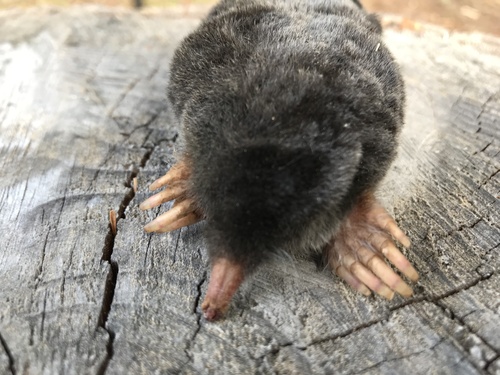
The forefeet are greatly expanded, with flattened palms and long, heavy claws.
Tail Characteristics
The tail is sparsely covered with coarse hair.
Body Size and Sexual Dimorphism
On average, total body length ranges from 5.5 to 7.1 inches, or 14 to 18 centimeters, and males are slightly larger than females.
Geographic Size Variation
Individuals from populations in more humid environments tend to be larger than those from drier, southern areas.
Dental Formula
The dental formula of Scapanus latimanus is 3.1.4.3 / 3.1.4.3 × 2 = 44.
Karyotype Details
Its karyotype has 2n = 34, FN = 64.
Habitat Soil Requirements
Like most moles, this species requires moist, friable soil.
Diet Composition
It feeds on earthworms, insects, other invertebrates, and some plant matter.
Fossorial Lifestyle
Scapanus latimanus is a fossorial mammal that spends most of its life underground.
Burrow Occupancy
Only one individual occupies a burrow at a time, and vacated burrows are often reoccupied within two days.
Deep Tunnel Construction
Tunnels are typically dug far below the surface.
Soil Disposal Shafts
Excess earth from digging is removed through shafts that run both laterally and vertically up to the surface.
Surface Mound Structure
Earth pushed out through these shafts forms distinct volcano-shaped mounds, with older earth located toward the outer base and newer earth toward the core.
Shallow Surface Tunnels
Shallow surface tunnels are sometimes dug, which create a ridge in the soil at the surface.
Shallow Tunnel Usage
It is unknown how often these shallow tunnels are used, as they are utilized irregularly.