About Neurotrichus gibbsii (Baird, 1858)
Common Name & Pelage Composition
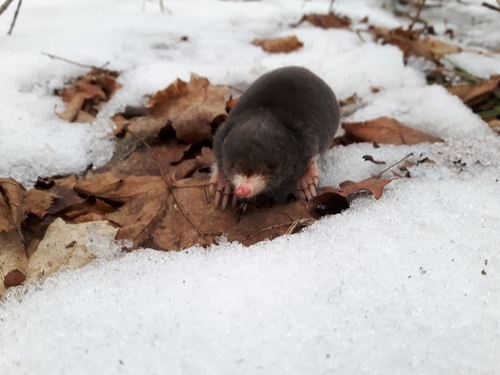
Neurotrichus gibbsii, commonly known as the shrew-mole, shares some morphological traits with shrews: like shrews, it has a pelage made up of guard hairs and underfur.
Fur Characteristics
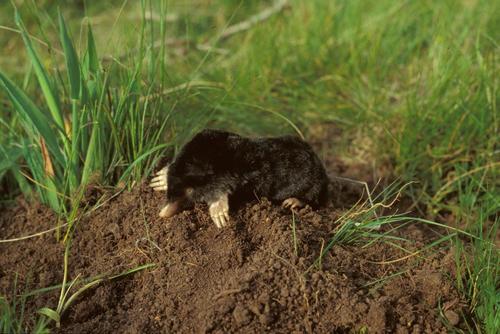
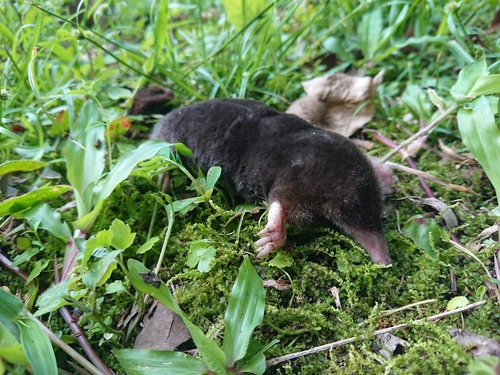
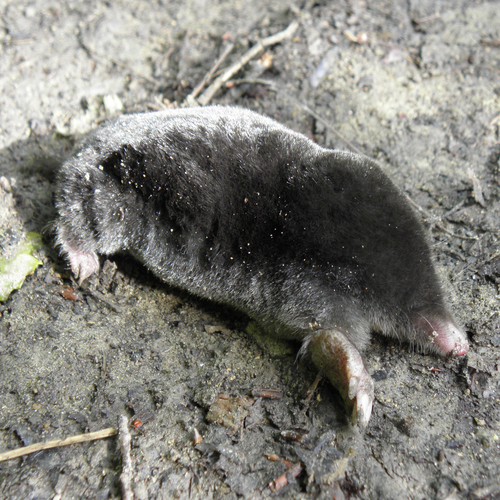
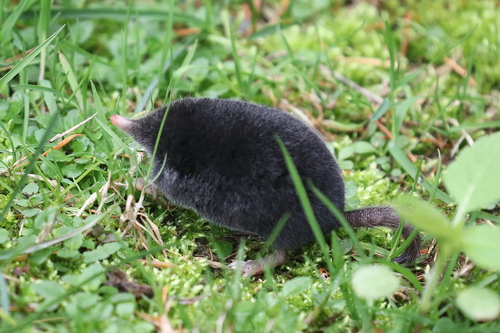
Its fur is dense, soft, and ranges in color from dark gray to sooty bluish-black.
Size & Weight
This species is the smallest American mole, measuring approximately 10 cm (3.9 in) in total length including a 3 cm (1.2 in) tail, and weighs around 10 g (0.35 oz).
Snout & Tail Morphology
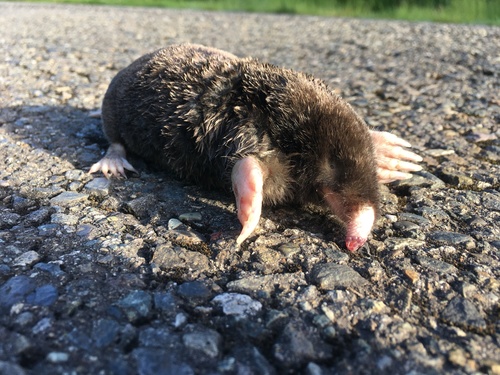
It has a long, flattened snout, and a short, thick, bristled tail that is roughly half the combined length of its head and body; the tail is also covered in scales and scattered coarse hairs.
Cranial Traits Distinguishing From Shrews
Unlike shrews, it has a zygoma (zygomatic arch) and auditory bullae, which are characteristic features of moles.
Dental & Reproductive Skeletal Traits
The tooth enamel of Neurotrichus gibbsii is white, unlike the mahogany or reddish-brown enamel seen in shrews, and this species lacks a penis bone.
Front Paw Comparison to Other Moles
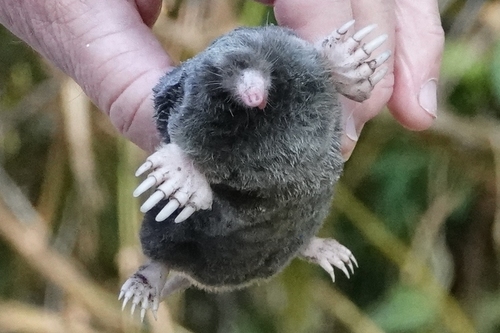
Its front paws are smaller than those of more fossorial moles and do not face outward from the body, making them more similar to the front paws of shrews.
Front Paw Digging Adaptations
Even so, the front paws are broad with bifurcate phalanges that add support to the claws for digging; the three middle claws of the front paws are also elongated, and the eyes are completely covered by skin.
Fossorial Lifestyle Adaptation Context
Beyond its front paw structure, all of this species' morphological traits support its highly fossorial, subterranean lifestyle.
Body Shape Adaptations
It has a streamlined body that lets it move smoothly through tunnels, and short appendages that are held close to the body.
Ear Structure Adaptation
It also has no external ear pinnae.
Drag Reduction Adaptations
Both of these traits reduce drag while the shrew-mole digs and moves through tunnels.
Overall Distribution & Habitat Type
Neurotrichus gibbsii inhabits damp, forested or bushy areas with deep, loose soil in the northwestern United States and southwestern British Columbia.
Range-Specific Habitat Preferences
In the northernmost part of its range, it lives along streams or in moist dense woods; in the southernmost part of its range, it occurs in swampy areas overgrown with vegetation such as sedges or shrubs.
Litter Production Frequency
This shrew-mole can produce several litters each year, though no litters have been recorded between December and January.
Litter Size
Females give birth to litters of one to four young.
Newborn Morphometrics
Newborns measure about 30 millimeters long and weigh less than 1 gram.
Female Reproductive Trait
In females, the vagina remains sealed until follicles develop in the ovaries.
Male Reproductive Traits
Males do not have a scrotum, though their testes and associated glands enlarge during breeding season, which increases their overall weight.
Sex Determination Difficulty
These reproductive traits make it difficult to externally determine the sex of shrew-moles.