About Tachornis squamata (Cassin, 1853)
Size and Weight
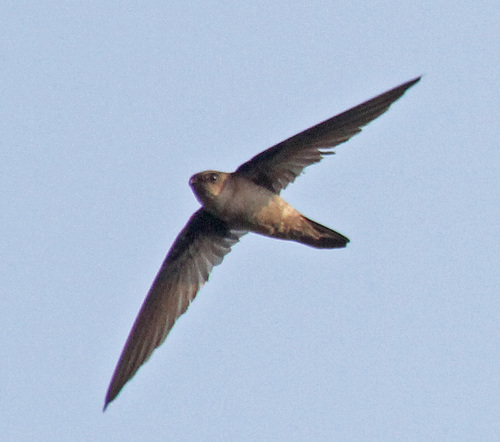
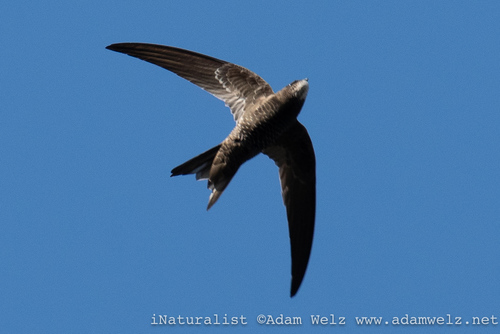
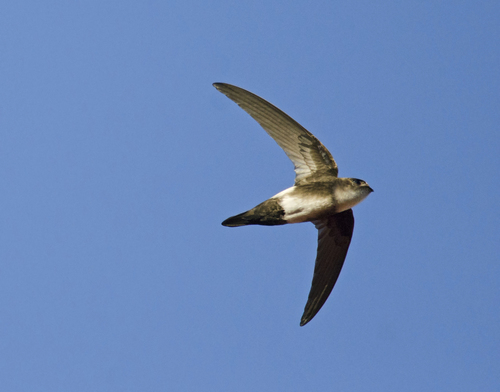
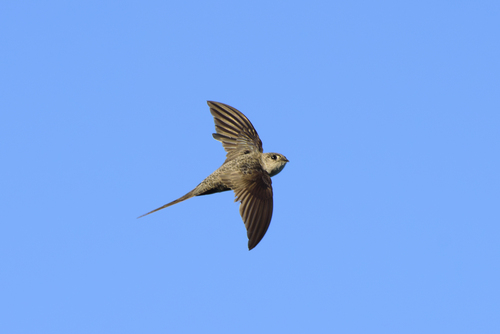
The fork-tailed palm swift (scientific name Tachornis squamata (Cassin, 1853)) is about 13 cm (5.1 in) long and weighs 9 to 13.6 g (0.32 to 0.48 oz). It has long narrow wings and a long, deeply forked tail, and males and females look identical.
Nominate Subspecies Upperparts
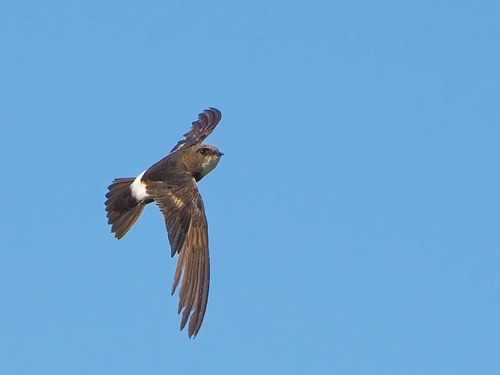
Adults of the nominate subspecies T. s. squamata have blackish brown upperparts with a faint greenish gloss, and pale gray edges on their feathers; the rump is slightly paler than the rest of the upperparts. Their cheeks are grayish brown, and the throat is very pale brownish white with dusky mottling.
Nominate Subspecies Underparts
The rest of their underparts are pale with light brown mottling, which is sparsest in the center of the belly. Their undertail coverts are blackish brown with pale edges.
Juvenile Plumage
Juveniles look similar to adults, but have a buff tinge on the head and buffy edges to the feathers of their upperparts.
T. s. semota Plumage
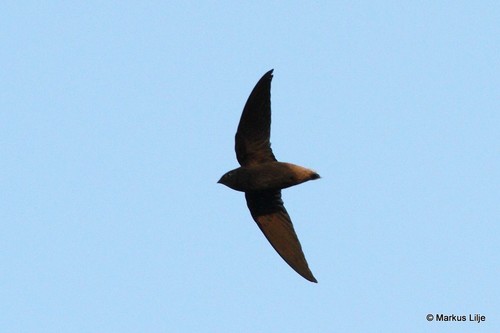
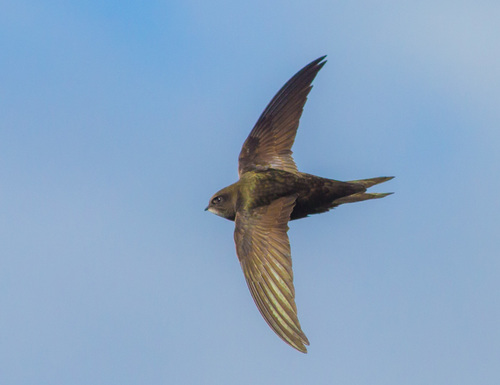
Subspecies T. s. semota is darker overall than the nominate subspecies. It has blacker upperparts with less gray on the feather edges.
T. s. semota Underparts
Its underpart feathers are darker with very little pale edging, and the undertail coverts are shining greenish black.
Nominate Subspecies Distribution
The nominate subspecies of fork-tailed palm swift is found in the Amazon Basin, ranging from northern Bolivia, eastern Peru, and eastern Ecuador through eastern Colombia and northwestern Brazil into southern and eastern Venezuela.
T. s. semota Distribution
T. s. semota is found on Trinidad and Tobago, in the Guianas, and in north central, northeastern, and eastern Brazil.
Habitat Requirements
The fork-tailed palm swift occurs in a variety of landscapes that all share the presence of palm trees, especially moriche palms. These landscapes include moist and wet savannas, palm swamps, riparian forest, and urban areas.
Elevation Range
It is a lowland species, with a maximum known elevation of about 1,000 m (3,300 ft).