About Antrostomus arizonae Brewster, 1881
Taxonomy and Naming
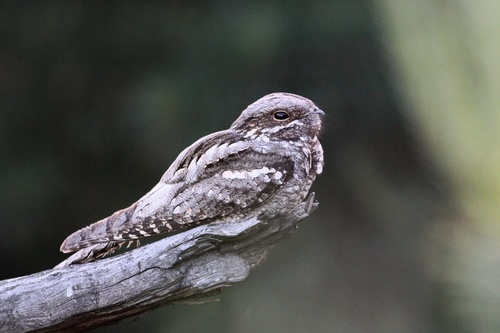
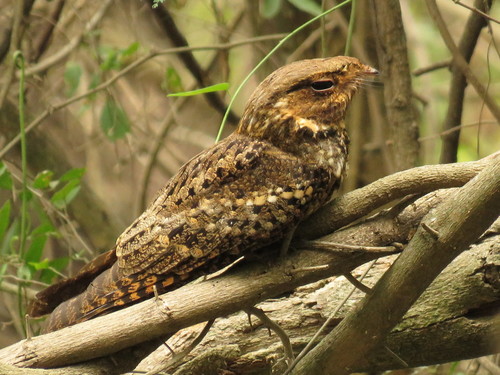
The Mexican whip-poor-will (Antrostomus arizonae Brewster, 1881) measures 23 to 24 cm (9.1 to 9.4 in) in length and weighs 45 to 50 g (1.6 to 1.8 oz).
Size
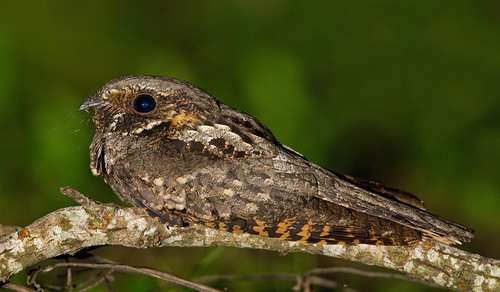
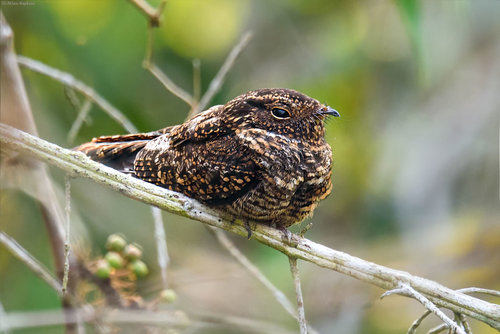
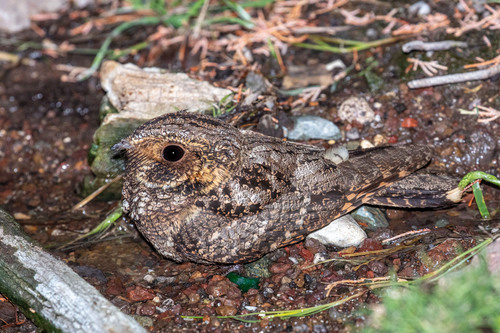
Its upperparts are generally grayish brown with blackish brown streaks, and the crown has wide blackish brown stripes.
Upperpart Coloration
The throat and breast are blackish, with a thin white band on the lower throat between these two regions.
Throat and Breast Markings
The belly is buff and marked with brown bars.
Belly Coloration
Males have broad white tips on the outermost three pairs of tail feathers; females have narrower, buffy tips on these same feathers.
Sexual Dimorphism in Tail Feathers
The wings are brown with tawny and buff spots and speckles.
Wing Markings
Subspecies of the Mexican whip-poor-will differ slightly in appearance: they are lighter in the northern part of the species' range and darker in the south, with variations in overall body color tone (some individuals are redder) and in the size and shape of the spots and speckles.
Subspecies Appearance Variation
The subspecies have the following distribution ranges: A. a. arizonae breeds from southeastern California to southwestern Texas in the United States, and extends south into the Mexican states of Jalisco and Guanajuato; the northernmost populations of this subspecies withdraw further south for the winter.
A. a. arizonae Distribution
A. a. setosus is resident in eastern Mexico, from central Tamaulipas south to the Isthmus of Tehuantepec in northwestern Chiapas.
A. a. setosus Distribution
A. a. oaxacae is resident in southwestern Mexico, from Michoacán to the Isthmus of Tehuantepec.
A. a. oaxacae Distribution
A. a. chiapensis is resident in eastern Oaxaca and northern Chiapas, extending south to central Guatemala.
A. a. chiapensis Distribution
A. a. vermiculatus is resident in Honduras and El Salvador.
A. a. vermiculatus Distribution
A. a. arizonae lives in several similar landscapes that range from mid to mid-upper elevation, and from semi-arid to moist; these landscapes all share the common feature of having oaks and pines.
A. a. arizonae Habitat
The habitat of the more southerly resident subspecies is not well understood, but these subspecies are also found in forest and woodland habitats.