About Symphalangus syndactylus (Raffles, 1821)
Description
Fur and Limb Features
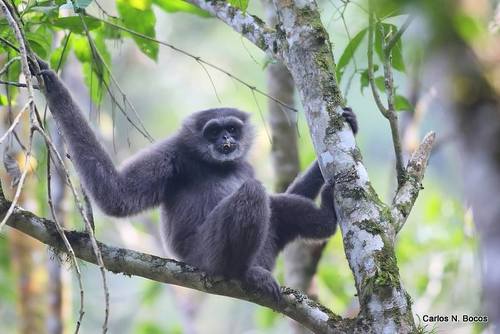
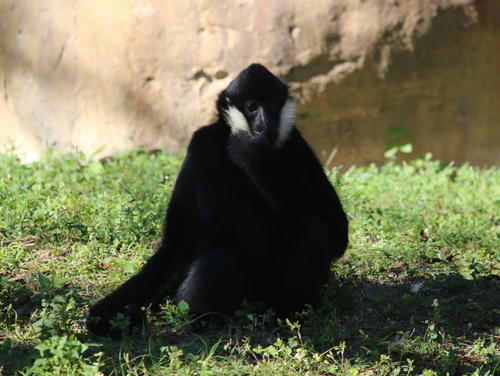
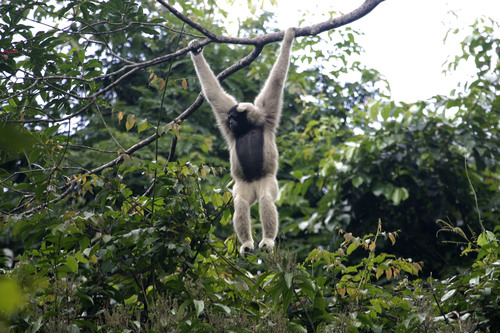
The siamang (Symphalangus syndactylus) has long, dense, shaggy hair that is the darkest among all gibbons. Its long, gangling arms are longer than its legs.
Body Size
The average body length of a siamang is 90 cm, and the maximum recorded length is 150 cm.
Facial Characteristics
The face of this large gibbon is mostly hairless, with the exception of a thin mustache.
Distribution and habitat
Geographic Range
The siamang inhabits remaining forest patches on Sumatra Island and the Malay Peninsula.
Forest and Altitude Range
It is distributed across a wide range of forest types from lowland to mountain forest, including rainforest, and occurs at altitudes up to 3800 m.
Group and Home Range
It lives in groups that can reach up to six individuals, with an average group size of four individuals, and has an average home range of 23 hectares.
Daily Movement
Its daily movement ranges are substantially smaller than those of sympatric Hylobates gibbon species, often measuring less than 1 km.
Vocal Behavior
Siamang melodious singing breaks the silence of the forest in the early morning, after the calls of agile gibbons or lar gibbons.
Regional Variation
While siamang populations from Sumatra and the Malay Peninsula are similar in appearance, some of their behaviors differ between the two groups.
Habitat loss
Primary Threat Sources
A major threat to the siamang is habitat fragmentation caused by plantations, forest fires, illegal logging, encroachment, and human development.
Palm Oil Plantation Impact
First, large areas of siamang habitat have been cleared for palm-oil plantations in recent decades. Since 2002, 107,000 km² of oil palm plantations have been established, replacing much of the original rainforest where siamangs live in Indonesia and Malaysia.
Illegal Logging Impact
Second, during the 2010s, forests in the Malay Peninsula have been destroyed by illegal logging. Sixteen out of 37 permanent forest reserves in Kelantan, Malay Peninsula, which hold most of the region's siamang population, have been encroached on by illegal loggers.
Agricultural Encroachment Impact
Third, forest encroachment converts forest cover to cultivated land; for example, rising coffee prices in 1998 encouraged people in Sumatra to replace native forest with coffee plantations.
Infrastructure Development Impact
Fourth, human development requires new infrastructure such as roads, which divide existing conservation areas and cause forest fragmentation and edge effects.
Ecology and behavior
Sympatric Gibbon Species
Siamangs share habitat with two other types of gibbons: the agile gibbon and the lar gibbon. Both co-occurring gibbons belong to the genus Hylobates, rather than Symphalangus.
Social Bonding
When two siamangs meet, they often form a social bond with one another.
Vocal Communication
They may also communicate using their throat pouches and vocalizations when they feel excited, relaxed, ready to mate, or threatened.
Body Language Communication
In addition to loud vocalizations, siamangs also use body language to communicate, including gesturing and pointing to let others know what they need or intend to do.