About Sylvilagus graysoni (J.A.Allen, 1877)
Common Name and General Classification
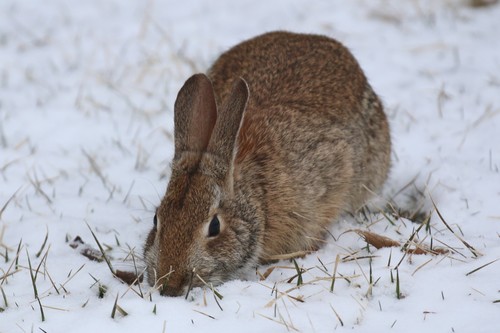
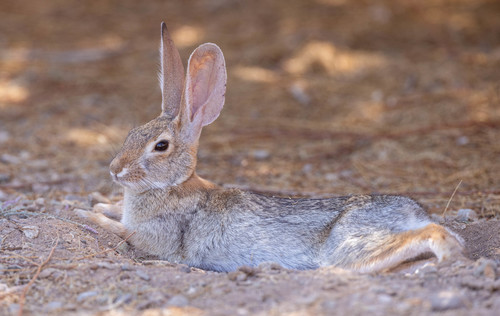
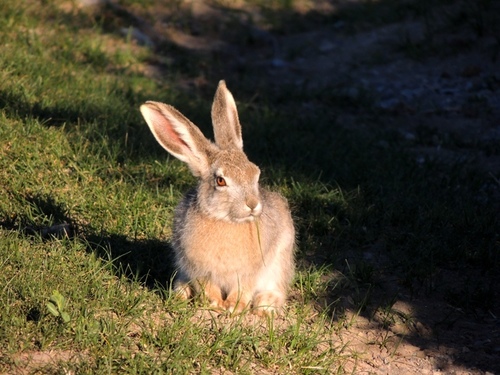
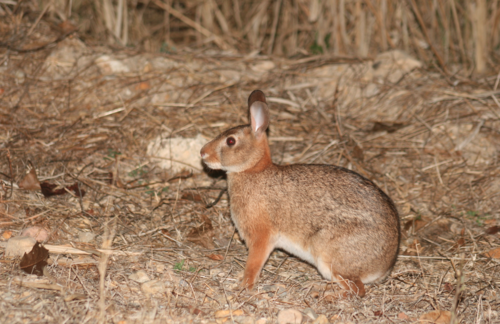
Sylvilagus graysoni, commonly called the Tres Marias cottontail, is a medium-sized cottontail rabbit.
Body Length and Ear Size
Adult body length ranges from 437 to 480 millimeters (17.2 to 18.9 inches), and it has short ears measuring 57 to 64 mm (2.2 to 2.5 inches).
Skull Length
It also has a medium-sized skull, ranging 78 to 80 mm (3.1 to 3.1 inches) in length.
Dorsal Fur Coloration
Its fur is rufous, and lightens in color near the nape and rump.
Ventral and Throat Markings
The underside and tail are whitish, and there is a brown patch on the throat.
Skin Thickness
Its skin is recorded as very thin.
Upper Jaw and Incisive Foramina
The skull of this species has a long upper jaw with long incisive foramina, which are ducts in the mouth’s palate.
Diastema and Occipital Bone Structure
There is a long gap between the incisors and premolars, and the basilar portion of the occipital bone is distinctly narrow.
Supraorbital Margin Trait
Like the marsh rabbit (S. palustris), it has bony extensions on the back of the brow (the supraorbital margin) that are fused to the rear of the braincase, the part of the skull that surrounds the brain.
Dental Formula
Like all rabbits and hares, it has a dental formula of 2.0.3.3/1.0.2.3 × 2 = 28: two pairs of upper incisors and one pair of lower incisors, no canines, three upper premolars and two lower premolars per side, and three upper and three lower molars on each side of the jaw.
Similarity to Mexican Cottontail
S. graysoni is similar in overall shape to its close relative the Mexican cottontail (S. cunicularius), which lives on mainland Mexico.
Shared Traits with Mexican Cottontail
It shares three key traits with S. cunicularius: a very deep lower jaw, carotid foramina of comparable width, and similarly sized skulls.
Differentiation from Eastern Cottontail
These shared traits separate both species from the Eastern cottontail (S. floridanus), which has a shallow lower jaw, narrower carotid foramina, and a larger skull.
Distinction from Mexican Cottontail
The Tres Marias cottontail can be told apart from the Mexican cottontail by its shorter ears and reddish fur on its sides.
Subspecies Size Variation
Recognized subspecies of S. graysoni differ in size: S. g. badistes is slightly smaller on average than the nominate subspecies S. g. graysoni.
Endemic Range
Sylvilagus graysoni is endemic to the Islas Marías, which belong to the Mexican state of Nayarit.
19th Century Distribution Record
A late 19th century record of the species noted it was abundant on both María Madre and María Magdalena, but rarely seen on María Cleofa.
Earlier Survey Distribution
Later surveys found the species on the three northern islands of the archipelago, but not on María Cleofa.
Recent Survey Distribution
More recent surveys report that S. graysoni lives on all four islands of the archipelago, with the population on San Juanito classified as the subspecies S. g. badistes.
Total Occupied Range Size
Across all the islands it occupies, the species’ total range is less than 500 square kilometers (190 sq mi).
Endemic Leporid Status
It is the only leporid species native to these islands.
General Habitat Type
Its natural habitat is deciduous tropical forest, though the area it occupies on the Islas Marías is more arid than corresponding habitats on mainland Mexico.
Dominant Habitat Vegetation
The habitat is dominated by plant species from the genus Bursera, false tamarind, and chupandía.
San Juanito Habitat Preference
On San Juanito, the rabbit does well in areas with dense trees, shrubs, and agaves that grow 3–4 meters (9.8–13.1 ft) tall.
Secondary Habitat Use
It can also move into abandoned farmland across the islands, though it prefers areas with abundant low shrubs.
Elevation Range
It occurs from sea level up to approximately 350 meters (1,150 ft) in elevation.
Tameness Toward Humans
Due to its island isolation, S. graysoni does not fear humans the way mainland rabbit species do.
Escape Behavior Trait
Individuals on San Juanito are particularly noted for lacking typical escape behavior.
Activity Pattern
Members of this species spend most of the day resting in shallow depressions under bushes, and emerge into open areas after sunset.
Documented Predators
The Tres Marias cottontail has few documented predators. These include the Tres Marias raccoon, a subspecies of common raccoon, and two raptors: the red-tailed hawk and the crested caracara.
Reproductive Behavior Status
Most of the species’ reproductive behavior remains unknown.
1978 Reproductive Record
One research expedition conducted in March 1978 recorded 11 lactating females, and two pregnant females carrying 75-millimeter (3.0 in) embryos.
Chromosome Count
This species has 42 diploid chromosomes, a chromosome count that it shares with the Mexican cottontail, the eastern cottontail, and the desert cottontail (S. audubonii).